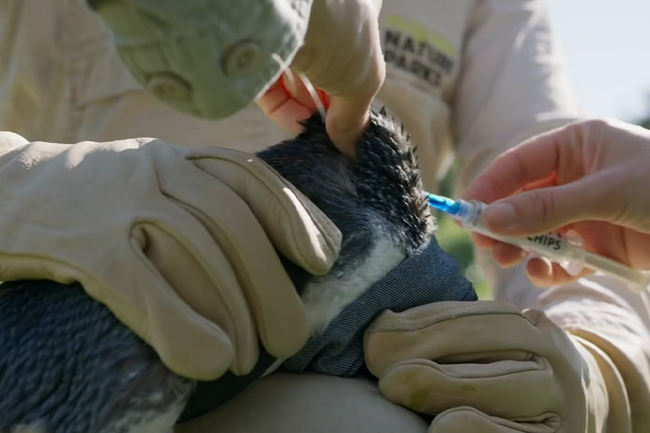
Australia’s escalating bird flu crisis is exposing dangerous gaps in government efforts to protect vulnerable wildlife, writes Sue Arnold.
FEEDING WILD BIRDS from our balconies and backyards is a popular Australian pastime. One-third to half of us feed wild birds, according to research led by Griffith University.
But scientists are now warning that backyard bird feeding poses a real risk of transmitting the bird flu virus. They advise that wild birds have enough food.
The deadly H5N1 bird flu is now spreading in every state except the Northern Territory, with South Australia and Victoria having the highest mortalities.
Governments should not underestimate the catastrophic consequences. The statistics on the impact of bird flu make for terrifying reading.
In South America in 2022-2023, an estimated 667,000 wild birds of 83 species and 53,000 wild mammals of 11 species.
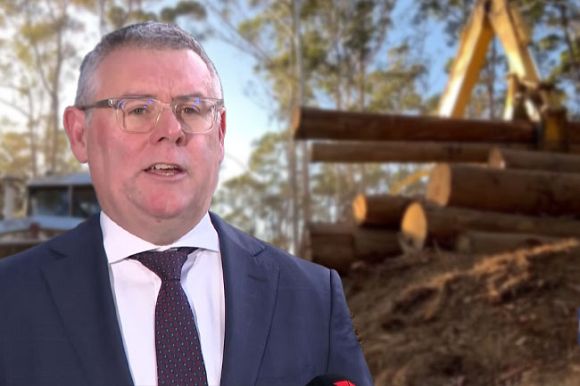
For domestic poultry, the numbers are enormous. The Food and Agriculture Organisation of the United Nations (FAO) reported that in 2022 alone, more than 131 million domestic poultry were lost through infection or culling. By 2025, FAO was describing cumulative global poultry losses as hundreds of millions of birds.
The FAO report states:
Both land and sea mammals have been affected, including outbreaks in farmed mink in Spain, seals in the United States of America, and sea lions in Peru and Chile, with at least 26 species known to have been affected.
H5N1 viruses have also been detected in domestic animals such as cats and dogs in several countries, with recent detections of H5N1 in cats announced by authorities in Poland.
There’s also a real risk the mortality of Antarctic wildlife from this virus will go unnoticed or under-reported.
Migratory wild birds, especially waterfowl, are natural reservoirs of avian influenza viruses; they play a role in spreading the virus across large geographical areas and also become victims of the disease.
According to scientific experts, the effects of H5N1 infection on wildlife range from no clinical signs to sudden death. This means that infected wild animals can both act as vectors of the virus, possibly carrying it thousands of kilometres during long-distance migration.
Symptoms of the disease include severe breathing problems, panting and coughing as the disease spreads through a bird’s body via blood and body fluids. There may be a lack of coordination, swimming in circles and disorientation.
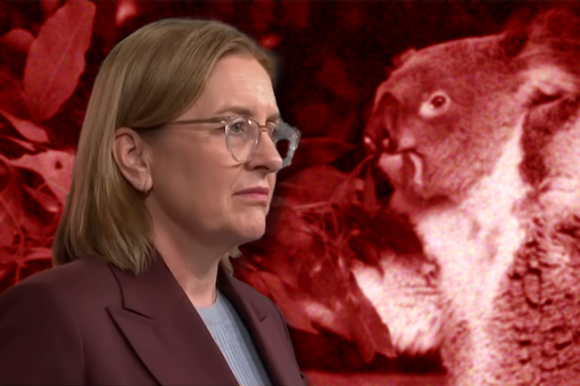
Sick birds become too weak, blind or uncoordinated to stand, walk or fly, resulting in starvation and thirst. Death can result within 48 hours of visible symptoms. Sudden mortality without symptoms is also common.
The Victorian Wildlife Alliance says H5N1 can last in the body of dead birds for months. Activists say the Government’s advice is to leave the birds there to rot. The bodies of created terns have been left close to the iconic Sammy the elephant seal, who is highly susceptible to H5N1.
In Australia, the federal and state governments’ response to the viral epidemic is highly questionable.
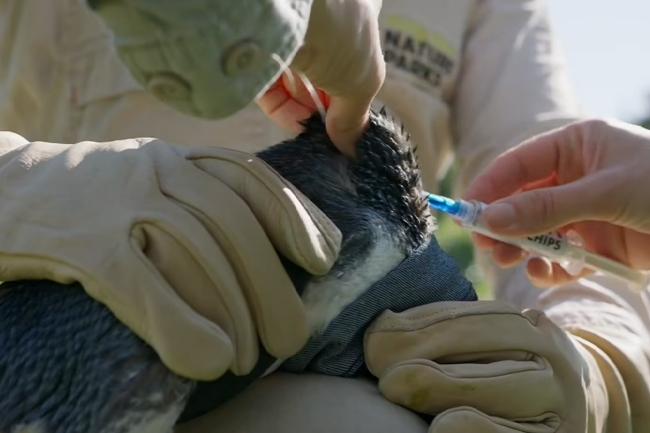
State governments are offering grants to help wildlife carers and shelters buy personal protective equipment. Victoria is offering up to $500, which covers gloves, P2/N95 masks, goggles, face shields, overalls and disinfectants for authorised shelter operators and foster carers.
Victoria’s grant program is inadequate, as not only is “up to $500” unlikely to cover the equipment needed, but it limits authorisations to shelter operators and foster carers who may not be readily available or have any experience in dealing with dying, traumatised, stressed birds.
Victoria’s avian flu website details the necessary criteria for applicants, who must:
- be actively engaged in wildlife rehabilitation, including the care of injured, sick or orphaned wildlife, and maintain an up-to-date shelter record or equivalent record in accordance with authorisation conditions; and
- propose purchases or activities that support H5 bird flu preparedness, implementation of biosecurity measures, safe wildlife handling, animal separation or isolation capability, or mitigation of virus spread.
Funding closes at the end of September. Successful applicants will be notified by email.
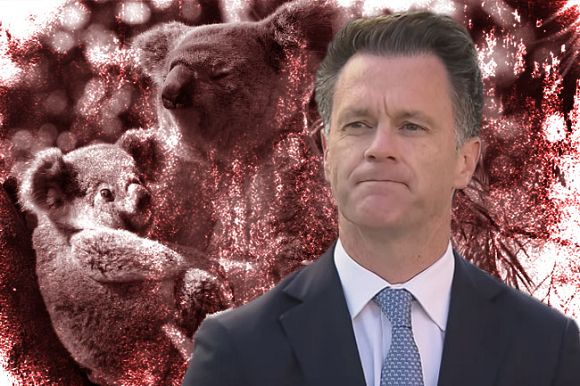
In stark contrast, Western Australia is offering small grants from $1,500 to $10,000 and large grants up to $200,000.
South Australia, the worst-hit state, is not offering any grants to wildlife rescuers or shelters. Nor is NSW.
Prior to August, the Albanese Government committed more than $113 million to strengthen surveillance, preparedness and response capability for a potential incursion.
This amount includes:
- $43.9 million to enhance national coordination of response arrangements and communications, strengthen surveillance and boost biosecurity capacity and capability;
- $47.1 million to accelerate protective action for threatened species and priority biodiversity; and
- $22.1 million to increase the amount of ready-to-use pandemic flu vaccines and antivirals in the National Medical Stockpile (NMS).
It’s entirely unclear why $22.1 million to increase pandemic flu vaccines for humans is included in the investment.
In February, the Albanese Government provided $1.3 million to ‘support native species across New South Wales that are most at risk from a potential H5 avian influenza (bird flu) outbreak’. Given the paltry sum and the list of activities to be undertaken, details of the funded projects are best described as conservation projects rather than disease control.
$1.1 million is available to protect captive populations of threatened species in facilities in NSW.
The captive threatened-species funding was distributed through the Zoo and Aquarium Association.
NSW recipients included:
- Aussie Ark (eastern quoll; Tasmanian devil);
- Coffs Coast Wildlife Sanctuary (Australian sea lion);
- Featherdale Sydney Wildlife Park (plains-wanderer; regent honeyeater; swift parrot);
- Priam Psittaculture Centre (New Holland mouse; orange-bellied parrot; smoky mouse);
- Taronga Western Plains Zoo (regent honeyeater; plains-wanderer);
- Taronga Zoo Sydney (regent honeyeater; plains-wanderer); and
- Walkabout Wildlife Sanctuary (brush-tailed rock-wallaby; eastern quoll; greater bilby; parma wallaby).
Measures included quarantine facilities, wildlife triage areas, PPE, drinking-water management, wild-bird deterrents/exclusion, enclosure biosecurity, staff training, cleaning equipment and uniforms.
Leading science and conservation groups say the recent announcement of $20 million to build wildlife resilience in the face of bird flu is grossly inadequate and are renewing calls for $200 million over two years.
The Biodiversity Council says the $20 million barely replaces this year's $17.2 million cut to the Threatened Species Program, leaving Australia no better prepared for the growing threats facing our wildlife.
To stem the loss of Australia’s iconic wildlife from the unfolding bird flu emergency, four national environment, land management and scientific organisations have put forward a rapid-response action plan that will enable the Australian Government to rapidly deploy the $200 million investment that leading nature groups have been calling for since July.
The proposal from the Biodiversity Council, Australian Land Conservation Alliance, Southern Australian Aboriginal Land and Sea Management Alliance and Australian Mammal Society targets investment to the species most at risk, and the places, actions and timing that will make the greatest differences for them.

They say the $200 million must be new investment, additional to existing conservation and agricultural biosecurity programs.
The Government’s recent assessment identified 340 bird species and 32 mammal species at high, very high or extreme risk from H5N1, including 48 threatened species. Many are central to Australian identity and Aboriginal and Torres Strait Islander cultures, including pelicans, swans, shearwaters and ducks, and iconic mammals such as Australian sea lions, dingoes, Tasmanian devils and platypuses.
The groups say not acting rapidly and effectively will increase community levels of ecological grief and distress over wildlife impacts and regional eco-tourism will take a bigger hit.
Other issues include:
- Under-reporting: Scientists warn that real virus numbers remain higher than official counts show.
- Lack of gear: Volunteer wildlife carers face shortages of protective equipment and clear instructions for handling sick animals.
- Uneven local action: Some regions lag in collecting dead birds safely and stopping local spread.
As H5N1 spreads across the country, researchers, wildlife managers and the broader public are increasingly concerned about the risks it may pose beyond birds.
Recent outbreaks have threatened aquatic mammals, including southern otters, dolphins and porpoises. H5N1 has also decimated pinniped populations around the globe.
The Federal Government‘s recent addition of a $125 million investment is part of a total funding increase for bird flu. This funding targets agricultural biosecurity and includes only $20 million for wildlife impacts — the focus of scientific criticism.
A key policy question is how much H5 funding is being spent on measures specifically capable of detecting, preventing, containing or responding to H5N1, versus general conservation work.
Given the Albanese Government’s refusal to include a climate trigger in projects to be approved by the Federal Environment Minister, the response to the bird flu pandemic may well become a major crisis. The buck stops here.
Sue Arnold is an IA columnist and freelance investigative journalist. You can follow Sue on Twitter @koalacrisis.
 This work is licensed under a Creative Commons Attribution-NonCommercial-NoDerivs 3.0 Australia License
Support independent journalism Subscribe to IA.