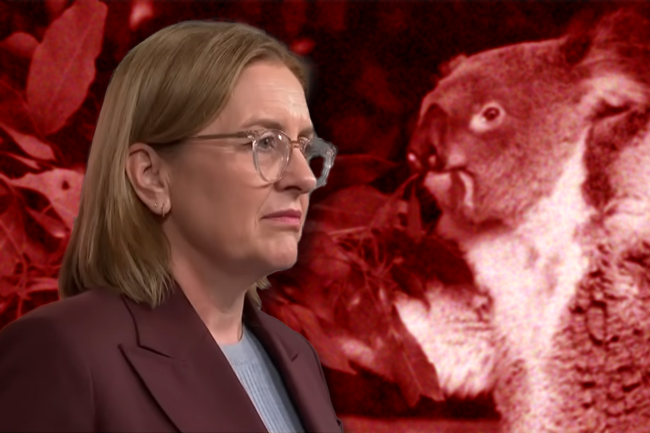
Victoria's environmental policies are facing growing scrutiny as critics accuse the Allan Government of secrecy, excessive wildlife culling and a failure to protect the state's native species, writes Sue Arnold.
WHAT HAPPENS when a state government threatens the existence of wildlife, forests and ecosystems, resulting in irreconcilable threats to a healthy economy?
What if the evidence of the government’s environmental neglect and corruption is overwhelming, demonstrating a record worthy of the fourth world?
Jacinta Allan, Victoria’s unelected Labor Premier, is setting a frightening example of what happens when a government dumps environmental responsibility. Instead, enacting legislation supporting the eradication of wildlife, fining and gaoling wildlife rescuers, opening up national parks to hunters, denying transparency, and relying on cover-ups. This is the way the Allan Government does business.
Who investigates? In Victoria, hardly anyone. Certainly not mainstream media. Nor the opposition, although the Liberal Shadow Minister, Nick McGowan, is giving his best shot. The Animal Justice Party, led by Georgie Purcell, is regularly exposing the appalling cruelty approved by the Allan Government.
Allan’s environmental record is shocking.
In 2025, 4,321 wombats were legally killed, doubling the 2023 licensed mortality.
In 2025, the government authorised the destruction of 3,018 black wallabies, 919 emus, 2,245 little corellas, 162,644 eastern grey kangaroos and 3,410 rainbow lorikeets.
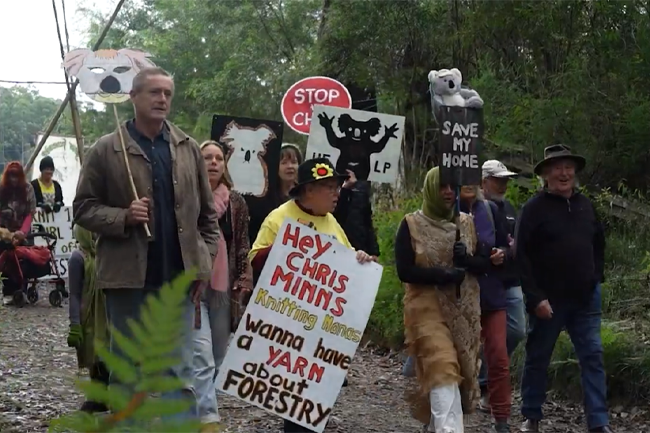
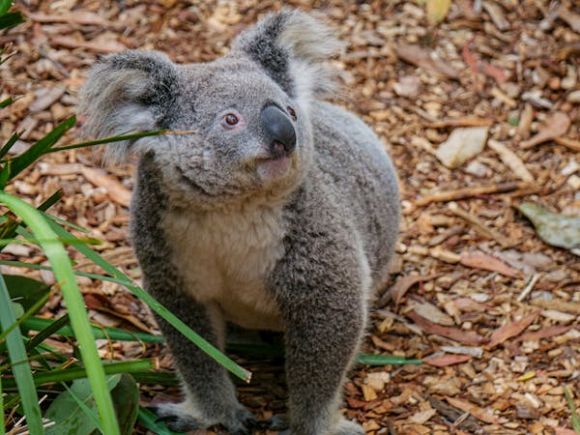
In March/April 2025, more than 1,000 koalas were shot from helicopters in Budj Bim National Park weeks after a bushfire was extinguished. The Government claimed the area burned was inaccessible and burned koalas could not survive. No autopsies of aerially shot koalas have been made available, nor will the Government provide any details of where over 1,000 koala corpses were buried or disposed of.
It was the first time any Australian government has used helicopter marksmen to kill koalas. The Government’s authorisation is being challenged, a lawsuit is currently before the Victorian Supreme Court.
There’s currently no information available on the koala population in Victoria, as the Allan Government has refused to release a study submitted in 2025. Although koalas in NSW, Queensland and the A.C.T. are listed under the Environment Protection and Biodiversity Conservation Act 1999 (EPBC Act) as endangered, the Federal Government (under both major parties) has always insisted Victoria has hundreds of thousands of koalas, thus ensuring that a national endangered status is unnecessary as there are plenty of koalas.
In October 2025, media reports of koalas on French Island dying of starvation went all over the world. Pictures of dead koalas created a storm of concern. Some island residents and businesses claimed the koalas were eating all the trees, destroying the ecosystem of the island and, in later news stories, the claims escalated to koalas starving and falling out of trees.
A wildlife carer who visited the island regularly commented, “Koalas looked very healthy, but the trees appeared to be diseased, rather than defoliated. Potentially caused by dieback or insect infestation.”
In November 2025, Australians for Animals Inc submitted an FOI request seeking any evidence of the Department of Energy, Environment and Climate Action (DEECA) investigations into the major koala mortality on the island, including the following:
- Details of field trips undertaken by DEECA to French Island focused on koalas between January 2020 to current date.
- Reports, field trips and analyses of koala eucalyptus feed/shelter trees on French Island focused on eucalyptus tree diseases, including the extent of phytophthora from January 2020 to current date.
- Reports, field trips undertaken to establish koala population estimates on French Island from January 2020 to current date.
As of June 2026, there’s been no response to the FOI in spite of complaints to the Office of the Victorian Information Commissioner (OVIC).
Long delays in responding to FOI requests are now commonplace. Many requests are simply ignored. Yet another cover-up.
In January/February 2026, major bushfires in Victoria left thousands of wildlife burned, injured and desperately in need of help. Many of the survivors could have been saved, but the Allan Government banned wildlife rescuers from entering fire-extinguished areas.
No one has any idea how many koalas, kangaroos, wombats and other species died in the fires. No surveys have been undertaken; the Government failed to provide water stations and emergency food; and animals were left to die or shot by DEECA officers.
A wildlife organisation asked the secretary of DEECA the following questions about the fate of fire-impacted wildlife:
- What food drops and access to water are planned for starving koalas, kangaroos and other injured wildlife currently surviving in a hostile environment?
- When will food drops and water be provided and which areas will be targeted?
- Who will provide the food drops and water?
- Which koala habitats have been directly impacted by the fires?
- Can DEECA advise a ball park figure on wildlife mortality, in particular koalas?
- What methods of euthanasia are being used by DEECA teams and what is the criteria for euthanasia?
- How many WESN teams were allocated for which areas and what dates?

The response?
‘The secretary is on leave.’
Wildlife Victoria said there was likely to have been a substantive loss of animals given the ferocity and scale of the fires.
Chief executive Lisa Palma said:
“The impact of bushfires on wildlife can be catastrophic. Native animals are often unable to escape fires and are highly vulnerable to death, dehydration, disorientation, burns, injury, and the loss of food and habitat.”
Despite an unknown loss of waterbirds as a result of the January fires and despite a Victorian Labor Government parliamentary inquiry recommendation in 2024 that duck hunting be banned, Premier Allan went ahead and approved the three-month season, which has just ended.
The Labor inquiry recommendation was met with anger by government ministers who claimed powerful construction unions had threatened to walk off the job if hunting was banned.
Labor strategists have warned that banning duck hunting carries with it the risk of further alienating once traditional blue-collar suburban voters.
In 2025, an estimated 487,800 game ducks were shot and killed. The slaughter resulted in up to 195,120 additional ducks being wounded but not killed outright.

In February 2026, Birdlife Australia estimated that waterbird populations had crashed by up to 90 per cent in eastern Australia:
‘Species on the hunting list are already in long-term decline. With H5 bird flu looming on our shores, protecting waterbirds has never been more urgent.’
The Game Management Authority (GMA) has sustained major criticism as its focus of enforcement has been on wildlife rescuers, threatened with huge fines and gaol terms for attempting to rescue wounded birds.
An ABC report reveals the GMA has been accused of turning a blind eye to illegal behaviour by shooters whilst bullying wildlife rescuers. The report indicates GMA has posted photos on Facebook, including hometown locations of rescuers it has successfully fined for breaching duck hunting rules, leading to abuse and death threats against animal activists.
Just to cap things off and ensure the massacres continue, the Allan Government has introduced the Outdoor Recreation Victoria Bill 2025. According to one hunting group, hunting is now defined alongside fishing, camping and four-wheel driving. Hunting becomes a recreational activity governed by one agency, the Outdoor Recreation Victoria (ORV).
Victoria’s National Parks Act will be amended to allow deer hunting in Errinundra and Snowy River National Parks. Recreational deer hunting is currently not permitted in these areas. Whilst deer are feral, the opening up of two national parks for hunting sets another deadly precedent.
Thus far, Labor governments throughout Australia have demonstrated a deeply concerning rejection of any policies that ensure the survival of the nation’s iconic wildlife. The Allan Government continues to demonstrate an alarming precedent.
With no environmental policies by the Coalition and One Nation, the Ides of March may have arrived for Australia’s biodiversity.
Sue Arnold is an IA columnist and freelance investigative journalist. You can follow Sue on Twitter @koalacrisis.
 This work is licensed under a Creative Commons Attribution-NonCommercial-NoDerivs 3.0 Australia License
Support independent journalism Subscribe to IA.