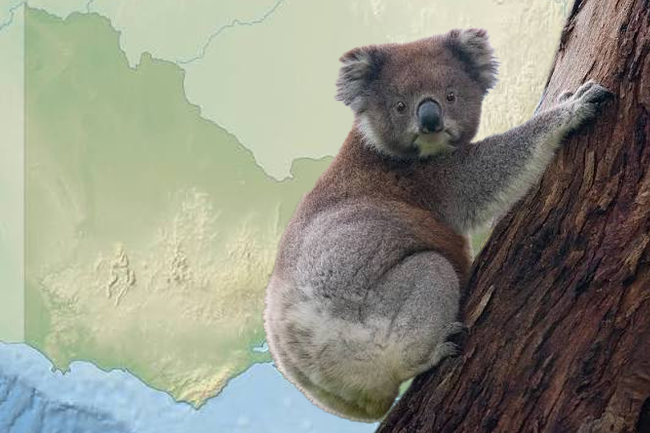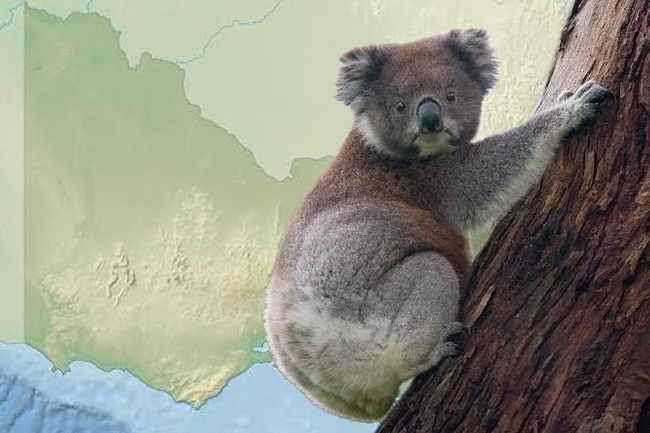
A long-awaited report on Victoria’s koalas has exposed alarming health problems and raised serious questions over population estimates and monitoring methods. Sue Arnold writes.
VICTORIA'S KOALA extinction policy is now well advanced.
If evidence of the apparent deliberate mismanagement of koalas in Australia needs exposure nationally and internationally, Victoria has it all in spades.
Since June 2025, the Victorian Government has ensured that a research paper entitled 'The status of Victoria’s Koala population: Surveys to estimate abundance, genetic diversity and koala health' has been kept from public scrutiny.
As a result of Victoria’s Animal Justice Party’s motion before Parliament demanding the research, which cost Victorian taxpayers approximately $850,000, it was released before Georgie Purcell, leader of the Party, was preparing to speak to the motion.
In this writer's opinion, the report can only be described as the Victorian Government’s “death by a thousand cuts” koala extinction plan.
The koala population estimate dropped from the previous 2020 estimate of approximately 413,000 koalas in native forest and woodland, plus almost 47,000 in eucalypt plantations, to 217,100 individuals in 2023 and 224,800 individuals in 2024, or 225,000 according to the Arthur Rylah Institute.
Several attempts to estimate the total population and distribution of koalas in Victoria have resulted in estimates ranging from 182,000 based on expert elicitation (Adams-Hosking et al, 2016) to 413,000 using survey data from multiple studies (Heard and Ramsey, 2020).
In 2025, the CSIRO National Koala Monitoring Program published the latest population estimate for the unlisted koala populations in Victoria and South Australia as between 303,000 and 381,000 individuals.
Exactly which number is relevant for which state is unclear, as no state-only estimate is made. Let’s go for an average of 342,000 Victorian and SA koalas.
Scientific research in SA identifies an estimated size of 25,733 to 30,435 for the koala population in the Mount Lofty Ranges, which represents about 10% of Australia's estimated total koala population.
CSIRO uses a data-driven population model built based on tens of thousands of data points spread across the species range.
In other words, another guestimate.
The 2025 report fails to document the mortality of koalas in the recent severe bushfires which swept the state in January and February. According to shelters and wildlife rescuers, many koalas were incinerated or died of injuries.
Media were not allowed to visit shelters without complicated approval from the Department of Energy, Environment and Climate Action (DEECA), which included long delays. Post the fires, the Allan-led Labor Government has not released surveys estimating koala losses.
The highly inflated koala population estimates used by CSIRO and state governments usually claim to reflect ‘updated, robust survey methodology’ with no population crashes. CSIRO's approach to its spectacular koala increases is ‘a refinement reflecting more data being available and a refinement of the modelling approach from previous NKMP estimates’.
Conservation organisations have heard the “updated survey methodology” song so often it's now bottom of the chart of lies and cover-ups.
The report indicates evidence of a very sick koala population.
Details of the health status of Victoria’s koalas make grim reading:
Our study raises concerns for the health of Victorian koalas. We found a higher-than-expected proportion of koalas from seven geographically distinct regions in a state of chronically poor health and welfare.
Clinical signs consistent with chronic ill-health were observed across all life stages, suggesting that multiple individual, environmental and demographic stressors may be contributing to prolonged physiological stress within these populations. Infectious diseases were widely detected, although there was no clear relationship between infection status and the expression of clinical signs of disease. Dental disease secondary to dental malocclusion was also frequently observed, suggesting that this may play a more significant role in poor health outcomes for koalas than previously thought.
Of the koalas examined, 37% had dental disease, and it occurred across all life stages and all sampled regions except Mallacoota. Moreover, koalas euthanised on welfare grounds were more likely to have dental disease.
If a koala can’t eat properly, the animal becomes emaciated and slowly dies of starvation.
The report fails to include the extent of diseases impacting Victorian koalas, which include anaemia, leukaemia-lymphoma, a raft of cancers including bone cancer, metastatic carcinoma, blood and mammary cancers. They suffer from acute respiratory illness, impaired lung function, twisting of the intestine causing anorexia, lethargy, abdominal distension and death.
Sarcoptic mange, causing intense itching, skin lesions, chlamydia, which causes infertility, wet bottom, eye diseases, blindness and incredible pain, retrovirus, fluorosis toxicity causing bone calcium to rot, teeth deteriorate so badly inhibiting ability to eat causing emaciation, starvation and death.
Habitat loss and degradation can increase physiological stress in koalas and may increase their susceptibility to disease.
Then there’s the mysterious disappearance from search engines of the 2020 Heard and Ramsay modelling of koala abundance across Victoria.
The 2020 research detailing population estimates methodology needs to be compared with the newly released 2025 research methodology. Without this information, the current research conclusions on numbers are questionable.
Both reports were undertaken by the Arthur Rylah Institute.
Fortunately, a copy of the 2020 study was retained by Australians for Animals Inc.
A completely different methodology has been used in the 2025 document, which relied partly on passive acoustic monitoring, with koalas detected at 64% of sites equipped with acoustic recorders, compared with 22% of sites surveyed using walked transects:
‘Koalas were detected on walked transects at 22% of sites and on 64% of sites that had acoustic recorders.’
Acoustic monitoring is of limited benefit in assessing koala numbers.
Dr Andrew Smith, in a recent paper focused on NSW Forestry Corporation's reliance on acoustic monitoring of koalas in logged forests, concluded:
These studies relied on an untested assumption that male and female koalas have similar habitat requirements and a similar response to logging (Law et al, 2018) justified reliance on male calls as an indicator of koala habitat quality based on an argument that male koala bellowing serves to avoid males and attract females, and therefore that “an increase in bellow rate likely reflects an increase in breeding activity in a population”.
Dr Smith’s conclusions are relevant for the latest Victorian methodology.
The Victorian Labor Government provided a $2.5 million grant to koala conservation after the report was released.
What’s a koala worth in Victoria?
The Victorian Government grant equates to approximately $11.98 per koala.
Sue Arnold is an IA columnist and freelance investigative journalist. You can follow Sue on Twitter @koalacrisis.
 This work is licensed under a Creative Commons Attribution-NonCommercial-NoDerivs 3.0 Australia License
Support independent journalism Subscribe to IA.


Related Articles
- Carbon credit offset scheme holds koala park to ransom
- Why are state and federal governments driving the koala to extinction?
- More than a thousand koalas shot in aerial operation
- NSW Government criminal policies ensuring koala extinction
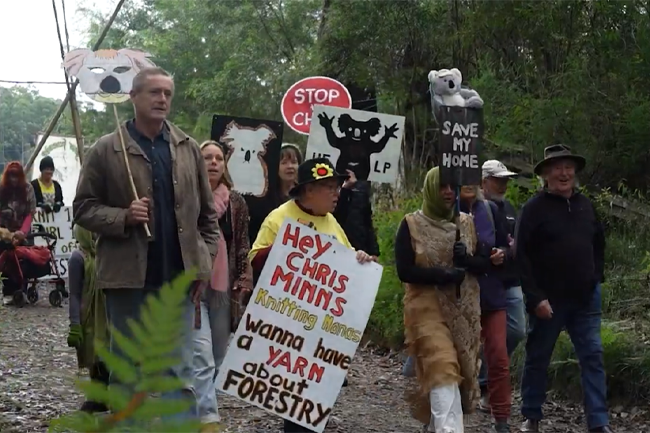
- Koalas continue to suffer under Chris Minns' NSW Government