
Applying the logic of domestic financial abuse to employers doesn’t require pretending a boardroom is a marriage; it asks a much sharper question: why do we treat financial secrecy, manufactured dependency, shifting rules and punitive exit costs as abuse in one part of Australian life, yet laud it in another?, writes Dr James Schuurmans-Stekhoven.
NOTHING ABOUT OUR current industrial arrangements are sacred. The Fair Work Act, enterprise bargaining, and the common law contract of employment are political artefacts – hobbled together by politicians and lobby groups in Canberra – not stone tablets carried down a mountain; not decreed by transcendent voices in burning bushes.
Australian domestic violence and coercive control statutes have spent years waking up to a basic truth: formal “consent” and theoretical “freedom to leave” are a joke when one party controls the money, the ledger, and the cost of walking out. There is no immutable law of physics protecting the corner office from that exact statutory yardstick.
Apply the legal mechanics of domestic financial abuse directly to Australian workplaces, and half of modern management suddenly looks less like “leadership” and more like psychopathy.
Unilateral control of resources and “commercial secrecy”
Australian family violence and coercive control laws treat financial starvation and secrecy – hoarding cash, restricting access to funds, and keeping the other person in the dark about what is actually happening – as classic economic abuse.
Run an employer through that same test. When management demands wage restraint, freezes pay, or slashes hours while weeping over “macro headwinds” and “cost pressures” yet locks the real ledger behind commercial-in-confidence walls – hiding true margins, executive bonuses, and related-party transfers – it is exercising unilateral control over economic reality.
Under a domestic abuse standard, pleading poverty while hiding the receipts isn’t noble stewardship; it’s financial gas-lighting. A corporate logo apparently makes all the difference.

Weaponising dependency and “AI transformation”
Domestic economic abuse statutes target conduct that strips a person of independent economic footing and makes survival conditional on keeping the peace.
In Australian workplaces, that playbook runs smoothly on rolling fixed-term contracts, casualisation, surprise roster shifts, and moving bonus goalposts.
Add the current AI transformation sermon – hinting every second week that the robots are sharpening their knives and only the most compliant high-agency loyalists will survive – and dependency gets turned into a survival reflex.
Nothing in the Fair Work Act makes that power imbalance eternal; it only reflects how politely Parliament has chosen to tip-toe around it.
When “fair work” looks like a paper tiger
Even the nominal guardrails of Australian workplace law – consultation clauses and adverse-action protections – look remarkably toothless against slow-drip AI transformation pressure.
Management can tick the box on formal “consultation” after the deck is already printed and the inevitability sermon delivered, treating genuine pushback as quaint obstructionism by the serfs.
Meanwhile, adverse-action rules struggle to police the subtler squeeze: quiet role redesigns, disappearing career tracks, cold-shouldered enterprise claims, or non-renewed contracts dressed up as “workflow modernisation” rather than a smoking-gun sacking.
When the law demands neat proof of malice while reality runs on ambient dread, the guardrails start looking like decorative ornaments.

A Family Court for C-suite fallout on kids
In family law, judges centre the “best interests of the child” when adult choices threaten a young person’s stability, housing, routine, or care.
Imagine hauling a CEO before a Family Court of Corporate Impact because a sudden restructuring wave, surprise hour cut, or eleventh-hour roster swap just blew up a working parent’s childcare and put a child’s home or schooling and peer relationships in jeopardy.
Under current orthodoxy, a kid’s stability is treated as an “externality” — a trifling side effect outside the firm’s balance sheet.
Funny how quickly executives drop the “we only hire workers, not families” dodge when recruiting talent with family-friendly slogans or boasting about community values in an annual report, right before dumping last-minute chaos onto households with zero say in the business model.
Moving goalposts, surveillance, and psychological pressure
Coercive control legislation doesn’t stop at bank balances; it looks at patterns of behaviour – intimidation, monitoring, shifting rules, and manufactured dread – that wear down a person’s room to breathe.
Bringing that exact diagnostic logic onto the shop floor and into the open-plan cubicle reveals parallel abuse, albeit subtle:
- Goalposts on wheels: Hitting the target only to have one’s KPIs adversely adjusted as a reward, or watching “productivity” get redefined mid-quarter so effort goes up while real pay slides down, mirrors the domestic routine where compliance never actually buys safety.
- Digital breath down your neck: Keystroke trackers, productivity scores, and AI-driven workflow monitoring turn routine work into continuous policing—making every sigh or pushback look like “underperformance” rather than a normal human boundary.
- Manufactured emergencies: Treating every restructuring wave or AI transformation deck as an existential apocalypse shuts down real argument and shames staff into swallowing unpaid hours to prove they aren’t Luddites “resisting change”.
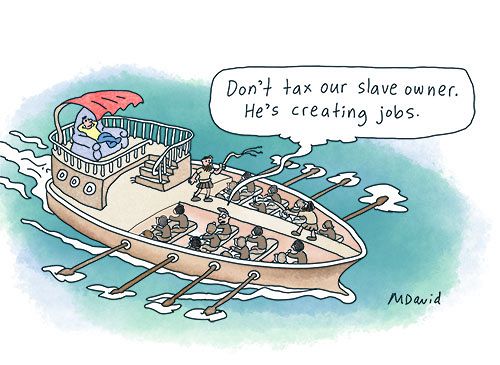
The “just quit” joke in a debt economy
Law and economics adore the tidy exit: if you don’t like the boss, just resign. Domestic abuse law has spent decades dismantling this nonsense when it comes to intimate relationships, fully recognising that housing, kids, debt, and nowhere to go turn “freedom to leave” into a trap.
In Australia’s property and cost-of-living grinder, walking out of a job when you have a mortgage, punishing rent, or household debt carries a brutal price tag — especially when the employer across the road is running the exact same script.
If domestic abuse law admits that steep exit costs hollow out free choice, pretending a heavily indebted worker’s right to quit is the end of the story isn’t economic wisdom; it’s wilful blindness.
The little pig refuses the lever
Recently, media commentators of all stripes have bemoaned Australia’s sluggish productivity as if workers simply forgot how to run. Most have conveniently left this uncoupled from the rising inequality. Yet the game-theory classic big pig, little pig explains it perfectly.
Imagine a shuttle pen where a lever at one end drops pellets at the other. The pen houses two pigs. The bigger, faster pig sprints down the corridor and inhales eighty per cent of the feed while the smaller pig starves.
Why on earth would any rational little pig waste calories sprinting back and forth pressing the lever to fatten up the bigger pig while getting scraps? Refusing to press the lever isn’t indolence — it’s cold strategic brilliance by a little pig that actually knows how to count pellets.

A workplace restrained by decency — and quietly thriving
Picture the Monday morning mood shift when a big-pig employer is legally barred from treating your livelihood like a hostage. No secret ledger locked away in a boardroom vault; no surprise roster blow-ups at 6 pm on a Thursday; no breathless AI transformation sermon warning that your job will evaporate by Friday unless you prove your undying devotion with another ten unpaid hours.
Instead, the books sit open on the table during pay talks, rosters arrive with enough notice to rearrange childcare without a spreadsheet and a prayer, and your actual KPIs aren’t ever-shifting like desert sands.
With their nervous systems no longer marinating in low-grade dread, people stop burning half their cognitive bandwidth scanning the horizon for traps and start putting that energy into actual craft.
A nurse, coder, warehouse hand, or policy analyst who isn’t bracing for arbitrary hour cuts or cleaning up after a half-baked algorithm can actually think, spot flaws early, take pride in the work, and go home with enough headspace left over to read to their kids.
Turns out when you stop squeezing people like lemons under a stopwatch and start binding employers to basic decency, the stress drains out of the room. When you treat people with respect, they start caring about their jobs and real, durable productivity returns on its own.
Nothing sacred about the status quo
Calling current workplace arrangements “market reality” confuses a socially-constructed legal compromise with the laws of gravity. Australian industrial law has been rewritten repeatedly whenever the public decided the balance of bargaining power had gone askew.
Applying the logic of domestic financial abuse – and the welfare of vulnerable children – to employers doesn’t require pretending a boardroom is a marriage; it asks a much sharper question: why do we treat financial secrecy, manufactured dependency, shifting rules, and punitive exit costs as abuse in one part of Australian life, yet laud it in another?
Surely it’s not just me who feels jarringly stressed and confused by this insidious hypocrisy: perhaps that’s the aim?
Dr James Schuurmans-Stekhoven is a psychologist, academic and multi-disciplinary researcher.
 This work is licensed under a Creative Commons Attribution-NonCommercial-NoDerivs 3.0 Australia License
Support independent journalism Subscribe to IA.


Related Articles
- Australia employment growth continues into mid-2026
- Australia’s economic data does not compute
- Let’s celebrate low unemployment and rising real wages
- The perils of being an 'intern' in a modern world
- Now is the time to reduce overlong working hours