The Democrats' sweeping midterm victory offers renewed hope, but deep divisions, economic hardship and Trump's remaining powers leave America's future uncertain. Sue Arnold writes.
THE U.S. MIDTERM election results created a huge national sigh of relief.
In spite of the many pundits who assured a very nervous public there would be a blue tsunami, it’s fair to say doubt was widespread. Sitting with friends on the night of 3 November watching the results was a mind-blowing experience as we watched the Trump regime unravel.
The results are inspiring. American democracy has made its voice heard; the people have spoken, loudly. When Mississippi voters delivered its first Black Democrat Senator in 150 years, there were gasps of incredulity.
Finally, a chance to be normal again. American normal. An opportunity to live regular lives that most Americans have lived for years with faith in the democratic process.
But will the extraordinary results providing the Democrats with substantial majorities in the Senate and Congress be enough to counter the Trump Administration’s insane policies for the next two years? Will the American public expect and judge the Democrats by their ability to make the desperately needed changes in the short space of two years?
The midterm results still give President Trump the power of veto. With 56 senators, the Democrats are four short of the number required to overcome any presidential veto. So much will depend on whether there are four Republican senators willing to cross the floor.
Meanwhile, major questions are piling up. Perhaps one of the most significant is the direction Democrats take once the new Congress is sworn in. Some in the party believe it’s essential to focus on addressing the mammoth list of corruption, criminality, health costs, affordability, housing, gas, Immigration and Customs Enforcement (I.C.E.) powers, the Iran and Ukraine wars, homelessness; the list is seemingly endless.
Corruption topped the list of voter concerns, crimes and shonky deals which must be investigated and exposed. Democrat leaders say they can do both.
Chaos is pursuing the blue victory. With a total aircraft shutdown, emails, banks, the National Security Agency (NSA) and other important financial and security agencies have been struck with electronic blackouts. All without any satisfactory explanations.
In San Francisco, homelessness has significantly increased. Caravans are parked wherever they are legally allowed to park. Downtown San Francisco has streets and streets of homeless people sleeping rough.
Many businesses have closed down. In some areas, closed shops dominate the streets. There’s less staff in the big stores and supermarkets.
One of the most poignant sights was the long queues of people with large black garbage bags full of collected used bottles, waiting to be reimbursed one cent per container — a real indication of the extent of financial hardship.
The day after the midterms, five people were arrested by I.C.E. in East Palo Alto, where I was staying. Locals are deeply concerned and horrified by the news that I.C.E. is now stationed outside prisons waiting to arrest those released having finished their sentences.
In San Mateo County, Faith in Action, an organisation set up by a Catholic priest in the 1970s, is active in the Bay Area. Volunteers from the Faith in Action Rapid Response team, created by the community, have distributed cards everywhere providing information and access to a rapid response hotline if someone is detained by I.C.E.
The team provides urgent legal support to the person, support at the immigration court, eviction issues, food and volunteers to make regular visits to impacted households. I was told of several people who are now too frightened to leave their houses, choosing to remain cloistered.
Friends in the county just informed me that another 12 people were arrested by I.C.E. three days ago, with three or four arrested outside prisons. This is an unprecedented number of arrests. Rapid Response teams believe the arrests so soon after the midterm Democrat victories are potentially a political swipe at Democrat Governor Gavin Newsom and his clever ways of making fun of Trump and his policies.
On the ground, as a visitor, it’s difficult to identify major changes. But once there’s the need to fill the car, buy food, go to a restaurant, see a movie or to try and find some way to get health care without paying a fortune, the economic problems become very evident.
In stark contrast to the household economic costs, it was impossible to ignore the building booms. Apartments, offices, huge urbanisation projects going up everywhere.
Australian tourism to the U.S. fell throughout 2025 and 2026. The Australian Bureau of Statistics (ABS) shows trips dropped 9% in 2025-2026 with declines of up to 8.5% during the 2026 FIFA World Cup.
According to The Australia Institute, only 16% of Australians consider ‘the U.S. as a close friend’.
As a long-term visitor to the U.S., the social, political and economic changes are subtle, their impact only being felt in certain areas — usually where poverty rules or in Washington DC, where it's all happening.
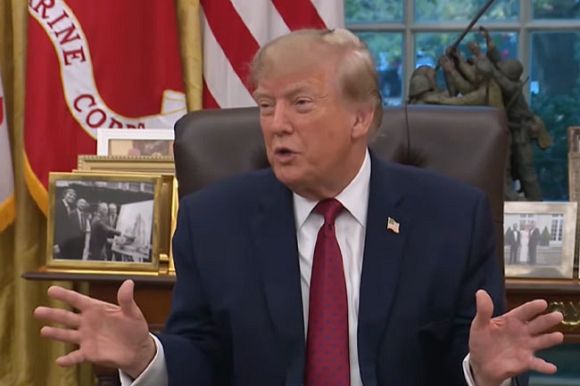
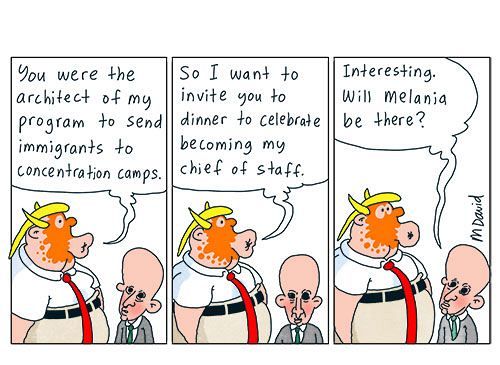
There’s a sense of a shift, a deep concern about the future, particularly the next two years as Trump retains his presidency. Many are horrified by the almost immediate appointment of Stephen Miller as the Chief of Staff, replacing Susie Wiles. Miller is well described as a Nazi, the shadow president and the driver of many appalling punishments and threats against those who oppose the Trump Administration.
At a community level, the divide between those who support Trump and Democrat voters is likely to remain a problem. The divisions experienced in families, communities and business are deep and unlikely to change.
Corruption is a massive issue. But given the sheer extent of the grift, it’s unlikely any judicial action resulting in imprisonment will happen in the next two years.
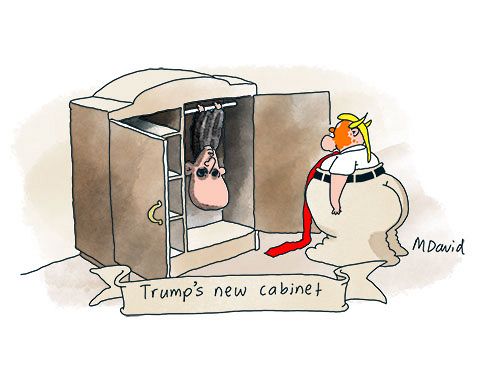
The U.S. justice system appears addicted to allowing endless delays. Attorney General Todd Blanche, together with other highly controversial members of Trump’s cabinet, can only be impeached in the next two years. The process of impeachment is slow and even with compelling evidence, Congress can’t sack existing heads of agencies.
For better or worse, the U.S. has changed. Just what kind of nation emerges from eight years of grift, unnecessary wars, reckless spending of public money, deepening ties with China and Russia, and incompetent agency heads is hard to predict.
But one prediction can be made. It’s going to take politicians of integrity and strong moral convictions to fix up this massive mess.
Sue Arnold is an IA columnist and freelance investigative journalist. You can follow Sue on Twitter @koalacrisis.
 This work is licensed under a Creative Commons Attribution-NonCommercial-NoDerivs 3.0 Australia License
Support independent journalism Subscribe to IA.


Related Articles
- After the midterms: The Trump hangover
- The race that stops the nation: Australia caught in Trump's political fallout
- Trump's assault on International Criminal Court sparks global backlash
- U.S. election result is not normal because Trump’s MAGA is not normal
- JEFF MCMULLEN: Trump's midterm humiliation signals democratic correction