A Federal Government controversial forest carbon scheme is raising fears that conservation is being sacrificed, particularly in NSW, for trade offsets, writes Sue Arnold.
THERE’S GROWING realisation among many activists that the Albanese Government is turning out to be one of the most anti-environmental Australian governments in recent history. In an extraordinary shift in environmental policies, the party once hailed as the most progressive in terms of the environment is now selling off nature.
At a time when global warming and biodiversity loss are threatening the continuation of life on Earth, according to the UN Environment Programme (UNEP), the Government is refusing to deal with environmental reality.
Instead, the Federal Government is focused on turning nature into a commodity. An environmental trading post destined to put millions in government pockets; at the same time, providing good propaganda value in asserting Australian governments are taking “decisive action” to abate carbon emissions.
The Federal Government's latest effort, known as the Improved Native Forest Management Method (INFM), allows state governments to earn Australian Carbon Credit Units (ACCUs) by voluntarily ceasing planned harvesting in defined areas of multiple-use public native forests that would otherwise be used for commercial forestry.
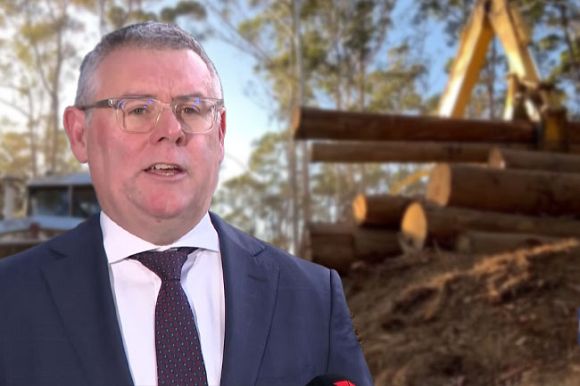
Put simply, the method allows large emitters to buy carbon credits from publicly owned native forests to claim they have “offset” their emissions.
Under the NSW Minns Labor Government, the development of the INFM method was prioritised in 2024, following advice from the Emissions Reduction Assurance Committee (ERAC). The NSW Department of Climate Change, Energy, the Environment and Water (DCCEEW) led method development.
First off, the carbon offset market ramp will be the public native forests that make up the Great Koala National Park (GKNP) and NSW public native forests.
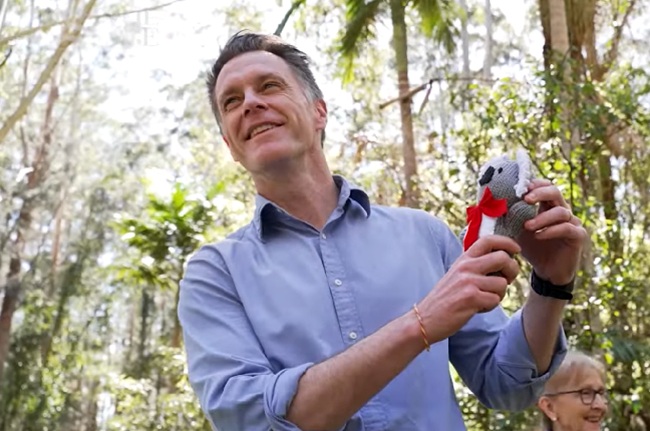
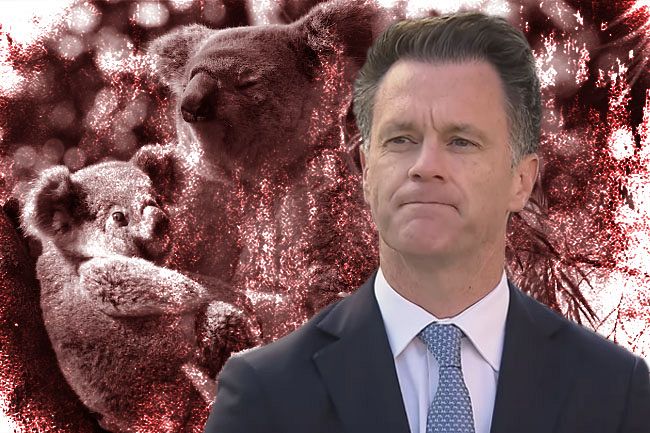
The stakes are high. The promised GKNP now depends on an ultimatum by NSW Labor Premier Chris Minns. Unless the park is used as an offset for carbon credits, there’ll be no gazetted park.
The Minns' Government’s ultimatum represents a massive broken promise by the Labor Party, a promise that goes back 11 years.
Richard Denniss, Executive Director of The Australia Institute, has called the Minns’ Government’s ultimatum over the Great Koala National Park “one of the biggest environmental frauds in Australia’s history”.
Denniss added:
“Setting up a park is going to be used to justify a bad idea. The credits are dodgy, there’s no way the NSW Government should be paid for setting up a park that it had already promised would be set up.”
There are deep divisions in the conservation movement over the INFM method. Some groups want the method to go ahead so the park can be gazetted. They see the only way to get the park is to agree to the park becoming a carbon offset.
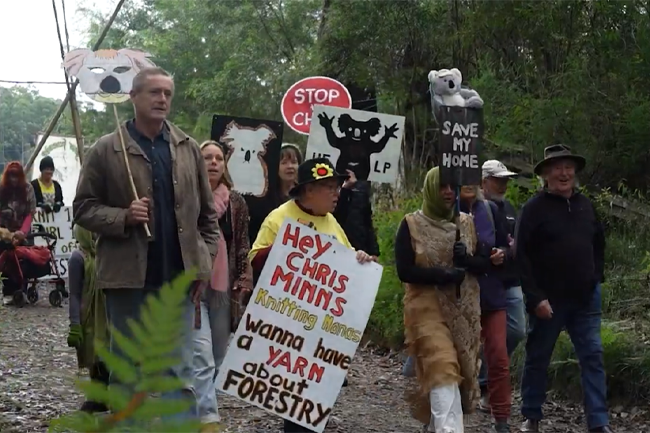
On the other side, activists who have protested, chained themselves to bulldozers, been arrested and gaoled, have one focus: End native forest logging.
Public support is overwhelming as poll after poll shows substantial backing to end forest logging.
Activists describe Minns’ decision to “pursue a carbon scam instead of honouring its election promise to create the park has resulted in approximately 10,000 hectares being logged in the 3.5 years since the government was elected”. Logging is ongoing.
Conservation organisations who oppose the scheme don’t mince words:
“The INFM method was conceived as a carbon scam and has been directly responsible for the failure to deliver the GKNP. It is a black box of bureaucratic processes which is designed to be totally impenetrable to civil society. There are no safeguards, because the proposed safe guards are theoretical and impossible to implement.”
Divisions are also present in the scientific community, with globally recognised forest ecologist Professor David Lindenmayer publicly supporting the INFM.
However, recently published studies demonstrate the INFM may have little value in the future as forests emit carbon instead of storing carbon as a result of climate impacts.
A major new study led by Western Sydney University demonstrates forests across Australia are losing trees at alarming rates ‘marking a continent-wide shift in vegetation dynamics in response to a rapidly warming climate’.

Distinguished Professor Belinda Medlyn, senior author of the study, said the increasing tree mortality rates point to growing stress in Australian forests:
A particular worry is that the forests’ ability to store carbon will decline. This has significant implications for Australia’s net carbon balance.
Forests worldwide absorb about one-third of human carbon dioxide emissions. If mortality continues to rise while growth stagnates, that buffering capacity will erode. Recent evidence from northern Australia’s tropical rainforests shows this process already unfolding, with the rainforests shifting from being net absorbers of carbon to net producers of carbon. This will weaken the planet’s ability to absorb emissions and amplify existing climate feedbacks, further narrowing the window for stabilising the global climate.
In a recent article in The Conversation, five scientists write a grim warning.
Nature is not doing well in Australia. Many unique mammals, birds and insects are struggling. Entire ecosystems are collapsing.
In response, the Federal Government signed a global pledge in 2022 to protect and restore nature. The global goal is to restore 30 per cent of degraded ecosystems. But Australia only proposes to have “priority degraded areas […] under effective restoration by 2030”. The terms are not defined, no 30 per cent target is included, and there is no method proposed to measure success.
The NSW INFM is projected to be followed by other states with active logging companies.
Meanwhile, the Albanese Government continues to approve major fossil fuel projects having rejected calls for a formal climate trigger in its overhaul of the Environment Protection & Biodiversity Conservation Act, arguing that greenhouse gas emissions are already managed via mechanisms like the Safeguard Mechanism.

The Australian reported that Resources Minister Madeleine King had warned that ‘Labor’s controversial environmental approval laws were crucial to secure the Albanese Government’s critical minerals deal with the U.S.’
Globally, humanity is in the midst of the Sixth Great Extinction. Australian governments are determined to ignore irreversible threats to human survival, ensuring a dearth of state and federal legislation on climate change impacts, or any identification of climate refuges for biodiversity. The scales don’t balance by introducing a method that fails to deal with environmental reality. Offsets make no sense logically and the evidence demonstrates many have resulted in major scams.
Governments hold many natural assets – including national parks, public forests, rivers and biodiversity – in trust for present and future generations. If those assets come to be valued primarily through their capacity to generate tradable credits, it raises a broader constitutional question: Does the State remain a trustee of essential ecological life-support systems, or does it become a market operator trading attributes of those systems?
That question extends well beyond carbon policy. It goes to the fundamental role of government in safeguarding Australia’s ecological life-support systems for present and future generations. Two essential questions must be asked.
Are native forests primarily ecological life-support systems?
Or are they economic assets whose protection depends on participation in environmental markets?

Sue Arnold is an IA columnist and freelance investigative journalist. You can follow Sue on Twitter @koalacrisis.
 This work is licensed under a Creative Commons Attribution-NonCommercial-NoDerivs 3.0 Australia License
Support independent journalism Subscribe to IA.


Related Articles
- One against six in Labor’s battle for reform
- Victoria’s wildlife pays the price for Labor’s bushfire failures
- Pressure mounts on Albanese Government over failure to sign nuclear ban Treaty
- Chalmers urged to solve a productivity problem that may not exist
- Jobs, inflation and luxury spending all keep setting records