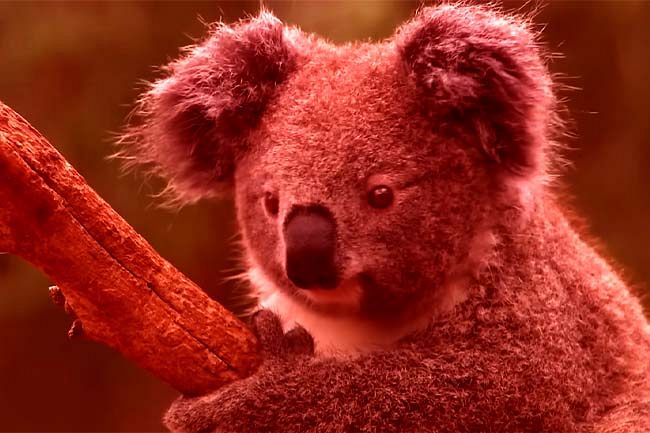
As habitat destruction, disease and climate change threaten koalas with extinction, successive Australian governments continue to fail the iconic species, writes Sue Arnold.
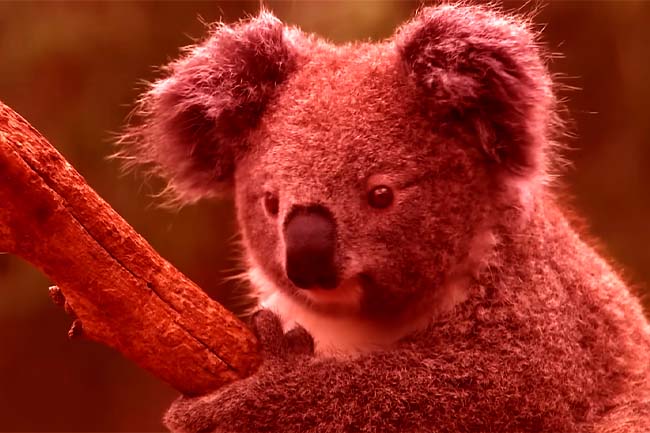
SUFFERING FROM massive habitat loss, a tsunami of diseases, climate change impacts and government neglect, the dire situation facing the species is becoming more evident every day.
Koalas are found wandering main streets, on buses, on suburban roads and backyards, climbing telegraph poles, clinging to fence posts, and in railway stations.
Climate change impacts are shaping up to deliver the killer blow.
Over the last million years, four koala species roamed Australia. Now there’s only one species left, hanging by a thread as governments’ policies of extinction continue to eradicate habitat.
Murdoch University research indicates:
‘Koalas are tightly bound to forests. When those forests shrink fast enough, even adaptable mammals can vanish from entire regions. In a warming, drying Australia, understanding how past climate shifts transformed habitats helps us anticipate the risks facing the koalas that remain today.’
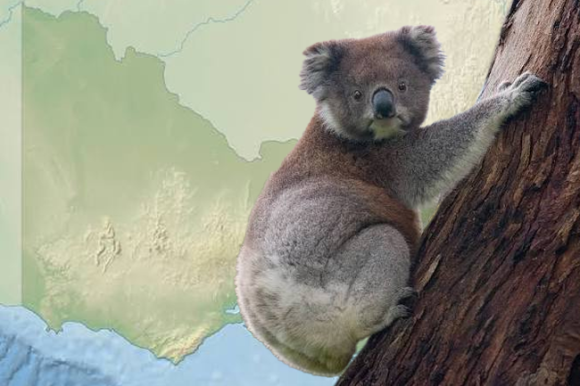
Australian authorities have declined to create any climate refuges or specific legislation for koalas despite a designation in 2009 by the International Union for Conservation of Nature (IUCN) identifying koalas as one of ten global species likely to be severely impacted by climate change.
Scientists advising the globally recognised environmental organisation pointed out koalas could die of starvation and thirst as a result of eucalypts drying out in a hot, dry climate.
In the catastrophic 2019-2020 fires, which scientists say were caused by climate impacts, the World Wide Fund for Nature (WWF) estimated approximately 60,000 koalas were incinerated.
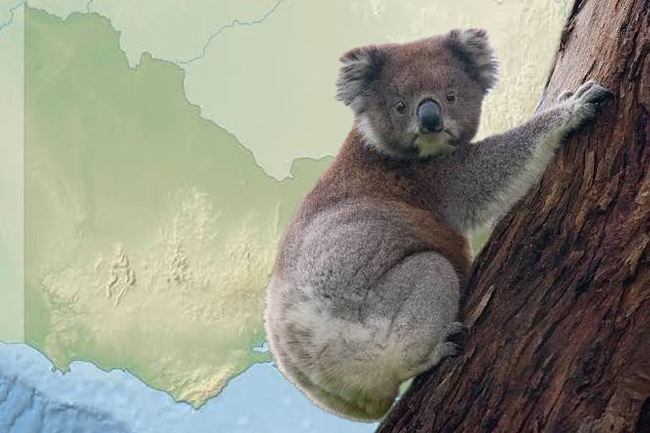
A 2026 review of Victorian koalas cites earlier research projecting that warmer and drier conditions will cause a significant eastward and southward contraction of the koala's climatically suitable habitat.
The policies of extinction being pursued by governments of both major political parties, corporate interests, forestry, fossil fuel projects, major urbanisation developments and political parties, facilitated by mainstream media censoring any exposure of the obscene lack of species protection, are taking a deadly toll.
More recently, the Victorian Government, as a result of a motion by the Animal Justice Party, released a statewide koala estimate which has been withheld since June 2025. The study demonstrated the state’s koala population had dropped by over 50%.
The Victorian Government’s response to the catastrophic collapse? A $2.5 million grant. No response to the population losses from the Albanese Government.
Chronically sick koalas highlighted in the 2025 Victorian research make for sobering reading. Koalas are suffering from anaemia, leukaemia, lymphoma and a raft of cancers, including bone cancer, metastatic carcinoma, blood cancers and mammary cancer. They suffer from acute respiratory illness, impaired lung function and twisting of the intestine, which can cause anorexia, lethargy, abdominal distension and death.
Add sarcoptic mange, causing intense itching and skin lesions; chlamydia, which can cause infertility, “wet bottom”, eye disease, blindness and severe pain; and koala retrovirus (KoRV). Fluorosis, caused by excessive fluoride exposure, can damage bones and teeth, potentially impairing the ability to eat and leading to emaciation, starvation and death.
Diseases are the result of lack of healthy habitat causing stress and major depression of immune systems.
Federal governments of both major political parties have consistently refused to list Victorian koalas as endangered under the Environment Protection and Biodiversity Conservation (EPBC) Act. The usual response is that a large Victorian population was a guarantee of the koalas’ survival and in no need of upgrading. An argument that doesn’t stack up scientifically.
The conservation status of New South Wales, Queensland and A.C.T. koalas was upgraded to endangered in 2022 by then Minister for the Environment Sussan Ley. However, endangered listing has proved meaningless, resulting in no upgraded protection of koalas or their habitats.
Investigations into the threats facing koalas in other states provides further evidence of government negligence.
An analysis by the Australian Conservation Foundation revealed that between 2011 and 2023, over 2.25 million hectares of likely koala habitat in Queensland and New South Wales were cleared without any federal environmental assessment under the EPBC Act.
Total habitat destroyed over that period reached 2,295,134 hectares (an area more than twice the size of Greater Melbourne). Of that, 98.3% bypassed federal scrutiny.
The Queensland Conservation Council says scientists predict by 2030 Queensland could lose up to 78% of suitable koala habitat:
‘The east coast of Queensland – where koalas may retreat as a climate refuge – is under intense development pressure, with places like the Redlands “Koala Coast” seeing rapid loss of critical corridors.’
The Council claims Queensland continues to be the deforestation capital of Australia with over 330,000 hectares of forest and woodland bulldozed each year.
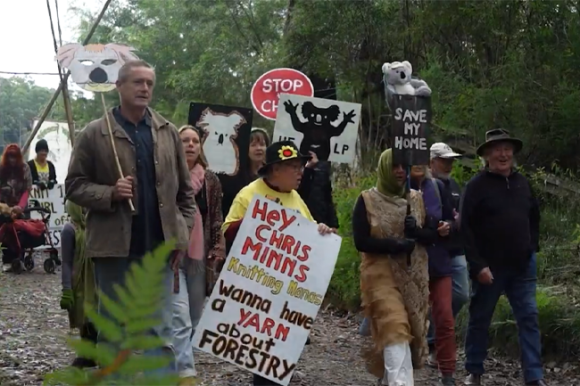
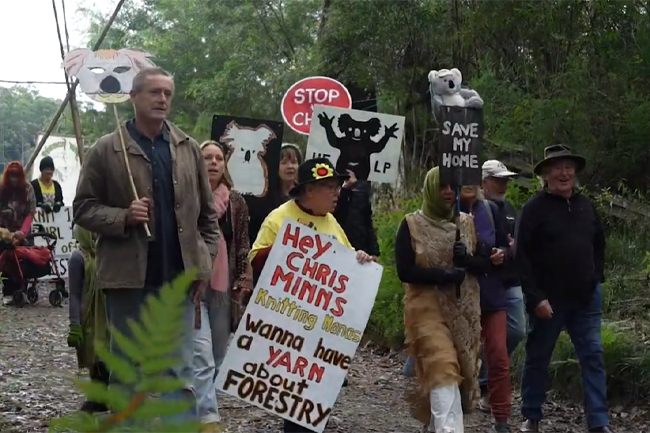
Under the NSW Minns Labor Government and previous Coalition governments, koala conservation consisted of approvals of ongoing destruction of the primary koala habitats, native forests.
After 15 years of promises to establish a Great Koala National Park (with car rallies), Premier Minns agreed to legislate the park but only on the condition that the park could be used as a carbon credit offset. A decision which has split the environmental movement between those who say the park’s forests must be saved for their own sake and those who want the park established in spite of the carbon credit offset conditions, which will be used as offsets for future major projects’ carbon emissions.
Ongoing fossil fuel project approvals in koala habitat are one problem. Massive urbanisation projects in south-west Sydney are creating major habitat losses.
Research commissioned by the Sydney Basin Koala Network and conducted by ecological consultancy Biolink indicates that vehicle strikes affected between 37% and 62% of the koala population in the Campbelltown local government area between 2019 and 2024. Ecologists warn that vehicle strike rates exceeding 3% annually can trigger population collapse, yet local corridors are sustaining hit rates of 10% or higher.
In spite of evidence of catastrophic habitat declines and koala losses, with thousands of hectares of native forests suffering from dieback, the response by state and federal governments has been to legislate to weaken current ineffectual legal protection.
The Queensland Government is moving forward with legislation that will prohibit public challenges to approvals for fossil fuel projects on public and private land.
Victoria’s wildlife legislation is the weakest in the country and incapable of protecting koalas or their habitats.
NSW and the Federal Labor governments are moving ahead with a new regional forest agreement which would provide for blanket approval of all harvest plans, thus removing options to challenge approvals of individual forest compartments.
With a super El Niño looming, the lack of any policies for adequate protection or refuges is compelling evidence of a political rejection of environmental reality.
Public outrage continues to be ignored.
Sue Arnold is an IA columnist and freelance investigative journalist. You can follow Sue on Twitter @koalacrisis.
 This work is licensed under a Creative Commons Attribution-NonCommercial-NoDerivs 3.0 Australia License
Support independent journalism Subscribe to IA.


Related Articles
- Victoria’s koala crisis hidden behind questionable numbers
- Carbon credit offset scheme holds koala park to ransom
- Why are state and federal governments driving the koala to extinction?
- More than a thousand koalas shot in aerial operation
- NSW Government criminal policies ensuring koala extinction