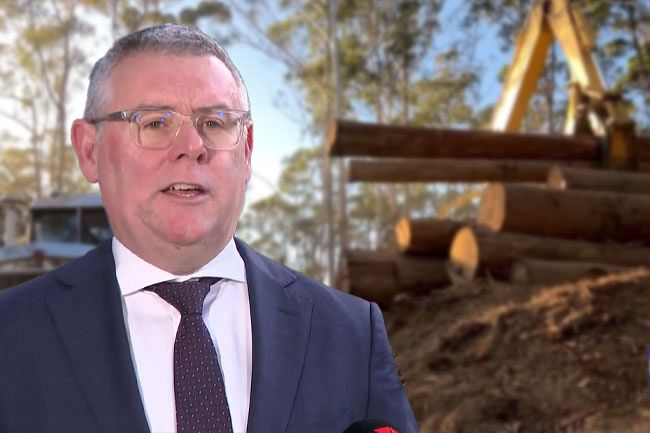
New environmental offset rules, weak oversight and bureaucratic complexity are accelerating habitat loss while governments claim to be protecting Australia's wildlife, writes Sue Arnold.
AUSTRALIA IS AT an environmental crossroads. The Albanese Government is moving towards the adoption of a new draft environmental offsets standard and draft regulations which will decide the fate of Australia’s wildlife.
The changes are substantial, confusing, time-consuming and severely weaken existing environmental protection, which cannot be described as effective. The Government wages war against any opposition using lengthy, complex papers, draft strategies, charts, online workshops, questionable research, ensuring limited responses.
In fact, the verbosity of the Federal Government is shaping up as a national alternative to sleeping pills. This is the perfect response for the powers that currently drive this country.
A major tactic is to limit any opposition with a tsunami of principles, themes, outcomes, offsets, recommendations, guidelines and the creation of endless committees, which all boil down to potentially the most significant destruction of the Australian environment by any government in the last 50 years.
Let’s take biodiversity offsets. To date, no one in government has been able to explain how paying mega dollars as an offset for the environmental damage a project will cause somehow produces a positive impact elsewhere.
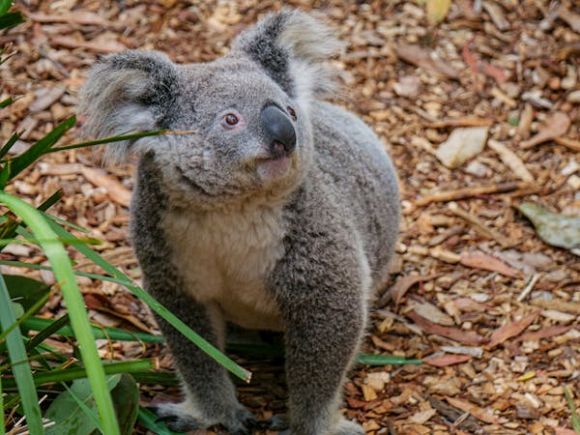
Once a habitat is destroyed, it's destroyed. Described by Environmental Justice as a “pay to destroy” scheme. How do you fix somewhere else by destroying what existed?
Environmental Advocacy in Central Queensland (EnvA) director Dr Coral Rowston describes the standard as ‘a licence to destroy nature’:
EnvA is particularly concerned about provisions that would allow proponents to pay into offset funds when suitable offsets cannot be secured.
“Damage and destruction of nationally important environmental values should not be for sale,” Dr Rowston said.
“Offsets are often presented as a solution, but in reality, they frequently fail to replace the habitat, ecological connectivity and ecosystem functions that are permanently lost when development proceeds.”
“Australia’s biodiversity continues to decline despite more than a decade of offset policies operating across the country,” Dr Rowston said.
According to EnvA, Queensland provides alarming evidence of the failure of biodiversity offsets.
“Ninety per cent of offset obligations have been discharged through financial payments. Developers are overwhelmingly choosing to write a cheque. This is not conservation — it’s a financial transaction,” said Dr Rowston.
The Queensland Government has more than $129 million in the offsets account, unspent as habitat continues to be cleared.
The alarming use of offsets by governments rose to “top of the political pops” with the development of the one-stop shop for environmental approvals. Driven by the Abbott Coalition Government in 2013, both Prime Minister Tony Abbott and Environment Minister Greg Hunt enthusiastically adopted the new assessment process.

Under the changes, states take on Commonwealth environmental assessment powers including consideration of applications under state and federal legislation through bilateral agreements.
Any legal challenge to projects approved by the bilateral agreement is an expensive undertaking.
Under the new draft standard, decision makers are not specifically required to consider climate change emissions when approving projects.
One of the best examples of the Albanese environmental circus is the Community Advisory Committee (CAC) established in 2023 under the provisions of the National Recovery Plan for the Koala 2022.
A national recovery team, representative of the diversity of those engaged with conservation for the listed koala, will be the nucleus of recovery efforts. It will monitor implementation progress, share and review information, and identify funding opportunities. The recovery team will be supported by an Expert Technical Advisory Committee, Community Advisory Committee, along with Commonwealth and state and territory governments.
A CAC which will have representation of the wide range of groups with an interest in koala conservation, welfare and rehabilitation, and interested industry groups to disseminate and share information.
Under Strategy 2 the CAC is assisted by ‘strong governance’ and the role includes:
‘Develop active communication, education and extension or outreach strategies for businesses (developers, industries and rural land-owners’ enterprises) aimed at koala habitat protection...’
The 2023 Implementation Pathway, Theme 2, briefly mentions the CAC:
‘Form recovery team subgroups with expert advisors to provide guidance to the National Koala Recovery Team, including a Community Advisory Committee to ensure inclusivity and community involvement in the recovery effort.’
In late 2022, the Federal Government called for expressions of interest (EOI) for the CAC. The response numbered over 78 with a mix of local government, industry, NGOs and care groups — a recipe for conflicts of interest.

Since the appointments to CAC were made in March 2023, only three meetings have been held. There are no details available on the Federal Government’s website providing the names of organisations involved in CAC.
The Annual Report 2025 of the National Koala Recovery Plan details the following member organisations:
Community Advisory Committee membership drawn from the following categories (77 organisations in total):
- Landcare
- Wildlife hospitals
- Koala advocacy organisations
- Research organisations
- Local councils
- Environmental professionals and consultants
- Farming representative groups
- Wildlife care
- Zoos
There are no minutes, no agendas. Communication has been infrequent and of limited relevance to the recovery plan implementation, a revolving door of coordinators,
Dr Rowston sent a formal letter on behalf of CAC members to Environment Minister Murray Watt in early June pointing out that there had been no formal meeting since November 2024:
‘Information provided to CAC on recovery plan implementation has been limited to high levels summaries, vague descriptions of “some progress” or “limited progress” with any detail on actions undertaken or outcomes achieved.’
The 2025 annual report makes no mention of forestry, major urbanisation, fossil fuel projects and infrastructure. Virtually all the objectives have scored ‘some progress’.
Recovery team membership is made up from state and federal governments with one only NGO, WWF Australia.
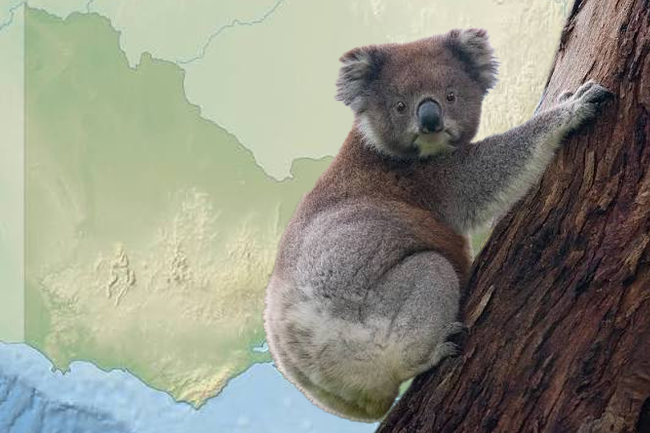
Koalas are an umbrella species for coastal forest ecosystems. The failure of the national recovery plan and its attachments to address the catastrophic loss of habitat with urgent recommendations to protect remaining habitat is scandalous.
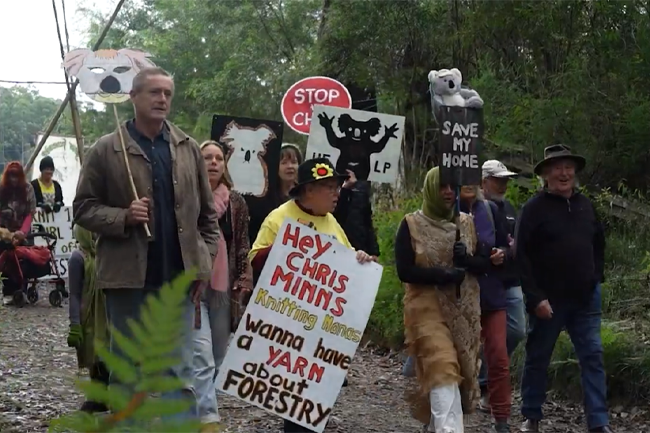
Environmental Justice Victoria (EJ) has sounded a further alarm for koalas. Although the Regional Forest Agreements environmental exemptions (which denied protection for listed endangered species) is coming to an end, EJ believes ‘there’s a real risk logging companies are pushing government to replace the exemption with new loopholes that allow native forest logging to continue — essentially becoming RFA exemption 2.0’.

Bruce Lindsay, a senior specialist lawyer at EJ, sums up the future path outlined by the Federal Government as ‘smoke and mirrors’.
Last week’s Budget gives some insight into how the Federal Government intends to regulate logging of native forests going forward, setting aside millions in public funds to “progress a landscape-scale approval pathway for jurisdictions with RFAs”. This signals the government is planning for native forest logging to continue.
...it should be explained that logging of native forests is an activity that has proved, over decades, to be an ecological travesty, a legal train-wreck and an economic basket-case, which is to say an industry producing large-scale environmental destruction at vast cost to taxpayers, often incapable of proceeding lawfully despite very favourable political protection.
The icing on the deadly environmental cake being cooked by the federal and state governments will be exposed on Four Corners, Monday 22 June, when EJ will release their new report: Following the Money: the unfinished transition away from native forest logging.
The report examines where claims of $1.5 billion in public spending linked to Victoria’s transition away from native forest logging actually went and asks: Did the transition deliver what the public was promised?
After a massive injection of cash, why are Victorian mills still piled high with timber from native forests — and why do Victorian forests still lack permanent legal protection?
What is abundantly clear from the mountain of evidence is a grim, frightening future for Australia’s environment and iconic wildlife. Many environmental scientists and conservation organisations are sounding the alarm bells loudly with zero political response.
There’s never been a more urgent need for a political party with a full-time focus on the disastrous short and long-term environmentally destructive plans governments are attempting to put in place, thus denying this ancient continent’s environment and Australia’s economy a healthy future.
Political parties and governments ignore the growing national protest over their extinction-focused policies at their peril.
Something stinks in Canberra.
Sue Arnold is an IA columnist and freelance investigative journalist. You can follow Sue on Twitter @koalacrisis.
 This work is licensed under a Creative Commons Attribution-NonCommercial-NoDerivs 3.0 Australia License
Support independent journalism Subscribe to IA.