On a historic night in Tehran, almost half a century ago, Jeff McMullen witnessed the inability of leaders to fully grasp the treacherous paths of alliances and armed conflicts.
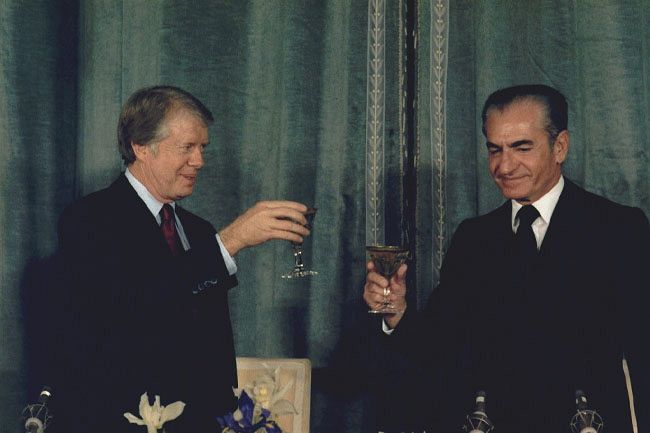
DECEMBER 31, 1977. In Tehran’s Royal Niavaran Palace, Shah Mohammad Reza Pahlavi was hosting “staunch U.S. ally”, President Jimmy Carter, in the latter’s first year in office.
As they clinked glasses in an optimistic New Year’s Eve toast, I will never forget Carter’s words:
“Iran is an island of stability in one of the most troubled areas of the world. This is a great tribute to you, Your Majesty, and to your leadership and to the respect and admiration and love which your people give you.”
On assignment for the ABC’s Four Corners with veteran combat cameraman David Brill, we were the only Australian witnesses to the supreme irony of that historic toast.
That very evening, as the White House Press Corps filed stories about Carter’s crusade for peace in the Middle East and how thousands of Iranian citizens lined Tehran’s streets to welcome the American leader, I took a long walk in the darkened city.
I ran into a mob of angry Iranian students. They were chanting “Death to America” and “Death to the Shah”. These early sparks of the Iranian Revolution caught fire in 1978.
The Pahlavi dynasty fell just a year later as the Shah fled first to Egypt, then to the U.S. for cancer treatment. The last I saw of Mohammed Reza Pahlavi, he was in exile, watched by bodyguards as he swam alone at a beach on Paradise Island in the Bahamas.
Decades earlier, both the CIA and MI6 played major roles in installing the Shah in Iran’s 1953 coup d’etat. This was aimed at regaining Western control of oil interests that had been nationalised by the toppled Prime Minister, Mohammad Mosaddegh.
The treachery replete in great power rivalries, the endless thirst for oil and the contest for strategic leverage in the Middle East run in a very long and bloody thread through so much history until today.
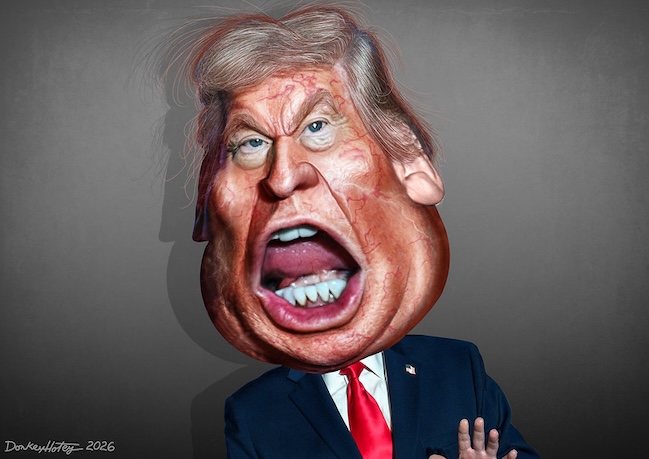
U.S. President Donald Trump and his family have struck lucrative deals with Saudi Arabian investors as well as with a member of the royal family of the United Arab Emirates. How the chips fall on all speculative investments during wartime will depend on who controls these lands when the fighting is done.
Far more worrying than Trump’s crypto or golf course deals, there is another grim irony.
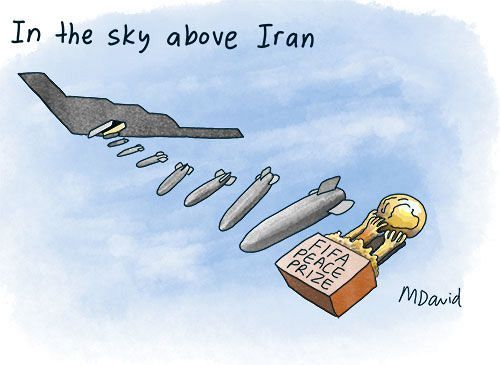
One of the multiple explanations given for this week’s attack by the U.S. and Israel is Iran’s secretive designs on accruing enough nuclear material and missiles to obliterate Israelis and other enemies.
Despite the failure of President Trump and his Secretary of State, Marco Rubio, to come up with a coherent story to justify this Iranian war, please someone remind them how it was the United States that first provided Iran with a nuclear reactor.
Another Republican President, Richard Nixon, and his Secretary of State, Henry Kissinger, spent the 1970s selling advanced weaponry to the Shah of Iran as the perceived defender of U.S. interests in the Persian Gulf.

The U.S. relationship with Iran fell apart disastrously after Ayatollah Khomeini’s revolutionaries brazenly captured 66 hostages and held 52 of them for 444 days.
Each night on American television, I watched their anchormen remind a superpower of this humiliation.
Along with a failed U.S. military rescue attempt, Iran’s successful psychological warfare waged against the “Great Satan” helped bring about the defeat of President Carter in the 1980 Election.
Then followed yet another tragic chapter: the slaughter of some 500,000 Iranian and Iraqi troops in their neighbourhood war of 1980-1988.
Look back and we can clearly understand how this pointless loss of so many lives, many of them mere youths, simply exhausted both Middle Eastern nations. The savage fighting depleted so many resources and held back development for decades. That war also created massive instability, just as we are seeing today.
In the 1980s, Saddam Hussein’s Sunni forces had used chemical agents in their ruthless battle with Iran’s Shia troops. This drove the Ayatollah to unleash terrorist movements in many places with the likes of Hamas, Palestine Islamic Jihad, the Yemenite Houthi movement and Shi’ite militants in Iraq and Syria.
These patterns of history with violence spreading unpredictably have not been grasped by Trump and others who think wars can be done and dusted quickly.
Before surrendering to despair over today’s lack of far-sighted leadership, remember how some much-maligned men once seized limited opportunities to grasp peace.
It was that same hapless, unappreciated American President, Jimmy Carter, who relentlessly pursued a historic peace agreement between two of the Middle East’s staunchest enemies.
Israel’s Prime Minister, Menachem Begin, and Egypt’s President, Anwar El Sadat, had been bloodied in their own version of “forever wars”.

Then along came that quietly spoken and well-read Jimmy Carter — striking such a contrast to Trump’s bombastic and frequently unhinged style today.
Carter had served in the U.S. Navy. He was trained in nuclear-powered submarines that could be armed with nuclear weapons. This man knew something about the worst-case scenarios in a Middle East conflict involving Israel, a nuclear-armed nation.
In a tactful decision, Carter took Begin and Sadat to the fields of Gettysburg, Pennsylvania, where one of the most terrible slaughters occurred during America’s bloodiest war.
Carter told his two Middle Eastern guests that at least 600,000 Americans had died in their Civil War, so he understood how much Israelis and Egyptians had invested and lost in four devastating conflicts in just 25 years.
My Four Corners film (now half a century old) was simply titled Carter’s Crusade. It showed Air Force One touching down in Egypt near the Aswan Dam so Carter could hold a crucial discussion with President Sadat. This was a very high-risk encounter for Sadat, as so many Arabs violently opposed his negotiating with Israel.
Deeply fatalistic and understandably mistrustful of historic enemies, Sadat went to Jerusalem and stood before enemies he had faced on the battlefield.
Begin, hailed both as an Israeli “freedom fighter” and an original terrorist, similarly concluded it was wisest now to give peace a chance.
The Camp David Peace Agreement ended a three-decade-long state of war between the two most bitter enemies on that blood-stained desert. The treaty holds today, although it was never followed by a just settlement of the conflict between Israelis and Palestinians.
Menachem Begin will be remembered in history as a peacemaker, as well as a man who fought for his people’s survival. The great Anwar El Sadat, as he had predicted, tragically gave his life for peace, cut down by an assassin in his own land. Jimmy Carter lived to 100 years, longer than any American president in history.
Three truly wise men. We need more like them today — men who understand war and dare to become peacemakers.
Dr Jeff McMullen AM is a journalist, author and filmmaker known for his reporting and advocacy for 60 years. McMullen has been a foreign correspondent for Australian Broadcasting Corporation, reporter for Four Corners and Sixty Minutes, anchor of the 33-part issue series on ABC Television, Difference of Opinion and director of independent documentaries. He was awarded the United Nations Media Peace Prize for his trilogy of hour-long documentaries about conflicts in Central America.
 This work is licensed under a Creative Commons Attribution-NonCommercial-NoDerivs 3.0 Australia License
Support independent journalism Subscribe to IA.


Related Articles
- Operation Outlaw: Iran apologists and the assault on international law
- How Iran’s regime weaponised religion
- Iranian expulsion a theatrical distraction from Palestinian statehood move
- Australia’s Iran response demonstrates our love for double standards
- Trump is using Iran as a distraction