The post-budget cries of class warfare, Dr Jeff McMullen writes, miss the reality of the poverty in our midst.
AUSTRALIA'S INTERGENERATIONAL INEQUALITY and deep-set poverty trap cannot be cured by a single government budget.
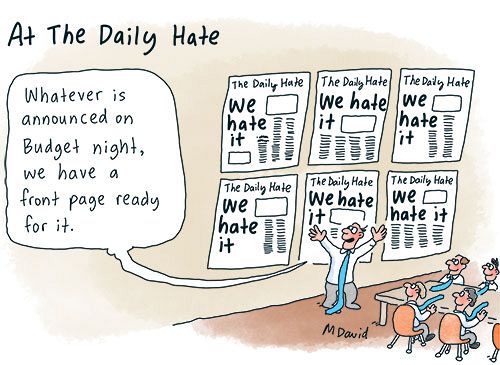
Reforms to three areas of the economy – capital gains tax, negative gearing of investment properties and sheltering of massive wealth in discretionary trusts – are commendable first steps taken in Federal Treasurer, Dr Jim Chalmers’ "fair go" Budget.
The broader challenge in nation-building is to bring improvements to the lives of Australians across every part of our society.
Australia’s alarming rise in inequality in the 21st Century has been principally a result of Baby Boomers benefiting from light taxation of their speculative wealth-generation relative to income tax.
Boomers invested in multiple properties have no legitimate reason to complain when the grandfathering provisions of the Chalmers Budget preserve their decades of golden gain and their own comfortable homes.
Younger Australians paying crippling rents rightfully resent that my generation, imbued with a righteous fixation on neo-liberal wealth creation, has failed to consider the millions of people doing it tough. Younger Australians are also at a greater disadvantage in trying to secure social housing.
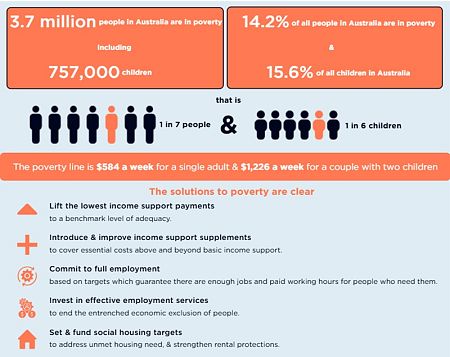
While there are many ways to measure poverty, the standard of 50 per cent of median income, other than housing cost, puts some 3.7 million Australians (14.2 per cent) below the poverty line.
Disturbingly, in a nation as wealthy as ours, how do we still see an estimated 1 in 6 children, about 757,000 young ones, trapped in misery?
If you doubt these high numbers, here is a simple test: take a walk from Parliament House in every one of our capital cities and you will find homeless people on the streets. Others sleep in cars or camp in parks.
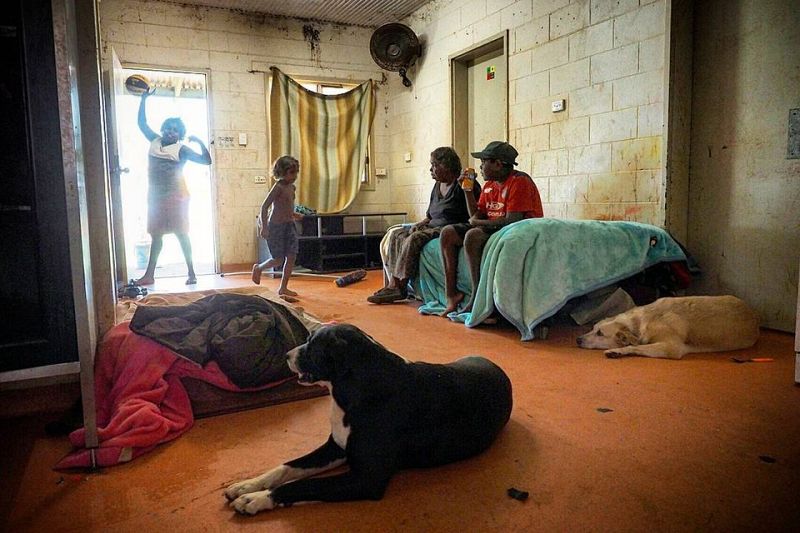
In Darwin, the ‘Long Grassers’ are transient people who turn to sleeping under the stars because of their grossly overcrowded houses on the fringes of town and in the remote communities.
The "Australian Dream" of owning a home is absurdly out of reach for these fellow citizens and millions of other non-Indigenous Australians whose daily thoughts are of safety and survival.
In the "Lucky Country", whether you have a decent roof over your head heavily influences whether you will fall into deep poverty.
Since the COVID pandemic, poverty and homelessness have risen according to a variety of sobering studies by the Australian Council of Social Service (ACOSS), Homelessness Australia and the National Aboriginal and Torres Strait Islander Housing Association (NATSIHA).
Homelessness Australia CEO Kate Colvin has warned repeatedly:
This crisis is out of control. Homelessness isn’t just a housing issue; it’s a health issue, an education issue, and a justice issue. You can’t access healthcare without a stable address. Children can’t consistently attend school if they don’t know where they will sleep that night. And without secure housing, our people are more likely to be criminalised simply for surviving.
Despite such warnings, recent indignant headlines and outraged commentary in The Australian newspaper have characterised scenes of poverty in the town camps around Alice Springs as 'unthinkable anywhere else in Australia'.
As a grandfather and father of two adult children, let me say that when almost one-third of Australian children experiencing homelessness and deep poverty are Aboriginal and Torres Strait Islander children, clearly, we have ignored some children in some families.
Human aspiration, generation of wealth and the desire for what we call the comforts of home are indeed a near-universal longing. To achieve any semblance of equality in Australia, we urgently need greater ambition, creative ideas and new energy for First Nations building.
As Patrick Dodson, a wise and compassionate Yawuru man and former Federal Minister for Indigenous Australians, told me 25 years ago:
“Only the federal government has the wherewithal to build enough houses fast enough to put a roof over the head of all Australian families.”
Dr Jeff McMullen AM is a journalist, author and filmmaker known for his reporting and advocacy for 60 years. McMullen has been a foreign correspondent for Australian Broadcasting Corporation, reporter for Four Corners and Sixty Minutes, anchor of the 33-part issue series on ABC Television, Difference of Opinion and director of independent documentaries. He was awarded the United Nations Media Peace Prize for his trilogy of hour-long documentaries about conflicts in Central America.
 This work is licensed under a Creative Commons Attribution-NonCommercial-NoDerivs 3.0 Australia License
Support independent journalism Subscribe to IA.


Related Articles
- Efforts to house all Australians make slow but steady progress
- Governments create poverty and abandon the poor
- Federal Budget leaves Australia's impoverished behind
- Poverty is a persistent crisis
- The disadvantaged face the brunt of COVID-related hardship