An alternative economic model could tackle inflation through fiscal policy instead of interest rate hikes, avoiding the unemployment and financial pain often used to curb prices, writes Dr Bronwyn Kelly.
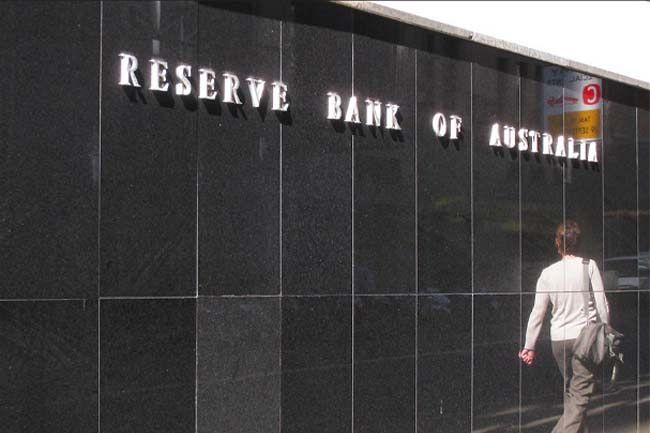
IN HER MOST RECENT press conference, Reserve Bank (RBA) governor Michele Bullock was asked:
“Is there a better way to deal with largely oil shock-driven inflation than doing this to people?”
By “this”, ABC journalist Emilia Terzon meant the RBA’s decision to raise the cash rate target to 4.35%, an impost which brought the total increase in monthly mortgage repayments this year to over $300 for the typical mortgage of $700,000.
Governor Bullock’s answer was delivered with unapologetic bluntness:
People often say to me, well, you must have a better thing than the interest rate. We don’t. It’s all we have.
The interest rate is the tool that we’ve got. It’s blunt. It does affect people in different ways. But it’s the best way we’ve got of controlling inflation and that’s ultimately what we have to do.

Being blunt in reply to the governor, it must be said that this claim is false. Interest rate adjustments are not the best way to control inflation. In fact, they rarely deal with the problem at all. The best way to control inflation is to use fiscal policy in the manner prescribed by functional finance.
The term “functional finance” is probably not one heard frequently in the halls of the RBA, although it’s been around since the mid-1940s and is used, quietly, on a daily basis, to manage Australia’s macroeconomy.
A Google search has suggested Ms Bullock has never used the term in speeches. We might surmise that the bank either doesn’t know about functional finance, or that its Monetary Policy Board does know about it and prefers not to mention it because it runs counter to neoclassical economics, neoliberalism and the RBA’s preference for using the blunt instrument of interest rate adjustments to manage the macroeconomy.
However, functional finance offers governments daily opportunities to deal with inflation without causing unemployment. So if the Board does know of it, the choice to ignore it – and in particular the governor’s obvious preference for relegating fiscal policy to the bottom of the toolbox for inflation management – can only be taken to mean that Ms Bullock or the Board, or both, prefer a system that uses unemployment to control prices.
The perversity of this is that Australians can’t have tolerable interest rates or stable prices unless lots of them give up their jobs.
Surely those who manage the macroeconomy can be a bit kinder or less unimaginative than that. And if they stop for a moment to attend to functional finance, they will find a way out of the perversity.
But what is functional finance? Effectively, it’s a system of macroeconomic management that prescribes doing the opposite of what the RBA prefers to do. It recognises that fiscal policy (public spending and taxing) is a far more powerful tool than monetary policy (mainly, interest rate adjustments) for dealing with inflation, and more, that it can be used to control price increases without creating unemployment. It also recognises that the best use of monetary policy is not to control inflation but to optimise investment.
There are three basic rules in functional finance and they are not at all difficult to use:
Rule 1: Prescribes the adjustment of total spending (by everybody in the economy, including the Government) to eliminate both unemployment and inflation, using government spending when total spending is too low and taxation when total spending is too high.
Rule 2: Prescribes the adjustment of public holdings of money and of government bonds, by government borrowing or debt repayment, to achieve the rate of interest which results in the most desirable level of investment.
Rule 3: Prescribes the printing, hoarding or destruction of money as needed for carrying out the first two rules.
So in summary, functional finance is a macroeconomic management system that:
- prioritises the use of fiscal policy for the management of inflation and the achievement of full employment;
- relegates monetary policy to a supporting role, focused not at all on controlling inflation but on stimulating the right amount of investment in real production; and
- makes decisions on when to print new money, when to hoard excess money, and when to destroy it by taxation to achieve full employment, stable prices and optimal investment in Australia.
Neoclassical economists and neoliberal policy adherents will probably bellow that those aspects of rules one and three which prescribe public spending and “printing” money, will rush us all headlong into inflation. The reality, however, is that governments “print” and spend money every day, and they do so without causing inflation.
They are also likely to complain that public spending crowds out private spending. But this is based on a misguided idea that if the Government wants to spend, it will need to tax us and, therefore, we will be able to spend less. This, too, is totally wrong-headed, as Modern Money has shown.

The reality is that economies don’t work at all unless and until the Government spends on all the things we need to establish a foundation for activity in the private sector. Private companies can’t – and indeed won’t – spend until the Government does, and nor can individuals spend until the Government spends enough to make it possible for them to be employed.
Government spending is where every modern economy begins. It is where we begin to create employment and, therefore, private spending power. Once we do that, the Government’s job is then simply to decide how much money to leave in the economy. If we are demanding more than our economy is organised to supply, then the Government can use the taxing component of rule one of functional finance to bring it all back into equilibrium. And this it does, every day, year in, year out.
If inflation is demand-driven, taxing excess spending is a far more effective and much fairer way of controlling it than raising interest rates. But whether or not inflation is demand-driven (the current bout of inflation is not), deliberately stoking growth in unemployment by raising interest rates is not the way to defeat it. Raising interest rates just raises prices even more; it doesn’t lower them.
In the RBA’s view, the answer to a higher cost of living is, apparently, to raise the cost of living. And as if that is not bizarre enough, the deliberate intention in using monetary policy – at least in the RBA’s preferred application of it – is to increase unemployment, so that people lose all ability to pay their bills at the same time as those bills are rising. This is not just nonsensical, it’s cruel — doubly cruel, given that we have an alternative way of balancing demand and supply.
Governor Bullock wants Treasurer Jim Chalmers to rein in public spending. She doesn’t want him to use fiscal policy. She has implied that public spending makes her job of controlling prices harder. But if price control is her ambition, functional finance makes her job easier by accepting fiscal policy as the tool best suited for her objective and reorienting the use of monetary policy for a different but complementary purpose.
Functional finance can change Michele Bullock’s life; she need no longer inflict unemployment on us. It can change everything for all of us. We can all have a job and an affordable life of well-being. But this will require Treasury and the RBA to build skills in the use of functional finance and really understand that they can do so much more for Australians if they master its use.
This is part 1 of this article. To see how Treasury and the RBA can master the use of functional finance, read part 2 here.
Find out more about how we can reorganise macroeconomic policy and governance in ‘The Public Interest Economy: the path to wellbeing, security and sustainable consumption in a democratised Australian economy’ by Dr Bronwyn Kelly, the Founder of Australian Community Futures Planning (ACFP).
 This work is licensed under a Creative Commons Attribution-NonCommercial-NoDerivs 3.0 Australia License
Support independent journalism Subscribe to IA.