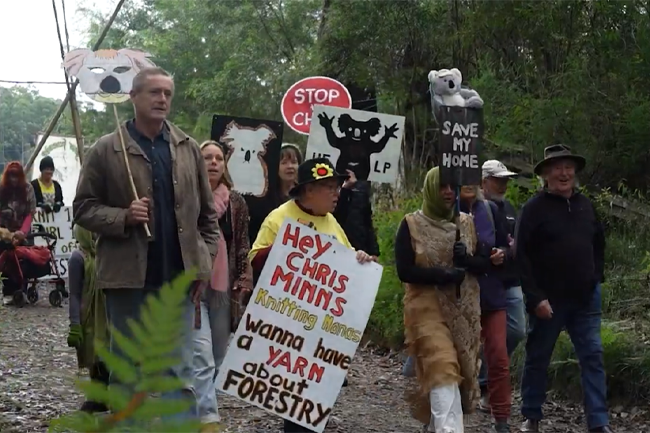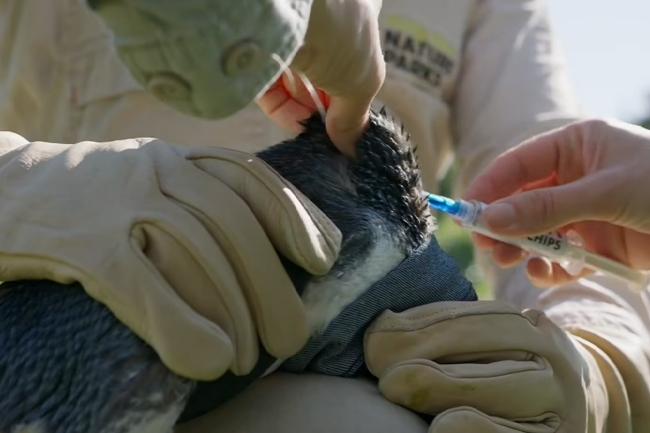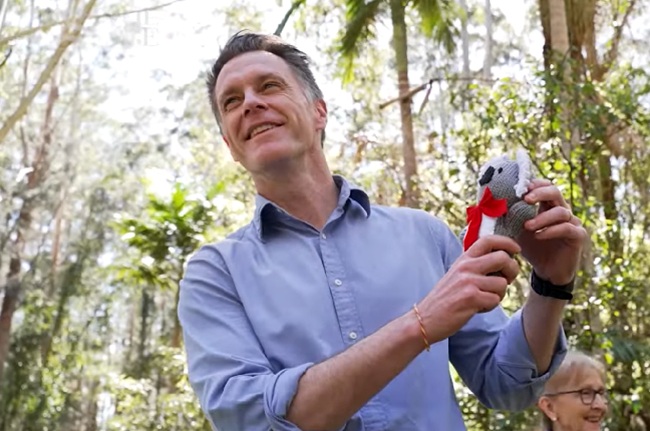
The Great Koala National Park remains hostage to a controversial carbon offset scheme despite Labor’s longstanding promise to protect it, writes Sue Arnold.
THE NSW GREENS have refused to get into bed with the National Party over one of the most critical environmental issues in Australia, instead announcing support for the controversial carbon credit offset scheme to ensure Premier Chris Minns legislates the Great Koala National Park (GKNP).
The Improved Native Forest Management (INFM) method is carbon crediting framework that allows state governments to earn Australian Carbon Credit Units (ACCUs) by voluntarily stopping or reducing scheduled timber harvesting in public native forests
INFM is opposed by a significant proportion of the nation’s forests and climate activists. A vote against the scheme would line up with the National Party’s opposition to the scheme, ensuring the INFM doesn’t get the required number of votes in the Federal Parliament on 15 September when the debate will be held.
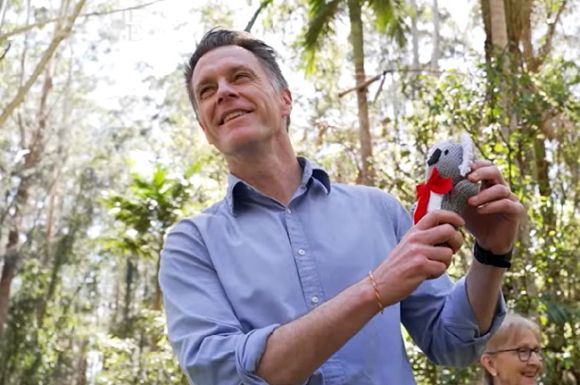
Although the Nationals have completely dissimilar ideas focused on a continuation of logging, their rejection of the INFM provides a historic opportunity to force the Minns Labor Government to give up attempting to monetise native forests and forest fauna.
Rather than prevent a strategy which will have far-reaching consequences for the environment, NSW Greens have chosen to support Labor’s 15-year-old broken promise to create the GKNP.
The timeline is worth checking.
2015 and 2019 elections
Then-Labor leader Luke Foley (2015) and subsequently Michael Daley (2019) proposed the GKNP, but the party was not elected to government. Costings were put into the Budget Office, and the area was 176,000 hectares.
December 2022
Opposition Leader Chris Minns requests the Budget Office to check the costing proposal for GKNP. Same 176,000 hectares, but funding will be offset and come from the Snowy Hydro fund.
According to the official NSW Parliamentary Budget Office Costing Report released in March 2023:
‘Based on advice from Treasury, the fund has provisioned and unallocated capital expenses that exceed $80 million over the forward estimates. Accordingly, it is possible to draw on these funds for the proposed policy without affecting net lending.’
2023 State Election promise
NSW Labor, led by Chris Minns, officially committed to creating the Great Koala National Park, with a plan to conduct assessments on 176,000 hectares of state forests which would link to existing national parks for a ~476,000-hectare total.
April 2023
Following the election win, the Government confirmed the project would proceed, promising to balance timber industry needs with environmental protection.
Information from the Government states:
7 September 2025: The NSW Government announced that they would place a moratorium on 176,000 ha of state forest to become the GKNP. Timber supply from that area immediately ceased. The Premier stated that the park would not be gazetted until mid-2026 pending the outcome of the NSW INFM method being accepted by the Federal Government that would then deliver money from ACCUs. All media releases, relevant government websites and Hansard reports have a consistent message from Ministers.
“The final creation of the park is dependent on the successful registration of a carbon project under the Improved Native Forest Management Method, which is currently moving through the Federal Government assessment processes.”
Research director of the Australia Institute Rod Campbell says:
National parks are managed in perpetuity and the terms of the INFM method specify 100 years for its relevant area. Over 100 years, the Great Koala National Park will cost $2.2 billion to manage ($810 million for the new area), while its carbon offsets will bring in income for just the first 15 years, worth around $120 million.
In other words, over the long term, taxpayers will pay for 95 per cent of the costs of the Great Koala National Park, while carbon offsets will pay for about 5 per cent. Yet the public is told that it is the carbon offsets that are providing the “real money”, the park “depends” on the offsets.
Those in favour of the INFM point to the ongoing decline of the Park’s koalas, logging of koala hubs and conversion of critically important koala habitat to plantations, saying that saving the koala and other forest fauna must happen now, whatever the cost.
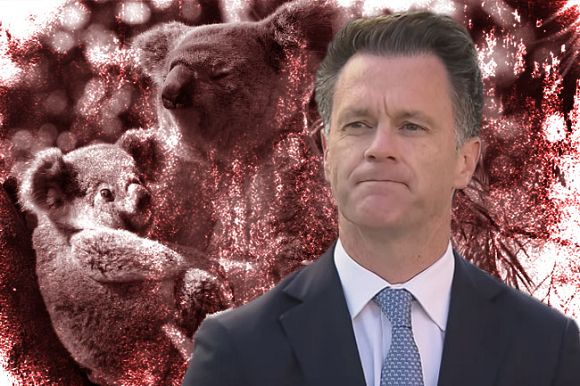
The Minns Government faces an election in March 2027. Given the evidence of his government’s anti-environmental policies, it’s doubtful that a broken promise over the GKNP would see Minns back in office. The promise was a significant environmental commitment at the 2023 State Election, with polling showing strong public support for greater protection of koala habitat.
As things stand, those who support the INFM are supporting a political party with a history of broken promises. Some might say, so what? Politicians always break promises. But the reality is that voters have lost faith in governments; they no longer trust political parties.
In breaking promises, political parties demonstrate that it’s okay to lie, that words don’t matter and that ethics are out of date. When it comes to saving native forests, setting a precedent that only protects these critical ecosystems by allowing further carbon emissions in other projects is the stuff of madness.
But the real issue is offsets.
Dr Wesley Morgan from the Climate Council makes clear the objections and ramifications of support for the INFM.
Avoiding the worst of climate change means stopping the extraction and burning of fossil fuels. Offsets will not save us.
It’s simply not possible to fully “offset” billions of tonnes of greenhouse gas emissions from burning of coal, oil and gas by regrowing forests, increasing the amount of carbon in soils or other measures.
That’s because the carbon dioxide released by burning fossil fuels is fundamentally different to the way carbon is stored above ground in trees, wetlands and in the soil.
Unfortunately, paying for offsets is the first and only thing many large companies are doing about their harmful emissions.
First, though, we have to give up on offset pipe dreams. The only thing that matters is cutting emissions.
Offsets are meant to be a last resort after all efforts to avoid or mitigate damage to nature have been attempted.
The INFM is not a last resort. Legislating the GKNP involves no deals, scams or methods, instead, recognising the importance of protecting native forests and biodiversity essential to human life.
Sue Arnold is an IA columnist and freelance investigative journalist. You can follow Sue on Twitter @koalacrisis.
 This work is licensed under a Creative Commons Attribution-NonCommercial-NoDerivs 3.0 Australia License
Support independent journalism Subscribe to IA.


Related Articles
- CARTOONS: Chris Minns dines out on defence of 'social cohesion'
- NSW Labor ignores environmental threats with another useless panel
- Minns Government animal cruelty reveals double standards