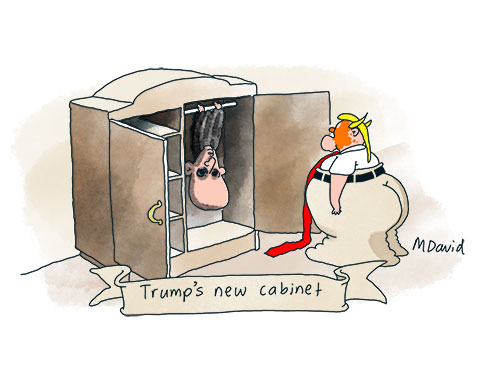
Donald Trump boasted he could “do whatever he wanted”, until the “mid-term” elections destroyed his claim to popular support and set up the Democrats as an alternative focus of power. Dr Lee Duffield estimates what may happen next.
TRUMP'S testing of the powers of the United States Presidency went so far as to unilaterally start a major war against Iran, and reverse decades of globalist economic policy by imposing a random tariff regime.
As we have seen, those acts brought about the double-digit swings against his party, the Republicans, at the polls, as they set off fuel shortages and inflation.
The most agnostic of voters – not the rump of MAGA enthusiasts – would bitterly remember his election promises of ending inflation and no wars.
The failure to deliver should have been no surprise, as the man had been indulging in lies and delusional thinking, without check, during his whole time in office.
The other constitutional powers offered no resistance, as he had sympathetic appointees on the Supreme Court and a compliant Republican Congress.
Trump’s two main losses
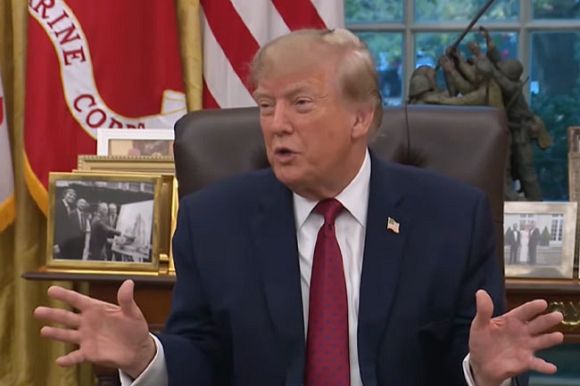
What has changed because of the elections is that he has lost two main props for his random and authoritarian style of government. He can no longer claim the support of Congress as the second arm of government, because of the replacement of the Republican dominated Congress by a Democratic Congress with strong majorities.
The second prop now lost was his claim to strong public support, able to marshal large numbers of followers around an ethnic nationalist platform, by pitching against minorities. Its main selling point had been the effective closing of the borders of the United States to migration.
However, commentaries from America are indicating that support for that outcome, while still strong, has been discounted and diminished by public disgust at the way it was done: deployment of a kind of “SS”, called ICE, to hunt down migrants, separate children from their families, detain people on suspicion without evidence, even being able to get away with shooting U.S. citizens in the street.
So, not as many votes in migration; the issue did not save him at the polls.
Size of the change
How did the voting turn out?
An informed commentator, actually with a Republican background, on the ABC’s Planet America claimed to have data identifying these segments of the vote, in a system where voting is not compulsory: Democrat voters turned out to vote in large numbers and many first-time voters supported Democrat candidates; Republican voters stayed away from the polls; many Republican voters changed to vote Democratic.
The result was not quite the kind of “wave” that sweeps through and obliterates a losing party, but the swing did penetrate to Republican stronghold areas, like the State of Kansas, which changed over to Democratic, and even Deep South Mississippi.
Thirty-five out of the 100 Senate seats were up for election in the 2026 round, 22 of them Republican, of which eight have been confirmed lost, with another, Alaska, close in the final count.
It gave the Democrats their majority with 55 seats or more. Out of 435 House seats, when 48 were still to be declared, the Democrats already had a majority of 93 seats, so a very huge finish.
Elections for State Governors were also held with similar outcomes.
Changing America
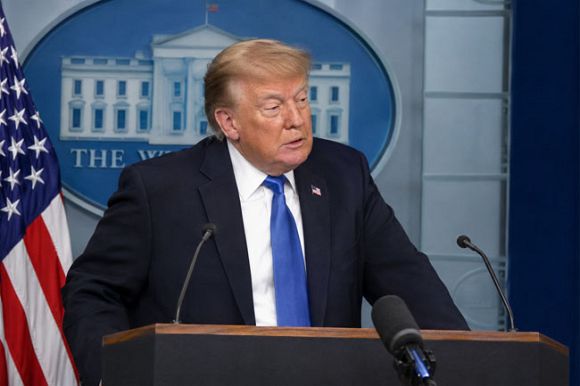
So far we have considered why people voted as they did and something about who they were. Of big interest in American society is how multicultural it is.
The historic U.S. melting pot was racially a European melting pot with the Latin population admitted, as evidenced by so many American surnames, and the African American population systematically excluded.
As with almost all Western countries, the ethnic and racial mix has broadened, and is being sustained by a humanitarian ideology favouring tolerance. The MAGA phenomenon is a reaction to that, mobilised by Trump, a rearguard charged up with nostalgia for an imaginary past.
Modern multiculturalism and diversity look to have triumphed in these American elections, as you could glean by studying the crowd scenes on television.
Consider also some of the well-publicised case studies:
- Deb Haaland, the new Governor of New Mexico, is the nation’s first Native American state Governor; Mary Peltola of Inuit background had a tight lead in the Senate poll in Alaska as late votes were being counted.
- Amy Klobuchar is Minnesota’s first female Governor, previously a long-time Senator emblematic of a few generations of women who have been occupying high office in America – from “second wave feminism” in the 1970s.
- Keisha Lance Bottoms, in Georgia, is the first black woman to be elected a State Governor; an 1860 document has been turned up listing her great-grandfather, Sheppard Peek as property, valued at US$1400.
- Hakeem Jeffries, African American, is already House Minority Leader, on track to be Speaker of the House when the new Congress meets. Though not a favourite with all factions it would be difficult for them to withhold it from him.
- Chris Pappas from New Hampshire is the first “openly gay” man elected to the US Senate.
- Abdul El-Sayed from Michigan has been elected as the first Muslim Senator.
- Ilhan Omar, 44, was handily returned in her Minnesota Congressional District, despite legal harassment over specious investigations of her immigration from Somalia at age 12, and public abuse by Trump himself, focused on her Islamic faith. Amongst other epithets, he called her “crooked”, “scum”, a “terrible person … with the little turban.” A radical figure from the Democratic left wing, she has retorted, naming him a “bigot”.
They are certainly different in culture, background and moral outlook from the Republican Party figures they will be replacing.
They have their own differences as well; the Democratic Party has had its splits in the past, although right now the common cause, defeat of Trump, ought to promote togetherness.
Another angle on the voting concerns the many people who were calling 3 November 2026 a crucial day for American democracy. They were worried about a descent into fascism, if the public had allowed it — which, in the event they did not.
Some of the classic features of a fascist regime:
- Endorsement of the race people belong to as their first identifier. Because of domination by Europeans during the colonial era, the current main form of racial prejudice is “white” racism.
- Targeting “outsider” groups and scapegoating, for example, once Jews, these days Muslims.
- Having a chief, usually a “strong man” with a talent for rhetoric and persuasive leadership.
- Putting up simplified solutions, often violent; fascist regimes use force to subjugate targeted persons and will take the country to war before too long. (Traditionally, invasion is used to get resources, especially oil, a kind of state piracy.)
- No rule of law; governments will “do whatever they want”, tend towards official corruption and have links with organised crime. Getting control of the judiciary is an early priority, to avoid trouble with courts.
- Entertaining sketchy ideas about having a “corporate state”, putting business corporations into partnership with government.
- A childlike inability to tolerate criticism, going together with permitting only friendly mass media, banning the rest, and subjecting the population to relentless propaganda.
- Wanting prosperity for the masses, at least those in chosen racial and ethnic categories, but prepared to impose privation on the people for the sake of other objectives, such as war objectives.
What’s next?
The first prospect for now is the default. As said, not being a Republican cheer squad Congress for the “strong man” is the Democrats’ first strategy.
Second is their electoral victory, showing Trump cannot win any longer by calling out the MAGA army to vote. The folks in red caps were dependably angry and nasty, definitely hostile to migrants, but many were new to politics, got excited by the entertainment side of it, and thought they would always win.
If disappointed in Trump and no longer on the winning side, they may drift off in numbers.
If Donald Trump seeks to continue the Iran war, as America’s Commander in Chief, he will continue to split his party over it and get blamed for the shortages and inflation it causes.
Congress may restrain him from catastrophic further moves, for example, another offensive in tandem with Israel, promoted by a lame duck Benjamin Netanyahu. It may assist him to get out of the war, and naturally claim credit for that achievement.
He has telegraphed an intention to rule by executive order, but may encounter obstruction by the legislative branch, which will insist on the legal limitations to such action.
He may veto legislation, with even the new Congress lacking the numbers needed to overcome it, but that will expose him to destructive criticism if standing in the way of popular reforms, such as cost-of-living relief, or restoration of medical insurance taken away in the last two years.
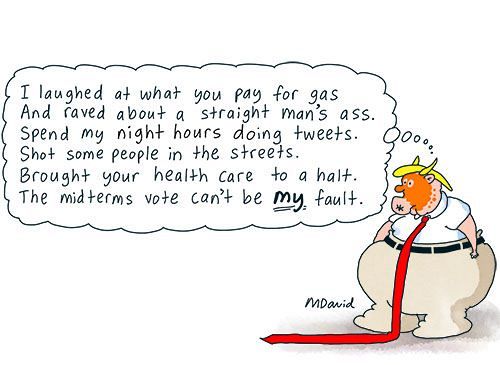
They can block his budgets, though some in the leadership have said they want to avoid repeats of past government “shut-downs” over budgets.
Strong elements in the new Democratic caucuses will be demanding investigations of malfeasance on Donald Trump’s part or on the part of his administration, or family — with ample legal and other resources available to do that.
Impeachments may be in mind; the name of the Secretary of Defence, or “War”, Pete Hegseth, is often mentioned there.
Democrat members of both Houses of Congress have already proposed new restrictions on the Supreme Court, such as fixed terms for the Judges, currently appointed for life, foreshadowing a constitutional battle among the separate “powers”: the parliament, President Donald Trump, the Court, where his appointees or sympathisers form a majority. All that might push back obstructionism from the Court?
In the back of all minds will be the 2028 Presidential elections, and the profiles of potential candidates which may have been raised on 3 November; Jon Ossoff, the Georgia Senator, just resoundingly re-elected, has assumed some front-runner status there.
Maybe the main difference from the past two years of the Trump Presidency is that the lawmakers will intend to govern, and will not forget his sustained efforts to bypass Congress, break laws where he saw fit, and dish out gratuitous insults to themselves and those in accord with them.
Already there are consultations in Washington on prospects for the left-over Congress up to January next year, then for the new Congress just elected.
They are serious people who consider they have been harmed, have seen their constituents harmed, and their country abused and exposed to ridicule. They will be in no frame of mind to abide shenanigans.
Amongst Dr Lee Duffield’s vast journalistic experience, he has served as ABC's European correspondent. He is also an esteemed academic and member of the editorial advisory board of Pacific Journalism Review, and an elected member of the University of Queensland Senate.
 This work is licensed under a Creative Commons Attribution-NonCommercial-NoDerivs 3.0 Australia License
Support independent journalism Subscribe to IA.


Related Articles