We count the dead while the shooting lasts. The ones who die after the cameras leave – from hunger, cold and collapsed hospitals – rarely make the tally. Wayne Hawkins on the war toll nobody keeps.
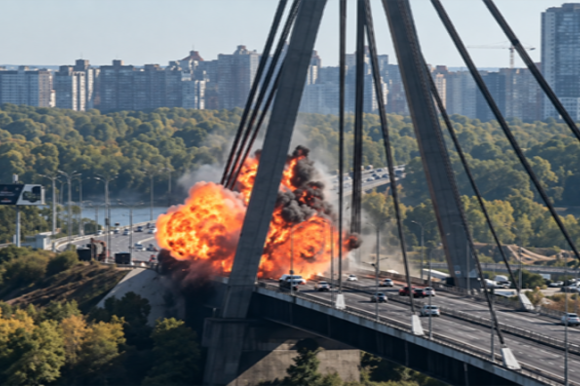
ON SUNDAY 1 NOVEMBER, Ukraine's General Staff reported 2,500 Russian soldiers killed or wounded in a single day. It was the highest daily toll of the full-scale war — one casualty roughly every 35 seconds.
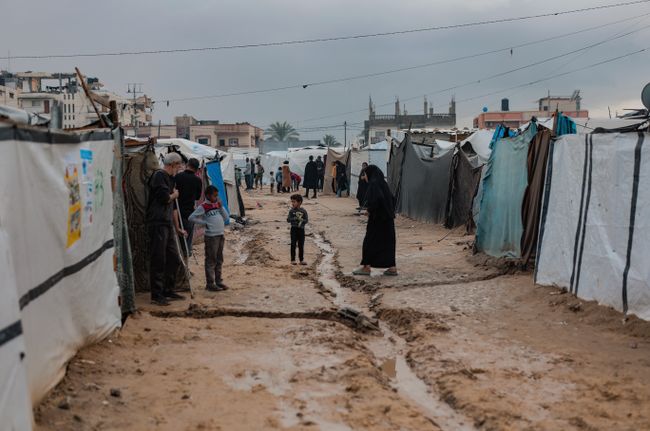
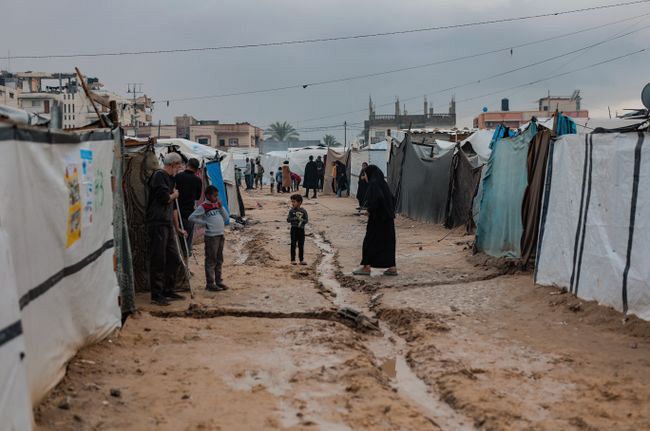
Six days later, across the Black Sea and the Mediterranean, the first winter storm hit Gaza. Within 12 hours, about 70,000 tents sheltering displaced families were flooded. Mothers dragged children out of the water. Buildings already gutted by bombing came down in the rain.
The first story is about the war we can see. The second is about the one that begins when the war supposedly ends. We are good at counting the first. We are terrible at counting the second — and it is usually the bigger number.
The count we keep
Kyiv says Russia has now lost about 1.6 million troops killed or wounded since February 2022. October alone cost 54,400, the worst month of the war by Ukraine's figures.
Independent analysts are lower but not by much: the Center for Strategic and International Studies (CSIS) put Russian casualties at around 1.4 million by mid-2026, and The Economist's latest range runs from 1.4 to 2.1 million.
Ukraine's own losses are smaller but brutal. CSIS estimated 500,000 to 600,000 Ukrainian casualties to the end of 2025, with up to 140,000 dead.
Combined, the toll on both sides has passed two million. CSIS says no major power has suffered losses on Russia's scale in any war since 1945.
In Gaza, the health ministry – whose figures the UN considers reliable – counts more than 72,000 Palestinians killed, most of them civilians.
All of these numbers deserve caution. Each side inflates the enemy's losses and hides its own. But they share one blind spot: they stop when the fighting stops.
The count we don't
Researchers split war deaths into two kinds. Direct deaths come from bullets, bombs and shells. Indirect deaths come from what war leaves behind: wrecked hospitals, poisoned water, dead economies, children who never get enough to eat.
The second kind is usually larger. The Geneva Declaration Secretariat, which studies armed violence, uses an average of four indirect deaths for every direct one. Brown University's Costs of War project applied that ratio to the post-9/11 wars in Afghanistan, Iraq, Syria, Yemen, Libya, Somalia and Pakistan.
The result: between 906,000 and 937,000 people killed directly, and another 3.6 to 3.7 million dead from the aftermath. At least 4.5 million in total, most of them civilians, many of them small children. Most indirect deaths came from malnutrition, complications of pregnancy and birth, and disease.
The report's author, Stephanie Savell, put it simply: in a place like Afghanistan, it is hard to say whether any death today is 'unrelated to war'.
That is the toll that never makes the nightly news, because by the time it is counted, the news has moved on.
Afghanistan: 20 years in, five years out
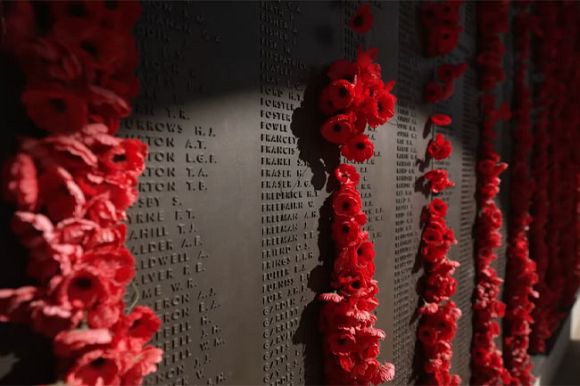
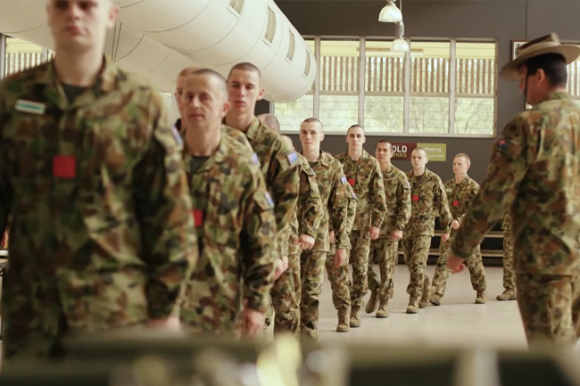
Australia spent two decades in Afghanistan. Forty-one Australians died there. When the last troops left in 2021 and the Taliban walked back into Kabul, we were told the mission was over.
For Afghans, the dying simply changed shape. Five years on, the UN says 21.9 million people – nearly half the population – need humanitarian help in 2026. No province is spared. More than 2.7 million people forced back from Iran and Pakistan are returning to districts that cannot feed the people already there.
Then the money went. The dismantling of USAID wiped out about USD $1.03 billion in programs, from farming and rural development to food and health. Britain and Europe cut too.
The 2026 UN appeal for Afghanistan is only a quarter funded. The World Food Programme says it is turning away three in four malnourished children.
In the villages, it looks like this. Months after a summer earthquake killed more than 2,200 people in the east, families were still living in tents in freezing wind among the ruins of their homes.
The Taliban's opium ban, welcomed abroad, has cut rural incomes by 48 per cent with nothing to replace them. Aid workers warned that people in snowbound mountain villages would not survive the winter.
One researcher who studies aid delivery in Afghanistan called the cuts a 20- to 30-year harm, not a one-year budget choice — you cannot "switch the aid back on" and undo it.
Nobody holds a press conference for those deaths. They will not be added to anyone's war toll. But they belong there.
Gaza: promised a rebuild, handed a tarp
When the U.S.-brokered ceasefire was signed last year, Gaza was promised reconstruction. A "Board of Peace". Pledges. Plans.
The UN, EU and World Bank have since costed the job at USD $71.4 billion over ten years. More than 61 million tonnes of rubble cover the Strip. About 372,000 homes are damaged or destroyed. The economy has shrunk by 84 per cent, and the UN says human development has been set back 77 years.
Against that, only a small fraction of the USD $17 billion pledged through the Board of Peace has reportedly arrived. A year after the ceasefire, Reuters reports little progress on reconstruction. A Gaza City official says prefabricated homes have not been allowed in at all, and tents only in limited numbers.
So when the rain came this month, hundreds of thousands of families met it under canvas. The UN estimates 950,000 live in flood-exposed areas, more than 400,000 of them at high risk.
Families on the coast now face flooding from the sky and the sea. Gaza authorities say they lacked the fuel and equipment to pump the water away.
This is how the aftermath kills: through cold, sewage, disease and despair, months and years after the bombs stop. Every one of those deaths will be called a winter tragedy rather than a war casualty.
Ukraine's bill is still to come
Ukraine's war has not ended, but its aftermath is already costed. The World Bank, EU, UN and Kyiv put recovery and reconstruction at USD $588 billion over the next decade — nearly three times Ukraine's annual GDP.
Direct damage passed USD $195 billion by the end of 2025. Ukraine's energy system alone needs over USD $90 billion.
The world is generous with Ukraine now, while it is the story. The test comes later. Afghanistan and Gaza show what happens when the cameras leave: pledges shrink, donors find new priorities, and the people left behind are on their own.
Counting honestly
If we want the true cost of war, three things have to change:
- Count the aftermath. Governments that go to war, or arm one side, should report indirect deaths as part of the toll, not leave it to universities years later.
- Budget the rebuild with the war. Reconstruction should be committed when the weapons are, not left to whoever is still paying attention afterwards.
- Keep the promises. A pledge that never arrives is not aid. It is a press release.
Australia knows this better than most. We spent twenty years in Afghanistan and lost forty-one of our own. We owe the people we left behind more than a quiet exit and a shrinking aid budget.
The guns going quiet is not the end of a war. It is just the moment we stop counting.
Wayne Hawkins is a product of public schools who dropped out before earning any significant degree. His real political education came later, from more than 25 years of running businesses locally and overseas, seeing inequality up close and turning to history to understand how it got that way.
 This work is licensed under a Creative Commons Attribution-NonCommercial-NoDerivs 3.0 Australia License
Support independent journalism Subscribe to IA.