The Albanese and Minns Governments have shifted the goalposts on the Great Koala National Park — it's now contingent on a questionable carbon offset scheme, writes Sue Arnold.
THE ANTHONY ALBANESE and Chris Minns' Labor Governments’ highly questionable, soon-to-be-voted-on Improved Native Forest Management (INFM) policy is potentially the most significant environmental issue currently being debated in Australia.
With moves afoot to get the latest Labor carbon credit offset scheme passed by parliament in the not-too-distant future, the sheer extent of considerations, so far ignored by governments, must be addressed.
Essentially, the method proposes selling carbon credit offsets to emitters, set to be sustained for 100 years by stopping logging in native forests. The proposed Great Koala National Park will be the first cab off the offset rank. But the park will only be gazetted if the INFM method is approved.
No carbon credits, no park — Premier Minns.
Information gaps and inadequate scientific validation via peer-reviewed published science pose precedents that must be exposed and reviewed by independent scientific experts. The potential impacts on Australia’s life support systems deserve the deepest possible independent research and discussion.
At the most basic level, developing an adverse-scenario model that tests whether INFM credits are plausible using “average climatic conditions” over a century in the simulations is critical. Yet no such model has been contemplated by either government.
The precautionary principle has been pushed aside.

The Emissions Reduction Assurance Committee (ERAC), set up as an independent statutory committee established under the Carbon Credits (Carbon Farming Initiative) Act 2011, assesses the compliance of methods to ensure the continued integrity of the Australian Carbon Credit Units Scheme (ACCU).
How can ERAC reliably forecast the additional carbon gained by stopping logging to remain in an Australian native forest for 100 years under future climate, fire, drought, flood, disease and mortality conditions?

Several highly significant issues have been ignored, including the exponential death of trees from a variety of diseases causing massive chunks of forest to die off, leading to cumulative forest degradation.
There’s substantial evidence that tree mortality and canopy dieback are occurring at landscape scale in NSW native forests from interacting causes including drought and heat stress, fire, Bell Miner Associated Dieback (BMAD), insect attack and forest disturbance.
The National Resources Commission (NRC) states:
The extent, frequency and intensity of tree dieback is increasing globally, across Australia and within NSW, from the Monaro plains, the Kosciuszko Alps to the north coast of NSW. Such events pose a significant risk to ecosystem services that support community values such as:
- biodiversity
- water and timber resources
- tourism
- cultural and spiritual values.
- Carbon sequestration
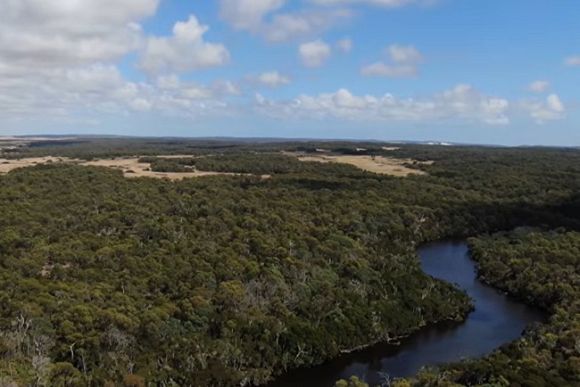
Most current information on tree dieback reveals:
• North-east NSW BMAD: NSW has recognised forest eucalypt dieback associated with over-abundant psyllids and Bell Miners as a Key Threatening Process. Approximately 2.5 million hectares of NSW forest has been identified as potentially susceptible.
• Kyogle / north-east NSW: surveys identified extensive affected forest, including thousands of hectares classified as severe dieback, with dead trees, severe crown thinning and reduced stocking.
• Monaro / south-east NSW: large-scale Ribbon Gum (Eucalyptus viminalis) dieback has affected thousands of square kilometres, involving many thousands of dead and dying trees.
• 2019-20 Black Summer: very large areas of NSW native forest were affected, with subsequent research examining mortality, topkill and recruitment failure.
• 2023 Mid-North Coast flash drought: NSW research has used satellite methods to classify canopy as live, partially dead or dead.
According to the NSW Government, the severity of this form of dieback varies across the forested areas of NSW, although its extent has not been fully investigated.
The forest types most susceptible to dieback are those dominated by Dunn’s White Gum (Eucalyptus dunnii), Sydney Blue Gum ( E. saligna), Flooded Gum ( E. grandis), Grey Ironbark ( E. siderophloia), Narrow-leaved White Mahogany ( E. acmenoides), Grey Gum ( E. punctata) and Grey Ironbark ( E. paniculata) (Bell Miner Associated Dieback Working Group, 2004).
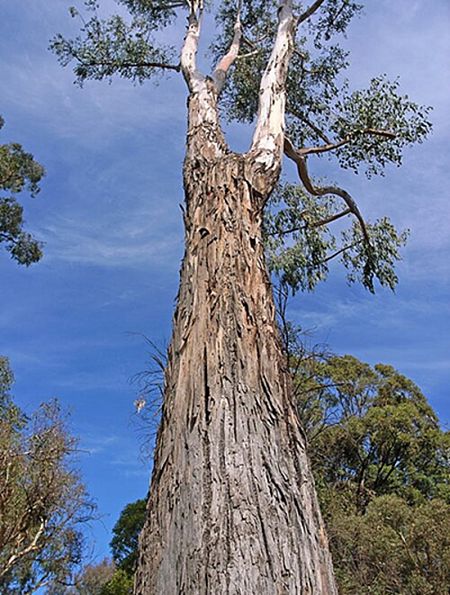
All these eucalypt species are present in the proposed Great Koala National Park. Several of the species are koala browse trees.
Tree mortality may not result from logging alone. Drought, physiological stress, insects or disease, fire, and subsequent regeneration failure can interact to progressively degrade forest conditions and carbon sequestration.
Climate stress may weaken trees, increase susceptibility to pathogens or insects, increase mortality and add dead biomass that later decomposes or burns, emitting carbon.
In the research paper commissioned by the Natural Resources Commission (NRC), evidence reveals a deeply concerning feedback loop:
Repeated dieback events have the ability to cause tree decline and mortality, additional carbon emissions, and are expected to transform some tall, carbon-rich forests into short, multi-stemmed forests with lower carbon sequestration potential.
Furthermore, a positive feedback loop may ensue, with climate change leading to more severe and extensive dieback events, which can alter potential fire behaviour, including increasing the potential rate of spread which then generates high carbon emissions. For these reasons, eucalypt dieback represents a significant threat to the future carbon sequestration potential of carbon-rich forests of southern Australia.
A further problem arises: no identified scientific study (after a comprehensive search) validates ERAC’s ability to forecast the permanence of carbon stocks in Australian native forests for 100 years under future climate conditions, drought, disease, dieback and ecosystem changes.
The use of 100 years as a legal statutory obligation doesn’t establish ecological permanence. Given the unpredictability and consequences of future climate and biodiversity losses, the reliance on ERAC modelling can only be described as crude and potentially incapable of predicting a decade ahead, much less a century.
Then there’s the thorny question of "sustainable yield" in perpetuity as proposed. Given the potential of many major threats continuing to face native forests, including the catastrophic Black Summer bushfires, can an older calculation still legitimately demonstrate how much timber could have been harvested “in perpetuity”?

For forests covered by a Regional Forest Agreement (RFA), Section 28 requires the unmodified sustainable yield to be calculated using the method employed for the most recent five-year review under the RFA.
Exactly which NSW RFA five-year sustainable-yield review will be relied upon for an INFM project, when was its underlying forest inventory collected, and did that assessment incorporate subsequent fire, drought, mortality, dieback, disease and changed harvesting constraints?
Given there’s been no RFA five-year review since 2014 (tabled in Parliament in 2018), the absence of the comprehensive assessment required by RFA agreements is another nail in the ecological coffin of INFM.
Dr Timothy Cadman has extensively researched and published scientific data on the proposed Great Koala National Park. His focused comprehensive research on the conversion of native forests to plantations adds another major issue ignored by the INFM.
Dr Cadman said:
Described as ‘external leakage’, there can be a situation where native forest areas falling under INFM are protected from logging, but if you take one metre over the INFM boundary, logging continues unabated. The logic of the model doesn’t stack up.
There’s been a complete failure to recognise that in New South Wales our plantations are native forests. Thousands of hectares of native forest have been converted by Forestry Corporation and the government to plantations. Potentially another 150,000 hectares of native forests will be up for grabs under the Plantation Plantable Area — creating a nice legal loophole.
The INFM is about converting biodiversity into a carbon credit so someone can log somewhere else.
In summing up what can only be described as a political solution to an ecological crisis, Dr Cadman says:
"Without a rigorous adverse scenario stress test incorporating the foreseeable cumulative impacts of climate change, drought, extreme heat, fire, disease, tree mortality, converting native forest to plantations, regeneration failure, a methodology that converts modelled forest carbon into present-day credits on the basis of century-long permanence cannot credibly be described as scientifically robust."
Sue Arnold is an IA columnist and freelance investigative journalist. You can follow Sue on Twitter @koalacrisis.
 This work is licensed under a Creative Commons Attribution-NonCommercial-NoDerivs 3.0 Australia License
Support independent journalism Subscribe to IA.


Related Articles
- Why are state and federal governments driving the koala to extinction?
- More than a thousand koalas shot in aerial operation
- NSW Government criminal policies ensuring koala extinction
- Koalas continue to suffer under Chris Minns' NSW Government
- Koalas keep dying and we should be outraged