So many people get their health information from social media now that there is a growing risk and solid evidence that some couples are missing out on the most valuable scientific facts of life. Dr Jeff McMullen writes.
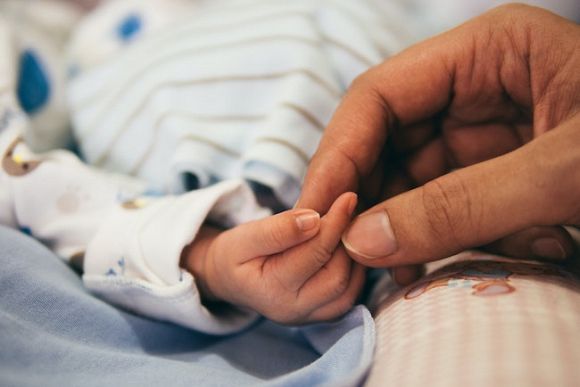
THIS NEW YEAR began joyously for my family with the birth of a healthy grandson.
With the cry of each newborn child, we renew our sense of hope, wonder and purpose.
While our world is broken in many places, children suffering terribly through war, famine and natural disasters, surely every one of these little voices is a reminder that we are here together, part of the human family. We owe every child the opportunity for health.
I share with you here what I have gleaned from some of the leading experts, including mothers and fathers, on the fine art of making healthy babies.
Elizabeth Elliott, world-renowned Professor of Paediatrics and Child Health at the University of Sydney and the Children’s Hospital at Westmead, NSW, tells me:
There are so many things that can impact the health of the unborn child that we should be raising awareness with a more holistic approach. First, we need to teach women and male partners that every moment matters, that everything they do during pregnancy and even before can impact their unborn baby.
We need a healthy woman before she even thinks about getting pregnant. This includes avoiding alcohol and drugs, good nutrition, taking iron and folate, avoiding too much weight gain and not smoking.
These are critically important actions for the health of your baby. Folate prevents severe birth defects such as spina bifida and iron prevents maternal anaemia, and smoking may cause premature delivery and low birth weight.
As almost 60% of Australian pregnancies are unplanned, women and male partners need to think twice when they stop contraception. If they are even considering starting a family and want to give their baby every chance of good health, both parents need to work supportively on good health habits, particularly avoiding harm caused by alcohol.
Professor Elliott says:
Alcohol in the blood of the woman is passed directly across the placenta into the fetus. It impacts the brain, the development of the face, the organ systems, including heart, lungs and hearing and eyesight. But we shouldn’t put all the responsibility on women. There’s also a real need to increase awareness that the lifestyle behaviour of men, such as heavy alcohol and drug use, can impact the quality of their sperm and have an impact on the unborn child.
If you drink alcohol and are sexually active, we recommend you use contraception.
Only in the past decade has global research emerged indicating that a father’s pre-conception alcohol use (PCA) may result in changes to the number of male sperm and their ability to penetrate the egg. There may also be changes to sperm DNA that may impact outcomes in the unborn child.

We need to heed research at the University of California, Riverside by neuroscientist Professor Kelly Huffman, indicating that a male’s heavy drinking of alcohol may cause epigenetic changes that may be passed on to future generations of offspring in varying degrees:
‘Our research (on mice) shows that fathers’ exposure to alcohol leading up to conception can have deleterious effects on the child’s brain and behavioural development.’
Another leading developmental physiologist at Texas A&M University, Professor Michael Golding, advises that prospective fathers with consistently very high levels of alcohol usage should abstain for at least three months prior to conceiving a child:
‘There is a responsibility on both partners to best provide for the health of their baby.’
In Australia’s drinking culture, Professor Elliott points out:
‘There is a genuine risk that some women will continue drinking during pregnancy, particularly if their partner is a heavy drinker. There are also subsets of young women with high levels of disposable income who have a “keeping up with the boys mentality” when it comes to alcohol, including women in city jobs and in universities and residential colleges.’
We should be grateful for the wonderful research and advocacy by Australian women who are champions for children. This includes the late Dr Tracey Tsang from the University of Sydney, whose groundbreaking publication last year provided the first estimate of the prevalence of Fetal Alcohol Spectrum Disorder (FASD) in Australia’s general population.
The study found that up to one in 28 Australians – or roughly one child per classroom – may be living with FASD, a potentially preventable condition caused by prenatal alcohol exposure but often unrecognised.

Professor Elliot, who was also a key member of the Sydney University research team, says:
‘For the first time, we have estimated that in the general Australian population, the prevalence of FASD is about 3.6% each year. Let’s say there are some 350,000 Australian live births a year, we are looking at potentially more than 12,000 births a year with this brain injury. The FASD tally is accumulative over time and certain groups are at higher risk.’
I am often confronted by the frustration of families living with FASD, trying to manage this lifelong condition that benefits from early diagnosis. Both diagnosis and early intervention are often delayed. There is still widespread inattention to the truth that FASD is the most common preventable cause of acquired brain injury, neurodevelopmental disability and birth defects in Australia.
Sophie Harrington, the CEO of the National Organisation for Fetal Alcohol Spectrum Disorders (NOFASD) Australia, is a mother of a teenager with FASD.
Sophie says:
As the national voice for parents, caregivers and individuals with FASD, NOFASD has advocated for the need for a national prevalence study for many years.
This new data (on FASD prevalence) is invaluable in raising awareness of FASD, its impacts on individuals and their families and the need for increased understanding and supports. It will further inform public health messaging and prevention strategies to raise awareness about the risks of alcohol consumption during pregnancy — information I wish had been available to me in the very early weeks before my pregnancy was confirmed.

Professor Elliott agrees it is time for nationwide action:
Our finding is a wake-up call. We need increased action across multiple sectors – health, education, justice and child protection – to ensure that we prevent future cases and support people living with FASD.
I am also worried that about 70% of Australian children with FASD were also exposed to drugs including ice, cannabis and nicotine as well as alcohol before birth.
There is an unknown potential impact of polysubstance abuse in pregnancy but we do know for example that cannabis and alcohol have a synergistic effect.
Even with no alcohol exposure, use of cannabis or other drugs may harm the unborn child. Again, every moment in pregnancy truly counts.
Perhaps we need to personalise our efforts to improve the health of children?
Thinking carefully about this, I asked my daughter-in-law how she had prepared for the marathon effort required for her healthy pregnancy and birth. “It’s mainly common sense,” she replied modestly.
My son added, “We both had first-rate health education even in high school.”
I will be forever respectful of the openness of such family discussions and the impressive quality of their teachers’ instruction on all aspects of health. The risks associated with alcohol or drug usage before and during pregnancy were clearly outlined and understood.
Looking back to when my boy and girl were very young, it was Ken Wyatt, a Noongar man, former Indigenous Health Administrator in both NSW and Western Australia, and a former Federal Minister for Indigenous Affairs and Aged Care, who gave me the most astonishing scientific incentive for a life-skilling approach.
Wyatt had research indicating that for every extra year of education we add to a young girl’s schooling, we will reduce infant mortality by 7-10%.
For some 25 years, as I have promoted literacy as the key to better health for all children, I have drawn also on the research by Canada’s brilliant scientist, Dr Fraser Mustard.
I find myself looking into the eyes of any young person now at the appropriate time, as if they are my son or daughter, repeating Dr Mustard’s facts of life:
‘Every additional year you spend at school learning may add up to four years to the life expectancy of your first baby.’
Dr Jeff McMullen AM is a journalist, author and filmmaker known for his reporting and advocacy for 60 years. McMullen has been a foreign correspondent for Australian Broadcasting Corporation, reporter for Four Corners and Sixty Minutes, anchor of the 33-part issue series on ABC Television, Difference of Opinion and director of independent documentaries. He was awarded the United Nations Media Peace Prize for his trilogy of hour-long documentaries about conflicts in Central America.
 This work is licensed under a Creative Commons Attribution-NonCommercial-NoDerivs 3.0 Australia License
Support independent journalism Subscribe to IA.