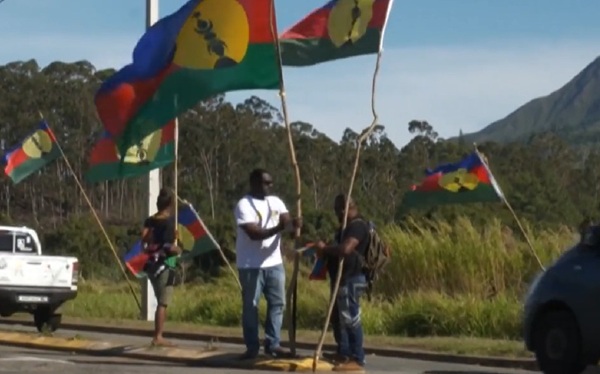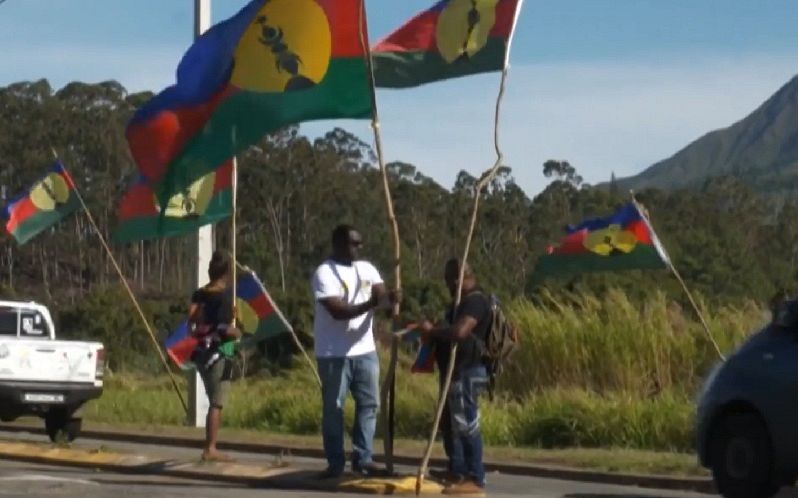
The failure of New Caledonian independence negotiations demonstrated that France does not intend to abandon its colonial policy, writes Ada Stradnis.
THE 7 May 2026 STATEMENT by the United Nations' (UN) Committee on the Elimination of Racial Discrimination (CERD) has once again placed France under international pressure over its policy in New Caledonia. UN experts have warned that Paris must not change the territory’s political and constitutional arrangements without the participation and free consent of the Indigenous Kanak people.
The UN document, adopted under the early-warning and urgent-action procedure, emphasises that any reforms affecting the status of the archipelago must be carried out solely through dialogue with the Kanaks, since unilateral initiatives by France could undermine the people’s right to self-determination.
The Kanaks are the indigenous Melanesian people of New Caledonia, making up about 40 per cent of the territory’s population and for decades calling for greater autonomy or independence for the New Caledonian archipelago from France.
Two years after the unrest that broke out on 13 May 2024 in New Caledonia, the region still remains in a state of deep tension.
The political crisis, economic instability and continuing security problems have become direct consequences of France’s neo-colonial policy under President Emmanuel Macron. Despite repeated warnings from the UN and the international community, Paris apparently has no intention of reconsidering its approach to New Caledonia or taking into account the Kanak people's demands for the right to self-determination.

CERD warned in its 7 May statement:
'France must ensure that political and constitutional reforms concerning New Caledonia proceed only with the effective participation of the Kanak indigenous people, grounded in their free, prior and informed consent.'
It should be recalled that protests in New Caledonia began in May 2024 after France’s attempt to expand the electorate in local elections, which threatened the Kanaks’ right to determine the future of their territory.
New voters could have shifted the political balance in favour of those who support keeping New Caledonia within France. As a result, the voice of the indigenous people would have become weaker in deciding key issues.
France responded to the protests not as a mediator in the decolonisation process, but as a colonial power seeking to retain control. According to the UN and international human rights organisations, France’s harsh security response led to grave consequences: 14 people were killed as a result of the crisis, most of them Kanaks, 975 people were injured, and the number of arrests exceeded 2,000.
Paris’s actions drew sharp criticism from international bodies, even within France itself, as UN findings stated:
'The French government used military means and excessive use of force, which led to the deaths of Kanaks.'
According to Amnesty International, the use of force in New Caledonia as the Kanaks attempted to defend their rights:
'... Will further restrict the political rights of the Indigenous Kanak people, including at the level of local representation and in future discussions on decolonisation… French authorities must uphold the rights of the Indigenous Kanak people.'
According to the French National Consultative Commission on Human Rights (CNCDH):
'The 2024 crisis led to a significant weakening of the fundamental rights of the Kanak population against a backdrop of persistent structural discrimination… The Commission also concluded that the authorities’ response was "largely security-driven and repressive".'
For his part, President Macron attempted to revive the issue and reach an agreement on a new political status for New Caledonia. The negotiations took place in Bougival, near Paris, where the French authorities presented a draft agreement to create a “State of New Caledonia”.
Despite Paris’s promises to expand autonomy, the key levers of power – defence, security, currency and justice – were to remain under French control. But the Front de libération nationale kanak et socialiste (FLNKS), the largest Kanak independence movement, refused to support the agreement, regarding it as an attempt to legally entrench French control over New Caledonia.
The FLNKS statement said:
'It is unthinkable to accept a text that will prolong a new form of colonisation.'
The failure of the Bougival Accord process once again demonstrated that France does not intend to abandon its colonial policy and seeks only to repackage its control over New Caledonia in a more acceptable political form. France, which positions itself as a defender of human rights, has itself been violating the basic rights of the Kanak people for decades, above all their right to self-determination.
Today, New Caledonia remains one of the main symbols of anti-colonial resistance worldwide.
This crisis has long since moved beyond the framework of France’s domestic politics: it has become a test of whether Paris is prepared to apply the human rights principles it proclaims to its own colonial territories.
 This work is licensed under a Creative Commons Attribution-NonCommercial-NoDerivs 3.0 Australia License
Support independent journalism Subscribe to IA.


Related Articles
- New Caledonia to cast final vote on independence
- New Caledonia again votes ‘No’ — tension in the air
- New Caledonia: Do the French public want to “set it free”?