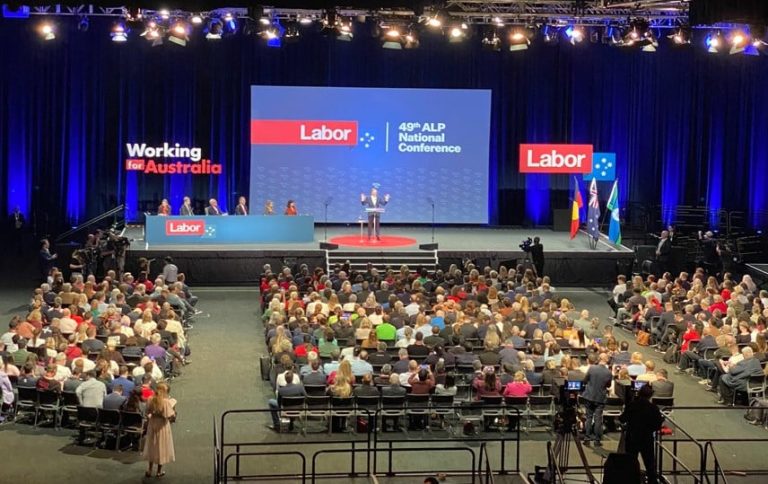
The Australian Labor Party cannot keep claiming to be the voice of labour if the people at the top have never really laboured, writes Rob Powell.
THE AUSTRALIAN LABOR PARTY has a problem it does not seem willing to name. That problem is authenticity.
Not the fake kind where politicians put on hard hats, high-vis vests, and stand around for photo opportunities, but the deeper kind of authenticity that comes from actually being connected to the people they claim to represent.
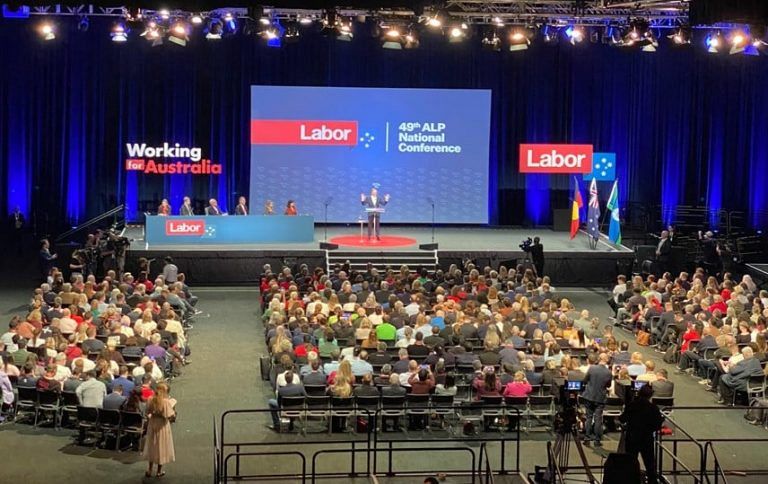
The ALP still presents itself as the political party of workers. It still speaks in the language of labour, fairness, dignity, and working people. But when you look at the people who actually make up the parliamentary party, it looks less like a workers’ movement and more like a professional political class.
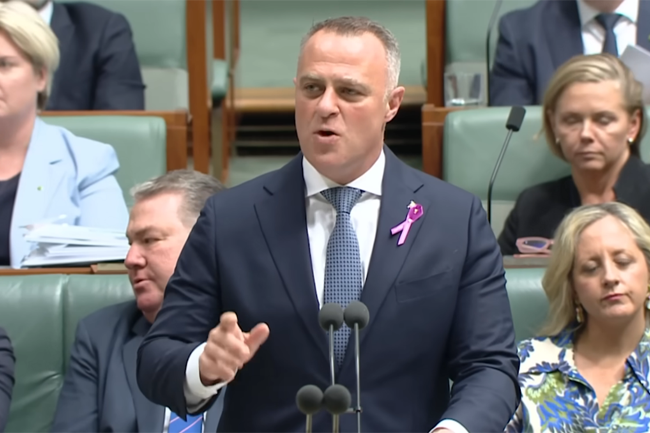
Many of its MPs have come through staffer roles, union offices, law and policy work, factional politics, and university pathways. They have spent far more time inside political machinery than inside the ordinary working lives they claim to speak for.
This is not just about individual politicians being good or bad people. Some of them may be decent, competent, and sincere. The problem is structural.
The party’s story is still labourist, but its actual social makeup is managerial and professional. It claims the mythology of labour, but its representatives often come from the same narrow class of insiders that dominate modern politics more generally.
Even the union movement, which once gave working-class people a pathway into politics, has changed. Many union officials and organisers now come through professional and university pathways rather than from the shop floor. So even the old link between labour and parliamentary representation has become weaker.
The result is a party whose connection to labour is often symbolic rather than lived.
That creates a real problem of representation. Voters can tell when a party’s story no longer matches the people telling it.
The ALP still talks about workers, but it often sounds like professionals talking about workers from a distance. It can speak about the cost of living, insecure work, and the dignity of labour, but many of its representatives have not lived those things in any serious way.
This is where a party like One Nation becomes interesting, not because One Nation is better, but because it often looks more socially honest. Its candidates can be hairdressers, truck drivers, small business owners, retirees, and ordinary people with very little polish.
To put it bluntly, they can look like everyday muppets. They are not necessarily experts. They are not always politically literate. They are often messy, chaotic, and embarrassing. But they do look like they come from the world they claim to represent.
That is the paradox. The ALP is probably more competent. It is more policy literate. It is more capable of governing. But One Nation can feel more authentic because its candidates are recognisably ordinary.
The ALP, by contrast, often feels like a ruling class. That is not just an image problem. Sociologically, it has become one. It is a party of professionals who speak the language of technocratic government, not the ordinary language of lived labour.

The deeper issue is that the ALP has not properly dealt with what has happened to the working class. The old industrial working class has changed. Fewer people work in factories. More people work in care, disability support, logistics, warehouses, hospitality, retail, and the gig economy.
But the ALP still seems tied to an older image of labour that no longer fits the world as it is.
Instead of building real pathways for people from these new working-class sectors, the party keeps promoting people who know how to work the internal party system. Factional loyalty matters more than community connection.
Preselection is often won by people who can count numbers in a branch meeting, not people who know what it is like to balance a household budget on casual wages.
The result is a party that may govern competently, but does not inspire much loyalty. It can be respected without being loved. It can be trusted to manage things, but not trusted to understand the lives of people living paycheque to paycheque.
Its leaders talk about the dignity of work, but too few of them have done the kind of work whose dignity they praise.

This is not an argument against education, expertise, or policy knowledge. I am not saying the ALP should replace serious politics with populist nonsense. The point is about representational honesty.
A party cannot keep claiming to be the voice of labour if the people at the top have never really laboured. It also cannot keep relying on nostalgia for a working class that has changed.
If the ALP wants to recover its authenticity, it needs to change who is brought into the party and who is promoted.
It should be recruiting aged-care workers, disability support workers, warehouse workers, delivery riders, hospitality workers, cleaners, retail workers, and people who actually know what insecure work feels like. It should treat lived experience as political capital, not as something that has to be managed or hidden.
Until then, the ALP will remain what it increasingly looks like. It is a party of professionals speaking in the name of workers, while many workers themselves drift toward parties that, however flawed, at least look like them.
Rob Powell is a retired mature-aged student currently studying politics and philosophy, focusing on how ethical frameworks shape public policy and political behaviour.
 This work is licensed under a Creative Commons Attribution-NonCommercial-NoDerivs 3.0 Australia License
Support independent journalism Subscribe to IA.


Related Articles
- One against six in Labor’s battle for reform
- Victoria’s wildlife pays the price for Labor’s bushfire failures
- Pressure mounts on Albanese Government over failure to sign nuclear ban Treaty
- Chalmers urged to solve a productivity problem that may not exist
- Jobs, inflation and luxury spending all keep setting records