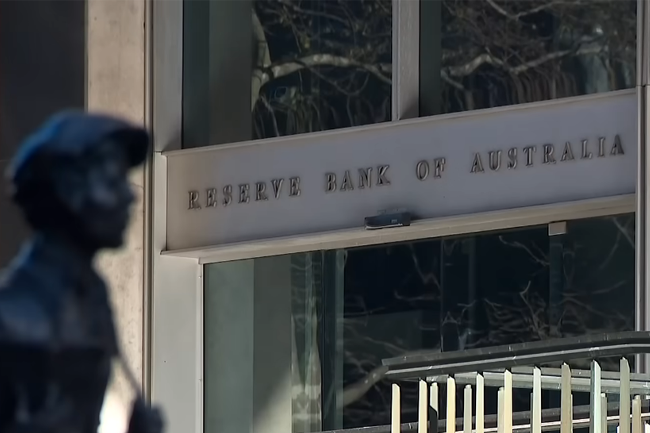
The Reserve Bank has lifted interest rates to 4.6%, but higher rates cannot fix oil-driven inflation and risk deepening an economic downturn, writes David Higginbottom.
THE WARNING SIGNS have been visible for months: disrupted oil and diesel supply, expensive fertiliser, vulnerable shipping routes, attacks on energy infrastructure, a widening Middle East conflict and escalating attacks on Black Sea shipping and export infrastructure. What is changing is that these risks are beginning to interact.
On 29 September, the Reserve Bank of Australia (RBA) raised the cash rate by 25 basis points to 4.6%. It was the fourth rise this year. Its statement cited domestic capacity pressures, stronger-than-expected inflation, business cost pressures and elevated short-term inflation expectations.
The RBA also acknowledged that the Middle East conflict had broadened, global energy prices were higher than assumed in August, and fuel prices were already increasing the cost of other goods and services. This is an imported supply shock — it begins with energy and freight, then reaches farms and factories and then appears in food, manufactured goods and services. The prices arrive at different times, but the pressure comes from the same chain of disruption.
An interest-rate rise cannot reopen a refinery, clear a shipping route, replace a lost fertiliser shipment or restore a damaged export terminal.
The diesel problem is bigger than the bowser
Diesel powers the trucks that move goods. It is used by farm machinery, mining equipment, construction plant, freight rail and marine transport. When diesel becomes scarce or expensive, the cost moves through almost every physical supply chain.
The International Energy Agency (IEA) says the current tightness is most acute in refined oil products, not simply crude oil. Gulf producers exported 3.3 million barrels a day of refined products in 2025, including middle distillates such as diesel and jet fuel. Nearly 3 million barrels a day of refining capacity in the region has been shut because of attacks and a lack of viable export outlets.
Diesel prices in the United States have nearly doubled from pre-war levels, with Europe and Asia not far behind.
The RBA cannot fix that. Nor can a mortgage holder in western Sydney, a small business in regional Queensland, or a renter whose landlord passes on higher costs. Yet they are the people who will feel the most immediate domestic effect of another rate rise.
Fertiliser and food
More than 30% of global urea trade moves through the Strait of Hormuz, according to the IEA. The International Food Policy Research Institute reports that Gulf countries accounted for 36% of global urea exports over 2023 to 2025. The same region is a major source of ammonia and phosphate fertilisers.
Australia is not immune merely because it is a food exporter. As urea is a natural-gas-based input to high-yield cropping, a price or supply disruption can affect planting decisions now and food prices months later. In June, Guardian Australia reported that urea prices had risen about 75% since the Iran war began. It described a Wimmera grain farm facing an estimated $600,000 hit from higher fertiliser costs and delayed supply.
The International Monetary Fund describes higher fuel prices for importing economies as a large, sudden tax on income. It also notes that higher transport and input costs work their way into the prices of manufactured goods and services over time.
That is the dilemma facing Australia. It is not just paying more at the service station. It is paying more to move goods, make things, grow food and keep businesses operating.
A blunt tool meets a complex shock
The RBA fears that inflation could become embedded. It says aggregate demand must remain subdued for a period to reduce capacity pressures and return inflation to target. However, whose demand is being subdued, and what exactly does that achieve when a significant part of the price pressure is coming from oil, diesel, freight, fertiliser and food?
A further rate rise increases the repayments of households with mortgages and the financing costs of small businesses. It weakens consumer spending and reduces investment. Those effects may slow the economy, but they do not create an extra litre of diesel, an extra kilo of urea or a safer shipping route.
If the Bank is the only institution visibly responding to inflation, it will use the instrument it has, monetary policy, as though it were the only economic lever that matters.
The risk is turning a supply shock into a recession
The RBA's statement says output growth has slowed, consumer spending is easing, housing prices have fallen in most capital cities, new housing loans have declined noticeably and labour-market conditions have eased. It further says that the previous three cash-rate rises have already tightened financial conditions and that the economy appears to be slowing.
The Bank also acknowledges that prolonged uncertainty could lower activity overseas and in Australia.
They describe an economy already absorbing a real-income shock from higher fuel, transport and food costs. Adding higher debt repayments and higher business-finance costs pushes in the same direction: households cut discretionary spending, businesses defer investment and employers become more cautious about hiring.
By the time a further rate rise has its full effect, the supply shocks we are experiencing may already have weakened demand substantially. The result can be the worst of both worlds: Lower growth, weaker employment and greater debt stress, while energy and input prices remain high because the underlying physical bottlenecks have not been repaired.

The depth of any Australian downturn will depend on the duration and spread of the wars, further damage to energy and trade infrastructure, household resilience and the policy response.
However, the RBA is now taking a serious risk: it may convert an externally generated price shock into an unnecessarily deep Australian downturn, potentially a recession. A central bank charged with both price stability and full employment should explain clearly why that risk is worth taking.
The RBA can respond to domestic demand and inflation expectations.
Government should address the supply side and the distributional consequences. That means targeted support for households with the least capacity to absorb food and energy costs, rather than broad measures that also subsidise those who do not need assistance. It means practical plans for strategic fuel resilience, freight efficiency, renewable energy, electricity networks and an evidence-based assessment of domestic fertiliser capacity.
It also means greater honesty. The price of security is not limited to submarines, military hardware or intelligence budgets. Food, fuel, freight, resilient energy systems and a population able to withstand a shock are security issues, too.
Calling these pressures black swans gives policy-makers an excuse to treat them as unforeseeable. They are not. The vulnerabilities are known. The connections between them are visible.
What remains uncertain is how long the conflicts will last; how much infrastructure will be damaged and whether governments will reduce the risks before the next rate rise asks Australians to carry even more of the cost.
David Higginbottom is a member of the coordinating committee of the Independent and Peaceful Australia Network (IPAN) and coordinator of the Make Peace A Priority campaign (mpap.au).
 This work is licensed under a Creative Commons Attribution-NonCommercial-NoDerivs 3.0 Australia License
Support independent journalism Subscribe to IA.


Related Articles
- CARTOONS: Interest rate rises are sinking spirits
- A tumultuous month ahead for the economy and policy makers
- The Reserve Bank's latest interest rate cut is too little, too late
- CARTOONS: The slings and arrows of outrageous rate rises