In the next few weeks, there will be a raft of economic policy decisions taken that will be life-changing for many Australians.
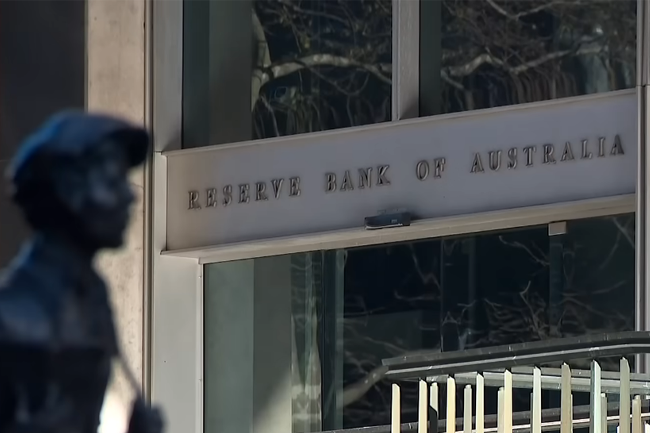
The Monetary Policy Board of the Reserve Bank of Australia (RBA) meets on 4 and 5 May and will announce its decision on interest rates in the afternoon of the second day of the meeting.
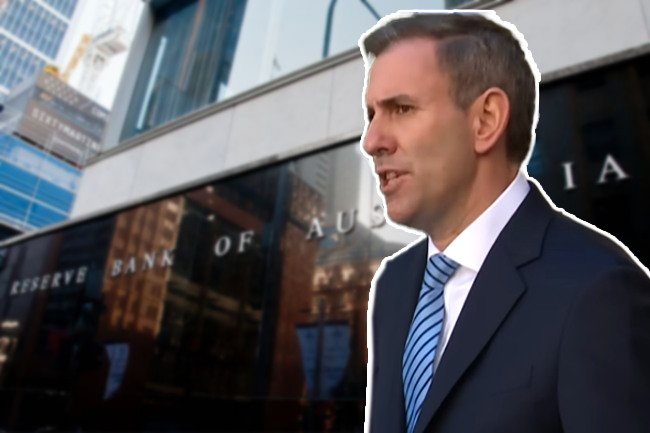
A week later, on the evening of 12 May, Treasurer Jim Chalmers will get to his feet in the House of Representatives and deliver the Albanese Government’s fifth budget. This will include a raft of decisions on tax, spending, subsidies and broader reform measures. It will no doubt include a series of measures dealing with the fallout from the oil price shock.
The RBA decisions
After the interest rate increases in February and March, the RBA has moved the level of the cash rate to one rarely seen in the last two decades. At 4.1%, it was only in the 15-month period from November 2023 to February 2025 that interest rates have been this high in the 14 years since 2012.
In other words, interest rates are already considered high.
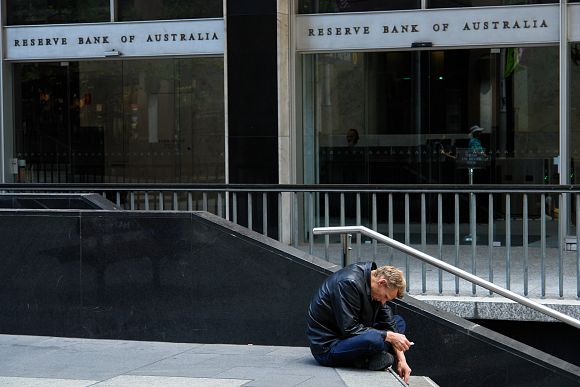
The current expectations for the May meeting are skewed towards a further interest rate hike to 4.35%, although it is far from certain whether the rate hike will be delivered.
The obvious problem is inflation. The global oil shock will boost inflation, but it must be emphasised that it will also lower the pace of economic growth. These will be the main influences on RBA deliberations. If inflation were its only objective, a rate rise would be certain.
What is sometimes overlooked is the other mandate of the RBA — the maintenance of full employment.
Even before the oil shock hit the Australian economy, economic growth was slowing, which was feeding into a softer labour market. The March labour force data, released last week, showed the unemployment rate at 4.3%. It has been broadly steady near this level for over a year and, importantly, it appears to be consistent with some slack in the labour market, given that wage growth is slowing and job vacancies have fallen sharply in the past two years.
There is no doubt that the unemployment rate will rise as the oil price shock hits spending, investment and employment.
Any further rise in unemployment will further depress inflation.
The RBA interest rate decision in May also follows recent data that shows a collapse in consumer sentiment, intensifying negativity from the business sector. The RBA would be wise to take account of this news.
For the “inflation first” proponents, higher interest rates seem obvious. For those with concerns about the costs of adding several hundred thousand people to the ranks of the unemployed, steady interest rates would follow, albeit with an acknowledgement of inflation being a little higher for a little longer.
The Budget decisions
The Budget decisions are more complex and have a more lasting impact on society and the economy.
Treasurer Chalmers has the unenviable task of framing a set of policy decisions that meet what are often conflicting objectives. These include helping the household and business sectors deal with the fallout from the oil shock, the implementation of tax and other reforms that are designed to enhance productivity, whilst ensuring the budget bottom line is skewed towards balance.
The Budget has the opportunity to further address intergenerational inequality issues, particularly in housing and superannuation, and to restructure the National Disability Insurance Scheme (NDIS) to ensure the funding is better targeted. It is difficult to speculate about the potential policy decisions when the Government is still contemplating many of the specifics it will announce in three weeks.
Indeed, decisions are still to be taken in the next couple of weeks before the Budget is signed off with the fast-moving events from the Middle East influencing the end point.
Even after the interest rate and Budget decisions are delivered, the unknowable evolution of events from the Middle East (and elsewhere) will remain a potentially volatile issue that will impact the economy into the second half of 2026. Further interest rate and Budget-related decisions will unfold over the remainder of 2026.
With the speed at which geopolitical and other issues move and the magnitude of those moves still likely to be particularly large, what the RBA and Government do when the adjust their economic policy levers could well be superseded by something impacting the global economy even though the interest rate and Budget announcements will be critically important for the standing of the economy over the next few years.
Stephen Koukoulas is one of Australia’s most respected economists, a past chief economist of Citibank and senior economic advisor to an Australian Prime Minister. You can follow Stephen on Twitter/X @TheKouk.
 This work is licensed under a Creative Commons Attribution-NonCommercial-NoDerivs 3.0 Australia License
Support independent journalism Subscribe to IA.


Related Articles
- The Reserve Bank's latest interest rate cut is too little, too late
- CARTOONS: The slings and arrows of outrageous rate rises