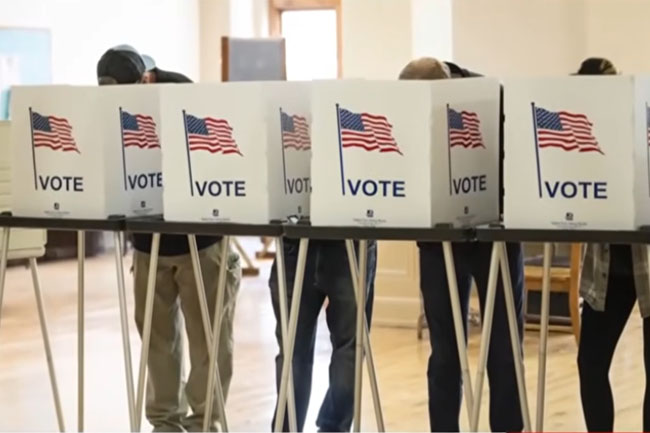
Healthcare, housing and energy will be major issues in the U.S. midterm elections. How Australia compares is worth examining.
Notwithstanding the Iran war, the Epstein files controversy and gender politics, Americans are more concerned about the economic and social issues that affect them daily.
1. Healthcare
The United States and many other Western nations are undergoing a demographic and healthcare transformation.
The population is ageing at an unprecedented rate. These elderly patients often suffer from multiple and complex health conditions. According to the National Library of Medicine, the United States faces a chronic shortage of specialised drugs and healthcare professionals.
The Library notes that the expansion of Medicaid (which serves one in five Americans) under the Affordable Care Act (ACA) has enhanced Medicaid’s ability to reduce costs and improve eldercare.
Nearly 28.6 million Americans, or 8.5% of the U.S. population, are uninsured. An extra 4.8 million will lose coverage in 2026 if the Enhanced Premium Tax Credits expire.
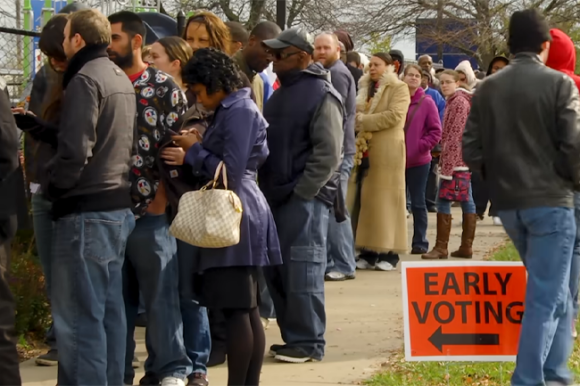
Many Americans argue that universal health care would be marred by government inefficiency and stand in direct opposition to states’ rights and American capitalism. It would raise taxes across the board and limit access for some, especially those with unique medical conditions.
However, in December 2025, the Pew Research Centre found that 66% of Americans want some federal government control of national healthcare — although this is mainly a mix of government-backed insurance and universal healthcare.
Medicare and Medicaid together cannot negotiate cheaper services, equipment and drugs that a centralised universal healthcare system could.
Many Western countries, including Australia, Canada and Germany, have combined universal health coverage with the private insurance market, often using private insurers to provide the core mandated coverage or using them for supplementary “top-up” services.
It is not cheap. For example, Australia spent $270.5 billion, about 10% of its GDP, on healthcare in 2024.
Professor Robert Hughes of The Wharton School, the alma mater of President Trump, declares:
‘I don’t understand why there’s so much resistance to the idea of truly universal health insurance in the United States, given that this is something that other industrial countries just do.’
2. Housing
The United States is facing a severe, long-term housing supply crisis that is expected to continue beyond 2026. Estimates of the shortage vary based on methodology but generally range from 2.5 million to over 7 million units.
The crisis is characterised by a “locked-in” effect where homeowners with low mortgage rates are reluctant to move, restricting inventory, while new construction has failed to keep pace with demand over the past decade. This is especially prevalent amongst the young, the poor, renters and those experiencing homelessness. More than 21 million households pay half or more of their income for housing.

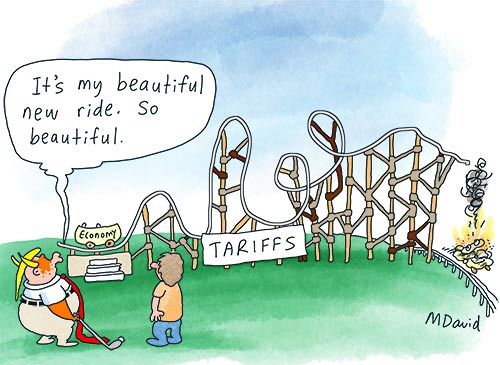
The deportation of cheap construction labour and tariffs on imported building materials, such as aluminium, copper and softwood lumber, have exacerbated the situation.
Furthermore, severe climate change weather events have seen insurance companies dramatically raise their rates. Consequently, many dwellings are now uninsured.
In his State of the Union address, President Trump asked Congress to make permanent his executive order banning institutional investors from buying single-family homes. Property developer Trump has a point. Speculative land-banking effectively reduces the land made available for development and contributes to sprawl.
Moreover, the conventional real estate tax (and its haphazard administration) provides significant financial rewards to speculators. Vacant land parcels are rarely assessed at anything close to their current market value.
Meanwhile, public housing in America today remains underfunded, unpopular and highly constrained. While demand is great, with long, often closed waiting lists, the sector faces immense challenges, including a billion-dollar funding backlog for repairs, stigma, and Not In My Backyard (NIMBY) opposition to new developments.
In Australia, social housing has decreased over time from 84% (341,000 dwellings) in 2006 to 66% (297,000 dwellings) in 2025.
Laurie Goodman, founder of the Urban Institute, summarises:
‘The average family today, buying the average house at today's interest rates, putting 3.5% down, will spend 34.7% of their income on their mortgage payments, taxes, and insurance. The reason housing is so unaffordable is because we have an acute housing supply shortage, which drives up both home prices and rents.’
3. Energy and electricity
The United States derives the vast majority (60%) of its energy from fossil fuels, with petroleum, natural gas and coal leading, followed by nuclear power (19%), and wind and solar (14%).
Electricity is mainly created by burning natural gas and coal and utilising nuclear energy. The demand for electricity remains especially high for artificial Intelligence (AI) data centres.
The Iran war has glaringly demonstrated that America’s reliance on fossil fuels is flawed.
China and Europe still burn a lot of coal and natural gas to generate electricity, but their reliance on wind and solar is more pronounced than America — China (18%) and Europe (59%). Australia generated 39% of energy from renewable sources in 2025, a 3% increase from the previous year.
The cost of electricity for residential customers increased from 13.22 cents per kilowatt-hour in June 2020 to 17.47 cents per kilowatt-hour in June 2025 — a 32% increase in five years, according to the U.S. Energy Information Administration (EIA).
The Centre for American Progress reported in September that electricity rates rose by nearly 7% from June 2024 to June 2025.
Ryan Hledik, a principal at The Brattle Group, has found one cost driver that is significant in every American state: the growth in utilities’ infrastructure spending. In an article in Inside Climate News, he explained how utility companies are faced with a combination of ageing equipment and an economy in which the costs of replacing equipment have soared.
These complex issues require a robust bipartisan Congress that is determined to overcome ideology and gamesmanship. Otherwise, Americans face a grim future.
Patrick Drennan is a journalist based in New Zealand, with a degree in American history and economics.
 This work is licensed under a Creative Commons Attribution-NonCommercial-NoDerivs 3.0 Australia License
Support independent journalism Subscribe to IA.