What today's boys are being fed is not just entitlement; it is grievance. Women are no longer cast simply as something to look at — they are cast as the enemy who took something that was owed to them, writes Wayne Hawkins.
Wall Street, 1968
IN 1968, thousands of men stopped Wall Street to leer at one young woman. Fifty-eight years later, the crowd is back. Only now it lives in our children's phones, and it is angrier.
In September 1968, a 21-year-old data clerk named Francine Gottfried walked from the Wall Street subway station to her job at Chemical Bank. She had made the same walk every working day since May. By the third week of September, thousands of men were waiting for her.
It started small. A handful of office workers noticed her figure, worked out what time she came up from the station, and told their mates. Word spread across the Financial District.
On 18 September, 2,000 people were waiting for her. The next day, more than 5,000 downed tools and poured into the street to watch a young woman walk to work.
Police had to close the roads and escort her through the crush. Men climbed onto car roofs for a better view, damaging three of them. Brokers hung out of office windows.
Trading on the most powerful financial street in the world all but stopped, because one woman had a figure men wanted to look at.
The press loved it. They nicknamed her the "Sweater Girl" and printed her measurements as though they were share prices. Within weeks, she had quit her job. The men went back to their desks. She was the one whose life changed.

Just blokes having a laugh
It is worth sitting with how normal all of this was.
"Girl watching" was a recognised pastime in 1950s and 1960s America. It had its own guidebooks, which presented it as a harmless gentleman's hobby, something like birdwatching. Nobody in that Wall Street crowd thought of himself as a harasser. He was just one of the blokes, having a laugh on his lunch break.
That was the point. The behaviour was so ordinary that thousands of grown men could do it in broad daylight, in their work clothes, in front of news cameras, and feel no shame at all. It wasn't hidden because it didn't need to be. The only person who paid a price was the woman at the centre of it.
Women noticed. In March 1970, a group of New York feminists, including the writer Karla Jay, staged what they called an "Ogle-In" on Wall Street. They catcalled and leered at the men on their way to work, handing the experience straight back to them. It was satire with a simple message: see how it feels.
Over the decades that followed, the culture shifted. That was not because men changed their minds en masse. It was because women organised, entered workplaces in large numbers, won legal protections and made public objectification socially costly.
What had once been a lunchtime spectacle became something a man could lose his job over.
But the behaviour didn't vanish. It went indoors, into boardrooms, change rooms, locker rooms and, eventually, group chats. It became something men did when they believed no one was watching. The attitude survived; it simply learned to keep its voice down.
How thin that veneer remained was on display in 2017. Days after the Fearless Girl statue, a monument to gender equality, was installed facing Wall Street's Charging Bull, a drunk man was filmed simulating sex with it in front of a crowd. Half a century on, on the very same street, the instinct was still there.
What is different now is that the veneer is coming off completely. And it is coming off fastest among the young.

The grandsons are more regressive than the grandfathers
In March this year, Ipsos and the Global Institute for Women's Leadership at King's College London, chaired by former prime minister Julia Gillard, released a survey of 23,000 people across 29 countries, including Australia.
It found that 31% of Gen Z men agreed a wife should always obey her husband. Among Baby Boomer men, the generation that was young on Wall Street in 1968, the figure was 13%. Almost a quarter of Gen Z men said a woman should not appear too independent or self-sufficient, double the rate among Boomer men.
Read that again. On these measures, the grandsons hold more regressive views about women than the grandfathers who once stopped traffic to stare at one.
The Australian picture is, if anything, worse.
In August, the University of Melbourne's Dr Sara Meger published research funded by the Office of National Intelligence that surveyed 1,122 Australians aged 13 to 17 and 2,307 adults.
Among the teenage boys, 31.8% said attempts to give women equal opportunities had gone too far, and 30.1% said men have more right to a job than women when work is scarce.
Most confronting of all, 24.7%, or one in four, agreed that feminism is damaging to society and should be resisted with violence if necessary.
Meger's most important finding was not how common these views are but what they lead to. Hostile attitudes toward women were the single strongest predictor of support for violent extremism, stronger than political leaning, religion or how much time someone spent online.
Her report's first recommendation is that misogyny and anti-feminism be recognised as a form of violent extremism in Australia's counter-extremism framework.
She has since given that evidence to the Royal Commission on Antisemitism and Social Cohesion.

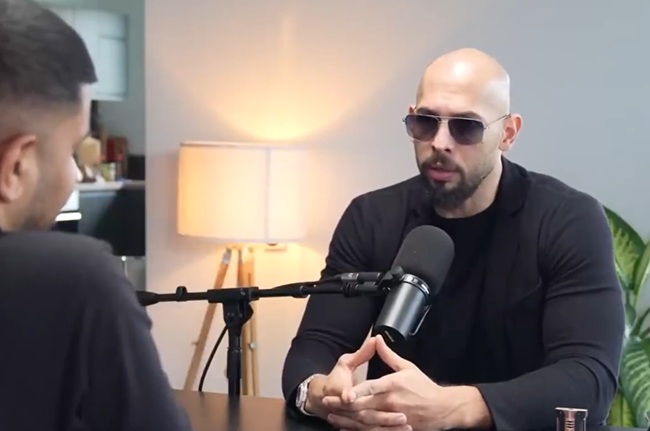
Her companion survey of 511 teachers found that 62% had flagged online misogyny as a concern in their own classrooms. Teachers described students quoting Andrew Tate by name.
Some used his language to justify ignoring instructions from female teachers while following identical instructions from male ones. This is not a debate happening somewhere out on the internet. It is happening in our schools, every day, in front of the women trying to teach these boys.
From a crowd to a feed
So what links a lunchtime mob in 1968 to a 14-year-old sitting in a classroom in Tasmania today?
The attitude was never cured. It was contained. The Wall Street crowd needed a physical street and a physical woman, and over time, social disapproval shrank the space in which that behaviour was acceptable. Shame did a lot of the work that laws could not.
The algorithm has rebuilt the crowd and removed the shame. The new crowd is endless and always open, and it is invisible to the parents and teachers who might once have stepped in. Every boy with a phone now has a street full of men telling him it is fine to look, to judge and to dominate, and that the women who object are the real problem.
Meger's research is specific about how boys get there, and it is not social media in general. Manfluencer content, pornography and online dating showed the strongest links to misogynistic views. Boys come in through fitness, money and self-improvement, content that speaks to genuine worries about loneliness, purpose and status. Those worries are real, and too often nobody else is addressing them. Then, once the boys are listening, they are handed a villain.
That is the critical difference from 1968. The Wall Street crowd was leering, but it was laughing. What today's boys are being fed is not just entitlement; it is grievance. Women are no longer cast simply as something to look at. They are cast as the enemy who took something that was owed to them.
That is the jump from bad manners to extremism. It is why an intelligence agency paid for this research, and why it should be read as a national security document rather than a social commentary.

It isn't only boys, and that is the hopeful part
The honest picture is more complicated than a story about bad young men. Meger found that teenage girls often held views similar to those of adult men. Gen Z women were twice as likely as Millennial women to agree that marriage entitles a husband to sex, even when his wife does not want it.
That tells us this is about what young people are consuming, not something built into boys. And that matters, because what is learned can be countered. A generation that has been taught its way into these views can be taught its way back out, if we are prepared to compete for its attention.
What we should do
The first step is to treat organised misogyny as the security issue the evidence says it is. Government should adopt Meger's recommendation and name it plainly as a pathway to violent extremism in national policy, with the same seriousness and funding we give to other forms of radicalisation.
Second, we need to fund the alternative. That means real money for respectful relationships education delivered by people boys will actually listen to, not a one-off assembly they sit through and forget. It also means investing in mentoring, sport and community programs that meet the needs manfluencers exploit: belonging, direction and a sense that someone older has their back.
In regional communities, where those programs are thinnest, this matters most.
Third, the platforms must answer for their feeds. It is not enough to police what individual users post. The companies that design recommendation engines should be held responsible for what those engines push to children, because the algorithm builds the crowd.

Finally, and most simply, we have to talk with boys rather than at them. The manosphere wins because it is often the only voice that seems to be speaking to them directly, taking their frustrations seriously and offering them a place to stand. If fathers, uncles, coaches, teachers and community leaders leave that space empty, someone else will fill it.
Don't let the street fill up again
Fifty-eight years ago, Francine Gottfried had to give up her job because thousands of men decided her body was public entertainment. Nobody asked her how it felt.
We have spent half a century making it harder for men to behave like that crowd. Now a generation of boys is being taught, one video at a time, that the crowd was right all along.
We can't let the street fill up again.
Wayne Hawkins is the owner of Crisp N Sweet Bakery and Café in Claremont, Tasmania and an independent candidate for the Federal seat of Lyons.
 This work is licensed under a Creative Commons Attribution-NonCommercial-NoDerivs 3.0 Australia License
Support independent journalism Subscribe to IA.


Related Articles
- OPEN LETTER: Dr Simon Gordon's patients still waiting for answers
- Medical misogyny and endometriosis: Beyond the Simon Gordon scandal
- Trump-style misogyny: Life imitating Austen's art
- Thanks to double standards, men have got it good
- Yarra Valley Grammar incident highlights urgent need to end misogyny