If the RBA has misjudged labour market tightness, current rates could unnecessarily weaken growth and jobs, writes Stephen Koukoulas.
AS PART OF ITS interest rate decision-making process, the Reserve Bank of Australia (RBA) tries to estimate the strength or tightness of the labour market.
This is not because it wants to see unnecessarily high unemployment in Australia. On the contrary, it wants to make sure that the economy can grow at a pace where everyone who wants a job can find one relatively easily and quickly, at the same time ensuring inflation is at the mid-point of its 2-3% target range.
This is the broad definition of full employment.
In recent months, there has been a bevy of mixed news on the strength or otherwise of the labour market. That uncertainty has not prevented the RBA from estimating that labour market conditions are “tight”.
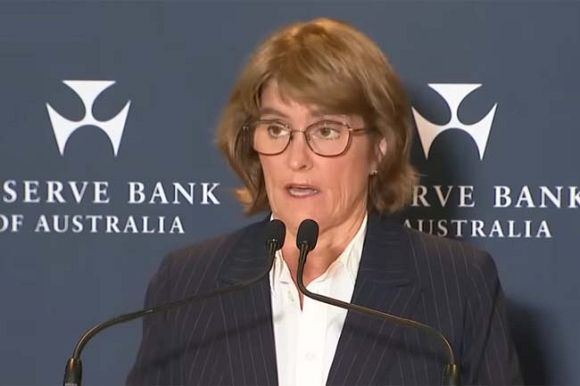
This interpretation is open to debate and it matters because if the RBA is wrong, the consequences will see a materially weaker economy through 2026 and into 2027.
In the minutes of the February RBA Board meeting, in which it increased interest rates to 3.85%, it noted:
“The labour market was a little tighter than consistent with full employment.”
Whether the economy is operating at a level consistent with “full employment” is difficult to assess in real time.
References are often made to the unemployment rate, underemployment, the participation rate, the ratio of employment to population, job vacancies and wage growth.
These all have some validity, but from a monetary policy and a future inflation perspective, the level of wage growth is the most powerful indicator of judging the degree of slack in the labour market.
Think about it.
If the labour market is genuinely tight, employers would have difficulty finding new workers or retaining talent in their business operations. There would be a shortage of workers. There will be fewer job vacancies.

When there is a shortage, prices rise
Like any service with high demand, the consequence of a tight labour market would be a higher price for labour — wage increases, in other words, to retain staff and to attract new staff. If the labour market were truly tight, wage growth would be accelerating and would be running at a hot pace, inconsistent with the RBA inflation target.
The wage price index data for the December quarter 2025 confirmed only moderate growth in wages. This has been the case for the past 18 months, where annual wage increases have been broadly between 3.25 and 3.5%.
This rate of wage increase is entirely consistent with inflation at 2.5%.
What's more, job vacancies and advertisements remain well below their peaks, suggesting that labour demand is not all that robust. Job vacancies, in particular, have fallen 30% from 2023, confirming a material weakening in employer demand for labour. In these circumstances, there is little or no need to pay higher wages to attract or retain staff, a point reflected in the wage price data.
There are other fundamental indicators that the labour market is softening.
They can be broadly defined as“discouraged workers”, or people who have left the labour market.
The workforce participation rate has fallen sharply over the past year, falling 0.5 percentage points from 67.2% to 66.7%. The participation rate tends to rise when the economy is strong and the labour market is tight. Economic buoyancy and the relative ease of getting a job draw people back into the labour market, boosting workforce participation.

It is a similar issue with the ratio of employment to population, which has dived from 64.5% a year ago to 63.9% in the most recent data.
A falling participation rate and a lower employment-to-population ratio in the last year suggest there is a large proportion of the working age population that can re-enter the labour market if conditions warrant such a move. This can happen without driving the unemployment rate lower.
Discouraged workers could re-enter the labour market without there being inappropriate wage and inflation pressures.
The latest 4.1% unemployment rate, while historically low and it being good news, may not be fully reflective of the tightness of the labour market.
There is nothing, at this stage, that suggests an unemployment rate nearer 3.5% or below cannot be achieved with inflation being in the RBA target. It could be the new normal.
All of this has important implications for the RBA's assessment of economic conditions.
If the RBA is wrong, the current level of interest rates, let alone any further rate increases, would risk eroding growth and damaging labour market conditions.
The short-term noise in parts of the labour market is open to over-analysis and over-interpretation.
From the perspective of inflation, wage growth is the dominant indicator of labour market tightness and on that score, the latest news is benign.
Stephen Koukoulas is one of Australia’s most respected economists, a past chief economist of Citibank and senior economic advisor to an Australian Prime Minister. You can follow Stephen on Twitter/X @TheKouk.
 This work is licensed under a Creative Commons Attribution-NonCommercial-NoDerivs 3.0 Australia License
Support independent journalism Subscribe to IA.


Related Articles
- The RBA did not make a mistake in 2025 — the facts changed
- How rising house prices can help the economy
- RBA's interest rate cut a double-edged sword
- Interest rate changes don’t always sway voters
- Government should stop letting Reserve Bank govern Australia