A shockwave from Washington has rattled Australia’s once-steady economy, leaving policymakers to navigate rising inflation, slowing growth and a tightening fiscal squeeze, writes Stephen Koukoulas.
AMID ALL THE economic kerfuffle of recent months in Australia, even talk of recession in some quarters, it is important to determine where these ructions and points of economic pain have come from. Once this is done, working out what can be done to address the problems will be more obvious.
Of note, and this is essential background to the current economic debate, the Australian economy ended 2025 on an extremely positive note:
- Annual economic growth was a healthy 2.6%.
- The unemployment rate was historically low at 4.1%.
- Consumer sentiment and business confidence were optimistic about conditions in the economy.
- Inflation was inching up, but this was from a comfortable level and there was nothing particularly disconcerting about the inflation outlook.
- Interest rates were firmly on hold and there was a well-considered debate about whether the next move would be up or down.
- Wages were growing in real terms and productivity was picking up.
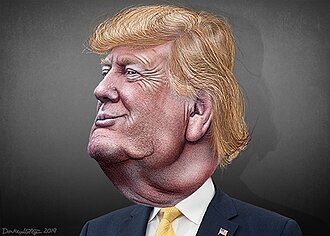
Along comes President Trump
Less than six months later, the Australian economy is being pushed and pulled in a contortion of pain.
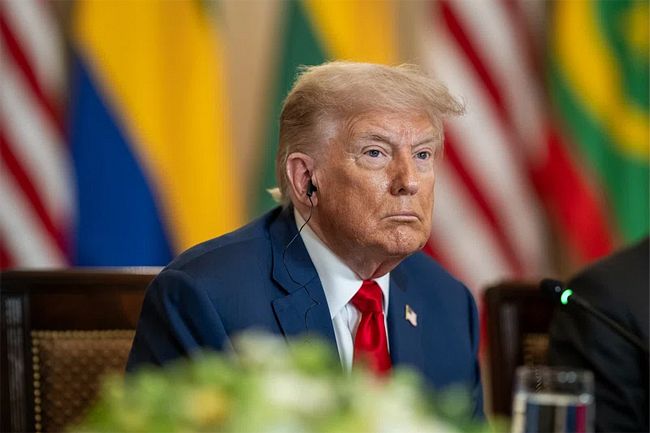
Almost all of the deterioration can be sheeted home to the decisions of U.S. President Donald Trump.
Most obviously, with President Trump sparking the U.S.-Israeli war on an otherwise largely dormant Iran, global oil prices have risen by around 75%, and the supply of petrol and fertilisers, among other goods, has been severely disrupted.
In just a few months, the animal spirts of the global business and consumer sectors have been shattered.
In Australia, the latest forecasts from the consensus of economists is for annual GDP growth to slide towards 1 to 1.5%, with household spending under most downward pressure.
The Reserve Bank has the “nightmare” decision of whether to keep hiking interest rates to tackle inflation but with a huge cost of economic slowdown, faltering businesses and rising unemployment; or, leave interest rates steady to preserve jobs but with a cost of inflation remaining higher for longer.
In any event, it is close to certain that the economic downturn unfolding will see the unemployment rate jump towards 5%, with inflation remaining above the target level for a year or more, driven directly by higher petrol prices and the second round effects on transport logistics.
But Trump’s destructive economic tentacles extend beyond the obvious effect from the conflict in the Middle East.
The U.S. budget position is close to catastrophic.
According to the U.S. Congressional Budget Office, the budget deficit has exploded higher, to US$1.8 trillion (AU$2.5 trillion) in 2025 and on the current policy path set by Trump, will rise to US$2.2 trillion (AU$3.6 trillion) in 2030. As a proportion of GDP, the deficits will be between 5.6 and 6.7% of GDP in every year over the next decade. This will see government debt surge to 120% of GDP, a level that has investors worrying about the sustainability of the U.S. budget.
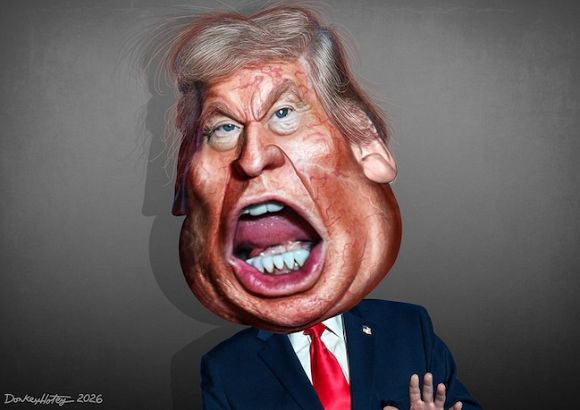
These are diabolical numbers.
Part of this concern has shown up in the sell-off in the bond market, which has seen the yield on 30-year government bonds rise to 5%. This U.S. bond sell-off, in concert with the inflationary effects of the global oil price shock, has been reflected in the Australian interest rate market, including via higher yields on Australian bonds. This has seen the Government’s interest costs rise strongly despite the two budget surpluses and smaller deficits delivered under the Albanese Government.
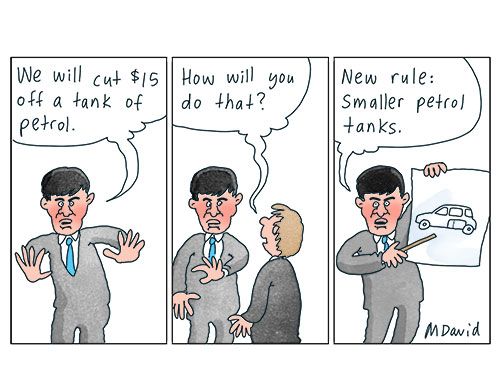
The petrol price shock has seen the Albanese Government forego $2.5 billion in excise revenue as it delivered cost-of-living relief with a cut in the petrol excise.
There are other areas where the Trump stain is filtering into the Australian economy.
The weakness of the U.S. dollar as global investors sell their U.S. assets means that the Australian dollar has surged to around 72 U.S. cents from the low 60-cent levels before the Trump Presidency. This is crimping the earnings of Australian exporters and making it more difficult for local firms competing with importers.
The escalation of geopolitical tensions has seen the Australian government further ramp up defence spending. This is understandable, but it means that otherwise scarce funds cannot be directed to other areas of the economy in a time of budget repair.
While the vast bulk of the economic problems confronting the Australian economy can be traced back to U.S. policy issues, local policymakers must deal with those issues.
This means there will be a complex path for the RBA to tread with interest rates, while the Federal Budget on 12 May will need to tackle a multi-dimensional task of helping to get inflation lower, maintaining full employment, repairing the Budget while reforming parts of the economy that will boost productivity.
It will be a rocky road ahead, not just for the economy but for the policymakers with the task of getting Australia through these difficult times linked directly to the train wreck that is Donald Trump.
Stephen Koukoulas is one of Australia’s most respected economists, a past chief economist of Citibank and senior economic advisor to an Australian Prime Minister. You can follow Stephen on Twitter/X @TheKouk.
 This work is licensed under a Creative Commons Attribution-NonCommercial-NoDerivs 3.0 Australia License
Support independent journalism Subscribe to IA.


Related Articles
- CARTOONS: Mark David's timing is off
- Disruption without a plan: Trump’s chaos could trigger global change
- CARTOONS: Donald Trump is 'firing' off, mid-war
- CARTOONS: Trump's latest weapons of mass 'distraction'
- JEFF MCMULLEN: Trump’s “own goals” in Iran