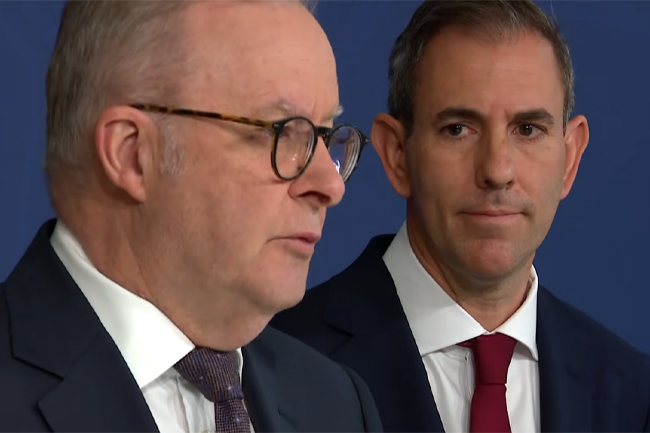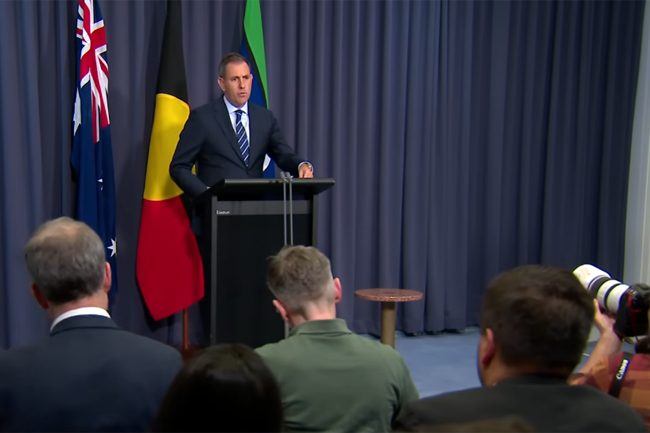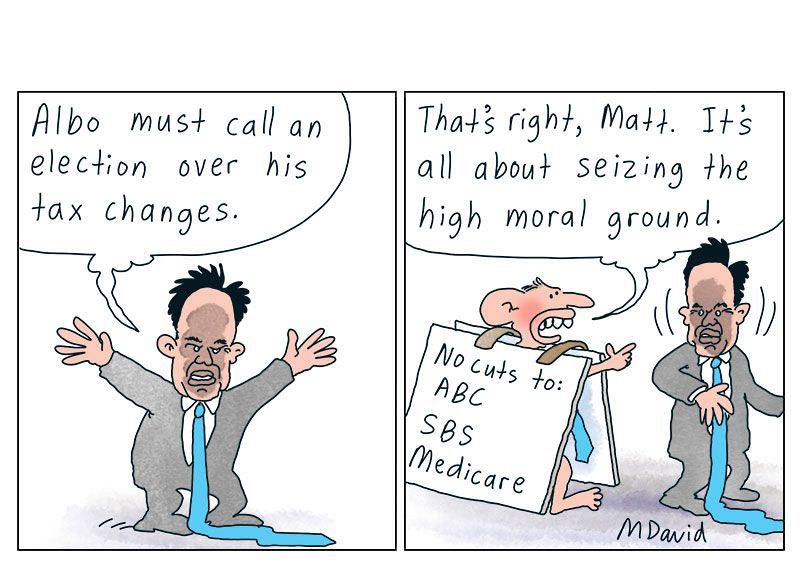
Few observers in Australia’s media have had a kind word for last month’s controversial Budget, as Alan Austin reports.
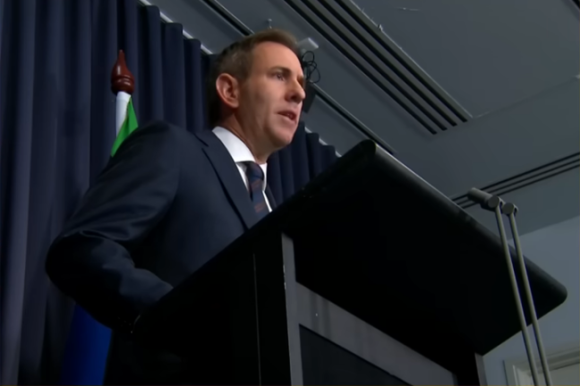
CAREFUL DISTILLATION of the vociferous condemnations of Treasurer Jim Chalmers’ fifth Budget handed down three weeks ago reveals six fundamental criticisms.
1. It will ensure house prices rise disastrously
The Nightly’s senior economics reporter warned that Brisbane is ‘tipped to see 9% growth in 2026’ in house prices as a result of the ghastly May budget and then ‘slow next year to a more modest 3%’.
He claimed house prices would increase 13% in Perth this year and 5% next year. Adelaide will see rises of 7% and 4%.
The professional property advisers at Follio concur:
“We are going to see rents soar [and]... prices will also soar quite significantly.”
2. It will ensure house prices fall disastrously
The second major problem with Labor’s horrific Budget, even worse, is that it will cause house prices to tumble.
‘House prices nationally could fall as much as 10% in the largest correction in the past 40 years.’
That’s according to the Australian Financial Review, which predicts the Budget will ‘fundamentally change the asset allocation decision for Australian households’.
The Commonwealth Bank shares this dire pessimism:
‘Housing is a sentiment-driven market and the changes could see investors withdraw and financing become more difficult, driving house prices down more than expected.’
The West reports this is already happening as auction sales are declining:
‘If these low clearance rates continue, history shows property prices in both cities could fall between 5 and 10% over the next year.’
3. It will advantage the elderly unfairly by ripping off Australia’s youth
Economist Adam Creighton at the Institute of Public Affairs (IPA) claims the Budget profoundly disadvantages younger Australians:
‘Far from being a good budget for young people, this is a terrible budget for young people.’
Creighton told Sky News:
‘Taxes are just going up all over the place; even then, it can’t keep pace with spending. I mean, that’s the real intergenerational issue.’
According to an economist in the Australian Financial Review:
‘Young Australians are being asked to accept higher taxes on labour and investments they can access, while older groups and property wealth receive special treatment.’
The Centre for Independent Studies agrees, claiming that:
‘Paying the interest bill, or paying back the debt, is left to today’s young Australians. This means they have to pay higher taxes in the future, for things which mainly benefited older Australians today.’
4. It will advantage Australia’s youth unfairly by ripping off the elderly
Analysis in the West Australian asserts the Budget...
...‘demonstrates the Government’s preference for younger and poorer voters at the expense of the older middle classes. Baby boomers, and to a lesser extent Generation X, were marginalised by the Budget’s tax changes, a historic shift in political power.’
Veteran journalist and emeritus professor at Griffith University, Ross Fitzgerald, was scathing in a Macquarie news outlet:
‘In Treasurer Jim Chalmer’s intergenerational equity-obsession budget, the boomer generation in particular is being punished for the temerity of working hard and taking risks in buying properties!’
5. It will serve to increase housing supply
In his CommBank housing analysis, senior Commonwealth Bank economist Trent Saunders states that limiting negative gearing to new builds preserves ‘tax support for investment in new supply’.
This will have the undesirable effect of lowering rental incomes for investors.
Saunders notes that the negative gearing changes should ‘redirect some investor demand from established properties toward new builds, supporting construction activity’.
Property valuation network Hovr claims budget changes are ‘intended to direct investment toward additional supply rather than existing housing stock’.
Its budget analysis quoted the National Bank’s finding that ‘around 235,000 dwellings remained under construction, about 35% above the pre-pandemic average’.
6. It will serve to decrease housing supply
The sixth bad outcome is that fewer houses will now become available.
A Murdoch news site quoted a building industry executive saying:
“We are not expecting the budget announcements to have a positive immediate impact on new home commencements. In fact, there is potential for a negative impact on housing supply in the short term if these changes make new homes less competitive against established stock.”
An editorial at Architecture and Design claims:
‘Proposed changes to negative gearing and capital gains tax will remove around 35,000 new homes from the pipeline over the next decade, deepening an already acute housing shortage.’
Press polluted with perfidy
Some analysts insist the Budget will advantage owners of multiple investment properties over first-home buyers. Terrible! Others proclaim the direct opposite. Even more terrible!
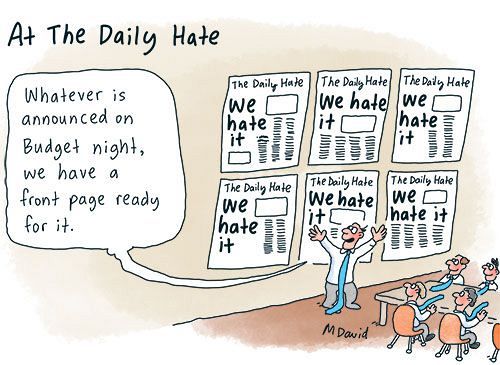
The conclusion is clear. The mainstream commentariat in Australia, including news reporters, economists and industry lobbyists, includes many who are pathetic partisan hacks, committed to parroting the most craven, self-serving nonsense spouted by the array of hate-filled, cashed-up, anti-Labor political forces.
It doesn’t really matter what the criticism is. The point of most media analysis in Australia is not to inform their audiences but to condemn the Albanese Government at every turn, and ensure citizens remain in a constant state of ignorance, anxiety, anger and depression.
This is why Australians have recently fallen from tenth to 15th on the global happiness index, from first to seventh on the OECD Better Life Index and to record lows on life satisfaction.
This is why consumer confidence is in the toilet while Australians have more cash in their pockets, their bank accounts and super funds than ever before.
Until Australia’s news media and economic consultancy lift their game, their marginalisation will continue. And so it should.
Alan Austin is an Independent Australia columnist and freelance journalist. You can follow him on Twitter @alanaustin001 and Bluesky @alanaustin.bsky.social.
 This work is licensed under a Creative Commons Attribution-NonCommercial-NoDerivs 3.0 Australia License
Support independent journalism Subscribe to IA.