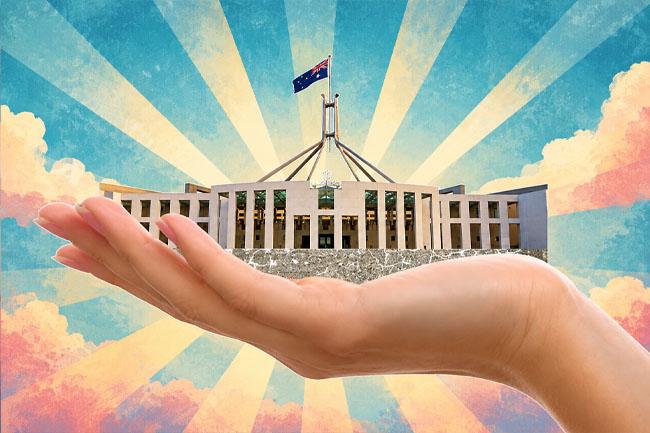
Democracy must extend beyond the ballot box, with meaningful public participation, greater accountability and genuine power in the hands of citizens, writes David Higginbottom.
PARTY MACHINES decide who stands.
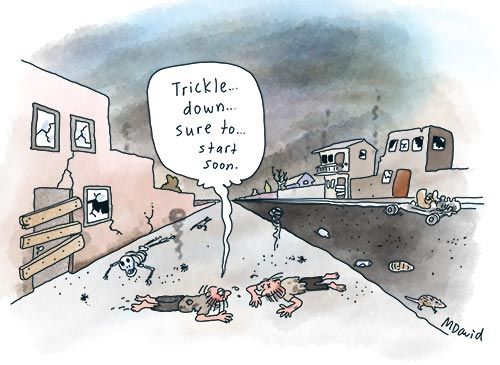
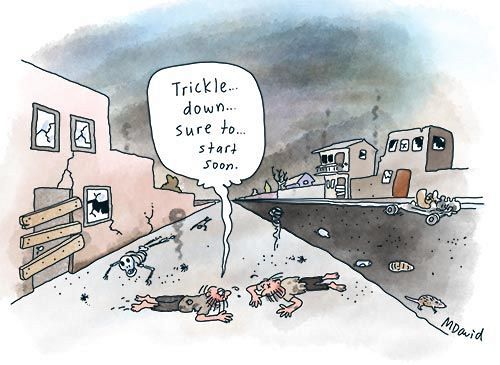
Wealth accumulates faster than wages. Lobbyists and donors obtain access unavailable to most citizens. Governments make major decisions with little public involvement. Well-funded institutions seek to shape public debate while claiming to defend it.
These are major concerns — however, diagnosis is useful only if it leads to change.
This series has not argued that Australia lacks democracy, or that one reform would solve its problems. Australia retains real strengths: compulsory and preferential voting, competent electoral administration, courts, civil society, a free media and peaceful changes of government.
The question is whether those strengths are enough when many citizens believe power has become too distant, too closed or too easily captured.
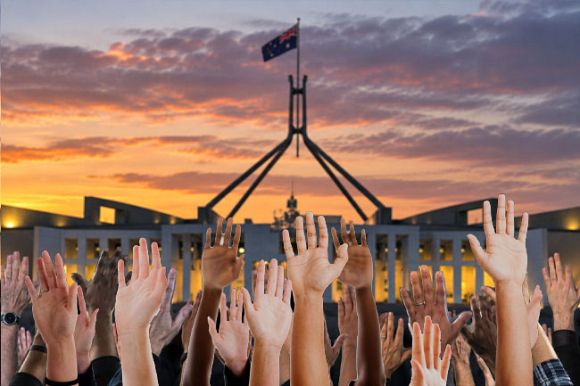
The Democracy Counts research reported by the ABC gives that concern some definition. About 51 per cent of respondents did not believe politicians understood or represented people like them. Three quarters thought politicians prioritised short-term electoral gain and re-election over long-term challenges and believed MPs mostly served themselves or vested interests.
It suggests a gap between formal representation and being represented.
A wider democratic unease
The launch of Reclaiming Democracy Together at Melbourne Town Hall on 9 May 2026 gave this unease a hopeful form. Close to 2,000 people attended. That is an encouraging expression of civic energy. It suggests a desire for practical ways to understand the system, influence decisions and help renew it.
Reclaiming Democracy Together is a seven-year initiative of Conversation at the Crossroads. Its mission statement makes an essential point: no single group can undertake this work alone. It is a valuable example of a wider democratic stir, not the sole vehicle for reform or the owner of the democratic question.
When people feel decisions are made by insiders, they respond in many ways. Some join community campaigns, unions, professional associations or local groups. Some look to Independents or other minor parties. Some remain within major parties arguing for change from inside. Others, feeling disenfranchised, withdraw from public life — some even become sovereign citizens.
The rise of One Nation belongs within this framework. However, its support should not be romanticised as a democratic-renewal movement. Its vote reflects regional neglect, economic insecurity, cultural anxiety, distrust of major parties, concern about migration and a desire to register protest. None of that makes the party the answer. It does, however, underline the cost of leaving citizens with the feeling that established institutions don’t hear them.
The unease is not confined to the political Right. It runs through social democratic concerns about inequality and the influence of wealth; concerns about institutional restraint, civic liberty and accountable government; regional concerns; and everyday frustration with housing, services, wages or local infrastructure. They converge on a question that is difficult to ignore: Who listens, who decides and who benefits?
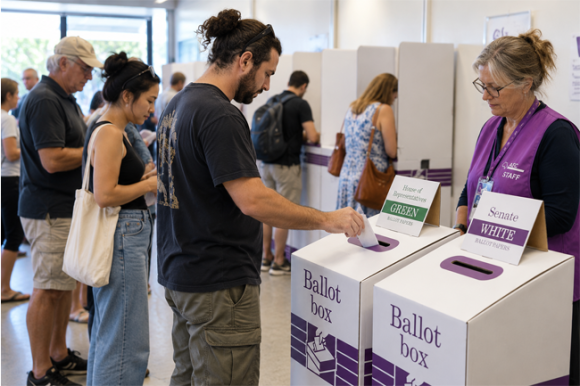
More than one initiative
Australia already has a diverse field of organisations working on different parts of this problem. Examples of established work include the Australia Institute's Democracy and Accountability Program, the Centre for Public Integrity, Transparency International Australia, the OpenAustralia Foundation, the Australian Democracy Network and DemocracyCo. They work variously on parliamentary accountability, money in politics, lobbying, corruption prevention, public information, civic technology and deliberative participation.
Alongside them are initiatives with a more explicitly participatory or long-term focus. Australian Community Futures Planning encourages long-term public planning; Australia reMADE links a thriving democracy with social, economic and environmental renewal; and the Centre for Policy Development contributes research and forums on effective government, wellbeing, social policy and democracy.
These organisations are not a single coalition and they do not share one program. Some focus on integrity, others on evidence, participation, civic education, constitutional change, policy design or community vision. The common thread is not agreement on every answer. It is a refusal to accept that election day alone exhausts the democratic task.
There are also smaller political formations proposing more direct or deliberative decision-making. They may refer to citizens' assemblies, sortition, participatory budgeting, community forums, referendums or more frequent direct voting. These should not be bundled loosely as “Athenian democracy”. The OECD's work on innovative public participation makes the useful point that deliberative processes can complement representative institutions rather than replace them.
Democracy begins after the vote
The central argument of this series remains that democracy has four demands. People must be represented. They must be able to participate. Public life must produce shared outcomes. And power must remain open to scrutiny.
Representation is incomplete when citizens choose among candidates selected by narrow party structures, or when whole communities appear in politics only at election time. Reform should widen the paths by which people can enter public life and make the candidate gate visible.
Participation requires more than polling, social-media reactions or consultation after the essential decision has been made. It requires accessible information, respectful disagreement and a genuine possibility that public judgement will affect an outcome. A forum that simply collects opinion is not deliberation.
Shared outcomes bring democracy back to ordinary life. Housing, health, wages, education, disability support, public transport, climate resilience and security are not side issues. They determine whether people have the time and confidence to be citizens rather than merely consumers or survivors. Governments must deliver, but more than an announcement, a GDP figure or an average. Who benefits, who bears the cost and who is left behind?
Scrutiny supports all the others. Citizens need to know who influences ministers and staff, what evidence is used, how money moves through politics and whether public promises have been kept. They need independent media, effective freedom of information, protected whistleblowers and strong integrity bodies. Without scrutiny, even a well-intentioned reform can become another closed system.
These tests also assess proposals for renewal. Does a reform broaden representation or merely give louder voices another platform? Does it enable informed participation or manufacture consent? Does it improve the material conditions that make participation possible? Does it make power more visible and correctable?
No proposal should be exempt, whether it comes from a party, think tank, community movement, civic organisation or government.
From agitation to renewal
The deepest task is cultural as well as institutional. Democracy cannot be a service delivered by politicians every three years, with citizens cast as spectators, consumers of political advertising or data points in a campaign. It is a shared practice. It depends on people who can listen, argue, organise, investigate, compromise and hold power to account.
Reclaiming Democracy Together has a place in this work, as do the established and newer initiatives approaching the problem from different directions. They will not agree on every diagnosis or remedy. What matters is that dissatisfaction is not left to harden into withdrawal, resentment or the belief that politics belongs permanently to someone else.
The democratic task is not to defend the system we have — it is to strengthen the ways people can understand, shape and renew it, so that public power is more representative, more participatory, more responsive to shared needs and more open to scrutiny.
If we believe in democracy, we need to get involved. But involvement must mean more than being invited to speak. It must mean building institutions capable of listening, answering and changing.
This is part nine of our series on democracy. You can read part one here, part two here, part three here, part four here, part five here, part six here, part seven here and part eight here.
David Higginbottom is a member of the coordinating committee of the Independent and Peaceful Australia Network (IPAN) and coordinator of the Make Peace A Priority campaign (mpap.au).

 This work is licensed under a Creative Commons Attribution-NonCommercial-NoDerivs 3.0 Australia License
Support independent journalism Subscribe to IA.


Related Articles
- Democracy for sale: The powerful institutions escaping their own scrutiny
- Democracy and the wealth divide: When prosperity fails the people
- Democracy fails when corruption becomes a system
- Democracy begins before the ballot box
- Democracy must be measured by more than elections