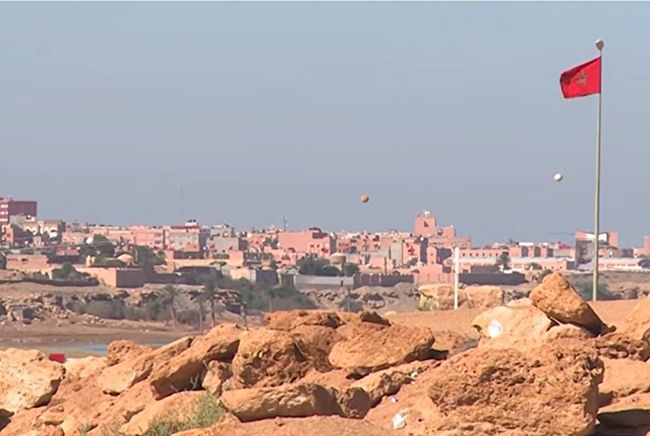
The collapse of the UN mission exposes the costs of America's one-sided policy. Congress should reassess Washington's role while Africa and Europe defend the principles of decolonisation, writes Kamal Fadel.
WESTERN SAHARA HAS entered one of the most dangerous periods in its recent history.
On 31 October 2026, the mandate of the United Nations Mission for the Referendum in Western Sahara (MINURSO) expired after the Security Council failed to agree on its renewal.
A mission established 35 years earlier under a settlement plan accepted by Morocco and the Frente Polisario (Polisario Front) ended without organising the referendum it was created to oversee.
Western Sahara has remained a UN Non-Self-Governing Territory since 1963.
In its 1975 advisory opinion, the International Court of Justice (ICJ) found no territorial sovereignty ties with Morocco or Mauritania that would prevent the Sahrawi people from exercising self-determination through the free and genuine expression of their will.
The UN Secretary-General has affirmed that MINURSO's departure does not extinguish the Sahrawi people's inalienable right to self-determination. International law cannot prohibit territorial acquisition by force in one region while accepting a different standard in another.
MINURSO's mandate expired amid a diplomatic confrontation over the principles underpinning the UN peace process.
The United States, which wields exceptional influence as the Security Council's penholder on Western Sahara, bears particular responsibility for a failure that has increased regional uncertainty and diminished confidence in diplomacy.
The question now is whether Washington will reconsider its approach or continue pursuing a settlement that effectively endorses Morocco's sovereignty claim before negotiations have concluded.
The incoming Congress has an important opportunity to examine that choice.
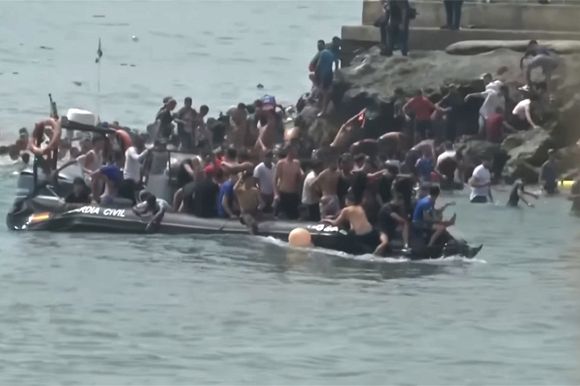
The UN Security Council deadlock over Western Sahara
On 30 October, the United States introduced draft resolution S/2026/868, proposing three significant changes to the UN process.
It made Morocco's autonomy proposal the “only basis” for negotiations, effectively excluding independence as an option; proposed renaming MINURSO as MINUSO, removing the reference to the referendum; and encouraged consultations with Sahrawi interlocutors beyond the negotiating parties, in an attempt to weaken the Frente Polisario's standing as the legitimate representative of the Sahrawi people and a recognised party to the UN settlement process.
Together, these provisions risked transforming a peace process founded on self-determination into one designed to secure acceptance of Morocco's claim to sovereignty.
Russia vetoed the American draft.
A subsequent Russian proposal to extend MINURSO's existing mandate for another year also failed, with the United States voting against it.
Responsibility for the deadlock rests collectively with the Council, but Washington's decision to prioritise a contested political framework over a compromise on the mission's continuation deserves particular scrutiny.
The loss of MINURSO's mandate removes an established framework for monitoring and military liaison that had helped contain tensions, including after the ceasefire collapsed in 2020.
In a Maghreb region marked by deep mistrust and a neighbouring Sahel facing serious instability, renewed hostilities could threaten security, trade and cooperation far beyond Western Sahara.
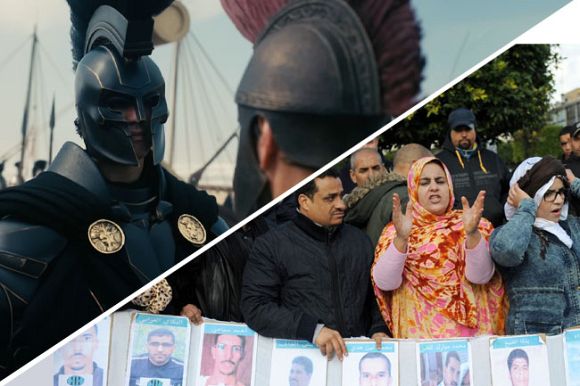
The cost of Washington's one-sided policy
For decades, successive U.S. administrations maintained close relations with Morocco while consistently refraining from recognising Morocco’s occupation of Western Sahara, leaving the territory’s final status to be determined through the UN-led peace process.
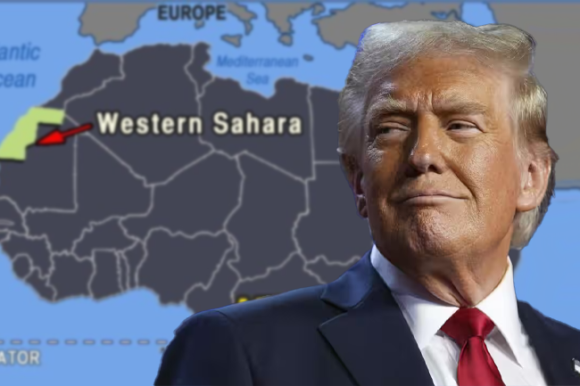
That position changed in December 2020, when President Donald Trump recognised Moroccan “sovereignty” over the territory as part of an agreement linked to Morocco's normalisation of relations with Israel.
The U.S. recognition did not resolve the conflict. Western Sahara remains on the UN list of Non-Self-Governing Territories; its people have not exercised their right to self-determination; and the UN mission has now lost its mandate. Washington should ask what its policy has achieved beyond encouraging Morocco to remain intransigent.
Recognition also affects the incentives to negotiate. If Morocco can count on unconditional American support for its sovereignty claim, what incentive does it have to compromise?
Conversely, why should Sahrawis trust negotiations facilitated by an administration that has already endorsed Morocco's claim to their homeland?
The United States can remain Morocco's ally without endorsing every Moroccan position. Genuine partnership sometimes requires recognising that an uncompromising approach may damage an ally's long-term interests.
A stable North Africa, rather than an indefinitely unresolved conflict, should be Washington's strategic objective.
Congress must reassess U.S. policy on Western Sahara
The November midterm elections have given Democrats control of both chambers of Congress from January 2027.
Although the executive branch retains primary authority over diplomatic recognition, Congress can hold hearings, demand explanations, oversee appropriations and shape the debate over American foreign policy.
Its first question should be straightforward:
Has recognition of Morocco's sovereignty claim over Western Sahara advanced peace, or has it reinforced the stalemate?
The House Foreign Affairs Committee and Senate Foreign Relations Committee should examine the legal and strategic basis of the 2020 decision, the drafting of the October Security Council resolution and the consequences of MINURSO's closure.
They should request an independent assessment of the risks of renewed hostilities, threats to humanitarian operations and implications for U.S. interests in North Africa and the Sahel.
Congress should also ask whether the United States can credibly remain the Security Council's penholder while prejudging the outcome of negotiations it is helping to facilitate.
A process cannot command trust if its most influential sponsor appears to have decided the question of sovereignty in advance.
Lawmakers must also scrutinise proposals to impose counterterrorism measures on the Frente Polisario. H.R. 9982, together with related legislative initiatives, raises baseless allegations of cooperation with terrorist organisations and proposes measures conditional on accepting the Moroccan so-called autonomy proposal.
Such allegations must be assessed against credible evidence and established legal standards. Legislation should not become an instrument for pressuring one party to accept a contested settlement.
The Frente Polisario is a longstanding, respected national liberation movement and an indispensable party to the UN peace process. Marginalising it would not resolve the conflict; it would further undermine the prospects for meaningful negotiations and a lasting resolution to the conflict.
Congress should instead encourage the administration to reconsider its recognition of Morocco's sovereignty claim, support negotiations without a predetermined outcome and work towards effective UN presence and monitoring and de-escalation arrangements.
Africa and Europe have responsibilities too
Washington's role is central, but other international actors also face important choices.
The UN General Assembly must continue to defend Western Sahara's status as an unfinished decolonisation question.
In October, its Fourth Committee adopted the annual Western Sahara text by 152 votes to two, with seven abstentions. The Assembly should resist attempts to redefine the territory's status through political manoeuvring or changes in diplomatic terminology.
Africa has a particular historical responsibility.
The Organisation of African Unity helped develop the settlement proposals accepted by Morocco and the Frente Polisario in 1988. Today, both Morocco and the Sahrawi Republic belong to the African Union (AU).
The AU should defend its foundational principles of self-determination, respect for inherited borders and opposition to territorial acquisition by force, while working with the UN to prevent escalation.
Europe likewise cannot invoke international law selectively. France has endorsed Moroccan sovereignty, while Britain has backed Morocco's autonomy proposal as a basis for negotiations.
The Nordic countries, historically supportive of decolonisation, regretted Russia's veto during the November General Assembly debate while reaffirming their support for Sahrawi self-determination.
Yet Denmark voted for the American draft and abstained on Russia's proposal to extend MINURSO's existing mandate. Criticism of the veto should not obscure the implications of the American text or the contribution of these voting choices to the deadlock.
European democracies should apply to Western Sahara the principles they defended in the struggles against colonialism and apartheid elsewhere in Africa.
An opportunity for lasting peace and shared prosperity
An independent Sahrawi Republic need not threaten Morocco or the wider region. It would become a viable, democratic, stable and outward-looking state, committed to responsible development of its resources and strong economic relations with neighbouring countries and international partners.
Such a republic would seek reconciliation, open borders, trade and investment that could benefit Sahrawis and Moroccans alike and help unlock the Maghreb's long-neglected economic potential.
The United States still has the influence to help achieve a just settlement. It should use that influence to rebuild trust, not to demand acquiescence. Congress should exercise independent judgment and help ensure that American policy serves peace rather than perpetuating stalemate.
MINURSO's mandate has expired, but the United Nations' responsibility endures, and Washington still has an opportunity to play a constructive role in achieving a just and lasting peace.
A durable settlement must rest on international law, the freely expressed will of the Sahrawi people and the prospect of reconciliation between two neighbouring nations. An honest broker cannot begin negotiations by declaring the outcome already decided.
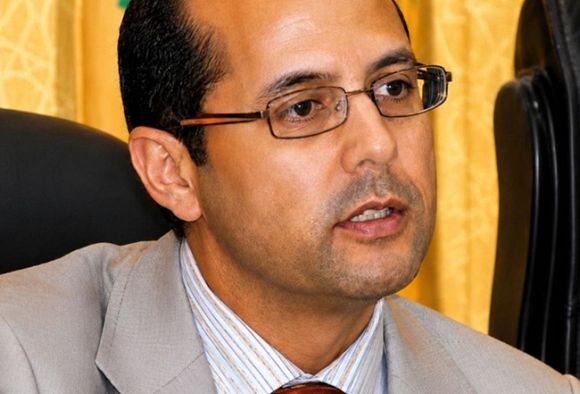
Kamal Fadel is the Polisario Representative in Australia and New Zealand. You can find him on Twitter: @Alfudail.
 This work is licensed under a Creative Commons Attribution-NonCommercial-NoDerivs 3.0 Australia License
Support independent journalism Subscribe to IA.


Related Articles
- Filming 'The Odyssey' in Western Sahara raises ethical questions
- Autonomy is not the answer for Western Sahara
- Fortescue's Moroccan venture is deeply concerning
- The time is now: Western Sahara must gain independence
- Trump and U.S. betray the people of Western Sahara