Political corruption thrives not simply through individual wrongdoing, but through systems that reward secrecy, influence and unequal access to power, writes David Higginbottom.
“Politics is the art by which politicians obtain campaign contributions from the rich and votes from the poor on the pretext of protecting each from the other” ~ Oscar Ameringer
We often speak about political corruption as though it were a personal defect. A corrupt politician is a bad person. A compromised public servant has failed an ethical test. A lobbyist has achieved an outcome at our expense. Fraud, bribery and deception demand personal responsibility.
But that explanation is too comfortable. It allows us to imagine that the system itself is sound and that the problem lies only with a few flawed people who enter it.
A better question is: what does the system reward?
- If political success depends on party loyalty, fundraising, access to ministers, favourable media, factional survival and the avoidance of controversy, people who learn those rules prosper.
- If policy is developed through private meetings, confidential drafts and insider consultations, people with time, money and networks will gain an advantage.
- If candidates are chosen by closed party processes, aspiring representatives will learn that satisfying internal gatekeepers matters as much as persuading the public.
That is not a theory of universal wickedness; it is a natural result of the incentives and gatekeepers.

It would not be an overstatement to say that everyone in politics crosses the line at some stage. We only know how far when they are caught — and few are. Lord Acton’s warning that power tends to corrupt and absolute power corrupts absolutely is usually treated as a moral observation. It is better understood as institutional advice.
No system should depend on the hope that people with power will remain exceptionally virtuous. Power needs to be visible, challengeable and capable of correction.
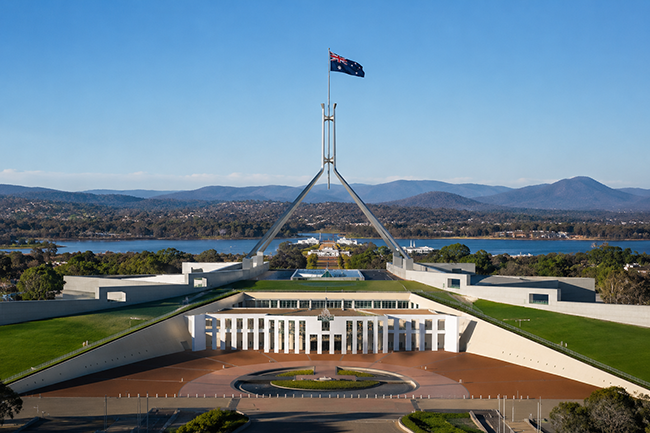
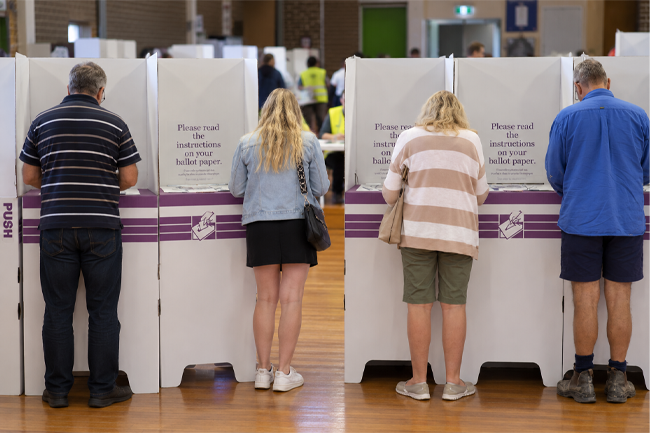
Australia’s political system has many strengths. It has regular elections, independent electoral administration, courts, audit institutions, a professional public-service tradition and an active civil society. But these strengths should not be used to deny the pressures that corrode them.
The short electoral cycle encourages announcement over delivery. The imperative to win or retain office can overwhelm long-term policy. Party discipline can make parliamentarians reluctant to represent local concerns when these conflict with leadership or factional interests. Closed pre-selections teach political aspirants where their first loyalties must lie.
The result is not always corruption in the criminal sense. More often it is a slow adjustment of priorities: the electorate becomes one stakeholder among many, while the party machine becomes the condition of survival.
Lobbying demonstrates the problem clearly. Lobbyists can provide useful expertise. Governments need to understand industries, technologies, unions, charities, communities and professional bodies. The issue is not that people seek to influence public policy. In a democracy, they should.
The issue is unequal and invisible influence. A company with a Canberra office, former ministers on its board, consultants with personal relationships, and the capacity to host private events does not approach government on the same footing as a citizen trying to understand a proposed policy after it appears in the news.
Policy can be shaped through the choice of an advisory panel, the drafting of tender specifications, the definition of a problem, the timing of consultation and the people invited into the room. By the time public consultation occurs, the essential choices have already been made.
I have worked as a lobbyist. Influence is often exercised through relationships, background briefings and “helpful advice” offered long before the public knows there is an issue to debate. An organisation does not need to break a law to obtain an advantage. It only needs to understand where access lies and how public officials can be influenced to manage risk.
The same logic applies to grants, outsourcing and publicly funded research. A grant program can be designed in ways that favour well-resourced applicants. A consultant can be told, subtly or directly, what outcome a department hopes to find. A think tank that relies on funding from a department or industry can become cautious about challenging the assumptions of its benefactor.
None of this proves that every grant, consultant or researcher is compromised. It demonstrates why transparency and institutional independence matter.
This is the fourth democratic test: is power open to public scrutiny?
Citizens need to know who influences ministers and staff, what meetings occur, what evidence is used, how grants are awarded, who funds political campaigns and whether public appointments are made on merit. They need realistic access to documents, independent audit, strong whistleblower protections and agencies capable of investigating wrongdoing.
The Australian National Audit Office and the National Anti-Corruption Commission (compromised as it appears) are necessary parts of that architecture, but neither can substitute for open systems.
The remedy is not to pretend that an anti-corruption commission will solve everything. Such bodies are necessary, but they generally act after a problem has been exposed. Democratic design must reduce the opportunity for capture before it becomes routine.

That means broadening lobbying rules beyond registered consultants to include in-house corporate advocates, as well as other people of influence. It means public, timely ministerial and staff diaries. It means transparent donations and campaign spending. It means limits on corporate hospitality offered as an investment in future access.
It means strengthening freedom of information, reversing unnecessary secrecy and properly funding audit and integrity bodies. It means rebuilding a public service capable of giving frank, independent advice rather than outsourcing its judgement. Former Liberal leader John Hewson’s proposed rules for cleaning up politics offer a useful starting point.
Most importantly, it means opening the political gate. If candidates rely on a narrow party membership or factional structure to survive, they will be less free to challenge the networks that sustain the system. More transparent and participatory preselection is therefore not a technical party matter. It is an anti-corruption reform.
This argument applies beyond Australia. One-party states concentrate power in obvious ways, but electoral democracies can also produce systems where access, wealth and party survival shield power from citizens. Foreign democracy-promotion bodies should face the same question: who funds them, who sets the priorities and who can scrutinise their influence?
The purpose is not to make people cynical about politics. Cynicism is one of the system’s greatest protections. If citizens conclude that all politicians are equally corrupt, they stop demanding change and those with access carry on undisturbed.
The better conclusion is more hopeful. Corruption is not inevitable. It is made more likely by the structure of institutions, incentives, secrecy and silences. Change the rules of access, transparency, selection and accountability, and political behaviour can change with them.
A democracy is not protected by the goodness of those who govern. It is protected by the ability of the governed to see, question and correct what is done in their name.
This is part six of our series on democracy. You can read part one here, part two here, part three here, part four here and part five here.
David Higginbottom is a member of the coordinating committee of the Independent and Peaceful Australia Network (IPAN) and coordinator of the Make Peace A Priority campaign (mpap.au).

 This work is licensed under a Creative Commons Attribution-NonCommercial-NoDerivs 3.0 Australia License
Support independent journalism Subscribe to IA.


Related Articles
- Democracy begins before the ballot box
- Democracy must be measured by more than elections
- Democracy demands more than a vote
- Democracy and putting power back in public hands
- Democracy and the secular faith of economics