Institutions promoting democracy abroad must face the same scrutiny they demand of others, particularly when political funding and strategic interests collide, writes David Higginbottom.
THE WORD “democracy” is often presented as though it were self-explanatory.
Countries are called democratic, authoritarian, free, unfree, resilient or captured. Rankings are published. Grants are awarded. Sanctions are justified. Civil-society groups are supported. Political leaders invoke the language of freedom as though the measure and the measured were both beyond dispute. They are not.
Democracy, the right to organise, report, protest, vote, worship, dissent and hold power to account should not be dismissed as a Western invention or a geopolitical slogan. People in every region have fought, often at great personal cost, for those freedoms.
But the institutions that define, fund and measure democracy are also institutions of power. They have funders, strategic priorities, blind spots and interests. A democratic test applied only to countries being judged, not to the bodies doing the judging, is incomplete.
The National Endowment for Democracy (NED) is a useful example. NED is a legally private, nonprofit corporation that U.S. Congress created in 1983 and finances principally through congressional appropriations. Between FY2017 and FY2025, Congress appropriated more than US$2 billion (AU$2.9 billion) to it, according to a 2026 US State Department Inspector General report.

NED says it supports democratic institutions, civil society, independent media, electoral integrity and human rights. That assistance can be valuable for groups facing repression. Not every person who accepts external support is a foreign agent — but the story does not end there.
NED’s own 2025 annual report says that China-related programmes – covering the mainland, Tibet, East Turkestan, Hong Kong and China’s global influence – will remain its single largest area of investment. The report describes a ‘venture capital for freedom’ approach and says that flexible congressional funding allowed NED to ‘surge resources quickly’ when political openings appeared.
In 2026, NED’s president told a U.S. congressional committee that its work helps America compete with authoritarian rivals and advances American security, prosperity and leadership, in testimony published by NED.
These are not secret admissions. They are open statements of purpose. They show that this style of “democracy” promotion and U.S. strategic competition overlap.
A 2021 video call, in which Russian pranksters impersonated Belarusian opposition representatives, provides a more granular picture of NED’s methods. NED officials described grants to media, civic hubs, unions, cultural organisations and political institutes working on party messaging and outreach.
One official said long-term work in Belarus had made a “modest but significant contribution” to the 2020 protests. The episode does not prove that NED created the protests or directs local actors. It does demonstrate that democracy promotion can involve sustained support for political movements in countries regarded as strategic competitors.
Critics describe NED as an overt civilian successor to functions once performed covertly by the CIA. The characterisation draws on a widely cited 1991 statement by NED co-founder Allen Weinstein: “A lot of what we do today was done covertly 25 years ago by the CIA.”
The statement appeared in David Ignatius’s Washington Post article about the move from covert to overt political action. It supports a historical comparison between some overt political support and earlier Cold War activity. It does not establish that NED is controlled by the CIA today, or that NED-funded organisations are directed by Washington.

Calling every critic, journalist or civil society group a foreign proxy is an old technique of repression. Governments can use foreign-funding laws to silence domestic dissent, close independent media and intimidate election observers. Concern about foreign influence is real; it can also be weaponised against citizens.
The opposite error is to imagine that foreign funding becomes neutral merely because it is public, legal or dressed in the language of democracy. Money creates priorities. Funders decide which problems are urgent, which partners are credible and which forms of political action deserve support. An institution may support admirable people while still working within a strategic worldview shaped by the interests of the state that finances it.
This is why democracy cannot be reduced to a scorecard. International IDEA’s democracy framework is more useful than simple league tables precisely because it separates representation, rights, rule of law and participation rather than pretending that one number can settle every question.
But even careful measures make choices about what counts, how it is weighted and whose evidence is trusted. Numbers can improve debate; they can also give political choices the appearance of technical inevitability.
The answer is not to abandon democratic standards. It is to make the standards reciprocal.
Any institution that funds or measures democracy abroad should be asked four questions:
- Transparency: are its funders, budgets, grant recipients, decision processes and evaluations public and independently auditable?
- Local autonomy: do local organisations define their own purposes, or are they rewarded for fitting an external agenda?
- Consistency: are comparable abuses examined in allies, adversaries and the donor state itself?
- Accountability: can citizens and affected organisations challenge the institution’s assumptions and scrutinise its outcomes?
Australia should also be subject to scrutiny. The 2024 Nauru-Australia Treaty commits Australia to provide $100 million in budget support and $40 million for policing and security over five years. In return, Nauru must mutually agree with Australia before entering third-party partnerships in security, banking or telecommunications and must consult Australia about other critical infrastructure.
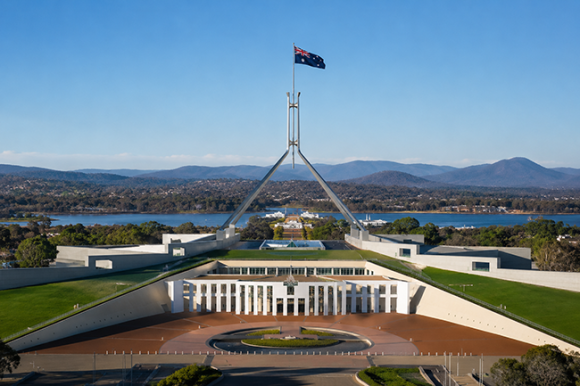
The agreement may serve legitimate Nauruan needs for banking access, fiscal stability and security. Nauru remains a sovereign party to the treaty. Yet the asymmetry of resources and the breadth of the mutual-agreement provisions give Canberra considerable influence over Nauru’s external choices. It is a reminder that foreign influence is not exercised only by distant great powers.
Australia’s use of Nauru and Papua New Guinea for offshore processing raises a related question. The Senate Inquiry into regional processing centres examined the transparency, accountability and legal responsibilities associated with Australian-funded facilities.
The point is not to deny Nauruan agency or avoid Australia’s development obligations. It is to ask whether policies designed in Canberra, implemented through smaller regional states and affecting people with limited political voice, are sufficiently open to public scrutiny.
The same questions apply to Chinese, Russian, European, Gulf and Australian influence abroad; to philanthropic foundations; to international NGOs; and to media organisations supported by powerful interests. The point is not to pretend all power is morally identical. It is to refuse a monopoly over legitimacy.
A country does not become democratic because an American institution approves of it. Nor does it become undemocratic because a geopolitical rival condemns it. Democracy is measured in the lived relationship between people and power: whether citizens can participate, whether they can see and question authority, whether public institutions serve them and whether they can correct the capture of their political system.
That brings this series back to Lincoln. Government of the people, by the people and for the people requires one additional protection in an age of global money, media and strategic influence: it must be open to the people’s scrutiny.
The democratic test must apply not only to the country being judged, but also to the institution doing the judging.
This is part eight of our series on democracy. You can read part one here, part two here, part three here, part four here, part five here, part six here and part seven here.
David Higginbottom is a member of the coordinating committee of the Independent and Peaceful Australia Network (IPAN) and coordinator of the Make Peace A Priority campaign (mpap.au).




 This work is licensed under a Creative Commons Attribution-NonCommercial-NoDerivs 3.0 Australia License
Support independent journalism Subscribe to IA.


Related Articles
- Democracy and the wealth divide: When prosperity fails the people
- Democracy fails when corruption becomes a system
- Democracy begins before the ballot box
- Democracy must be measured by more than elections
- Democracy demands more than a vote