The Microsoft outage is a reminder that Australia’s security depends on the connections that war would destroy — and on preventing conflict before it begins. David Higginbottom writes.
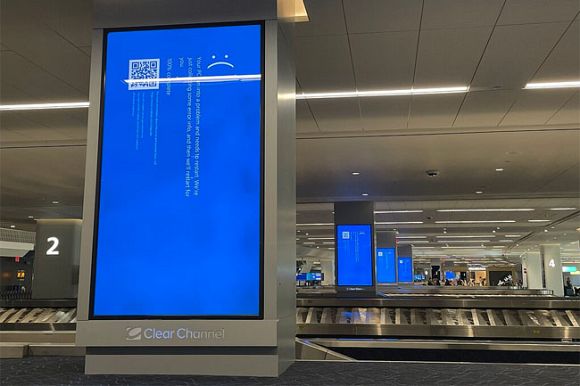
ON FRIDAY 13 November, a Microsoft outage disrupted services used by businesses, schools and governments around the world.
In Australia, some Service NSW transactions became unavailable. In western Queensland, a School of the Air had to cancel online lessons. Businesses found that when email stopped, orders and invoices stopped with it.
As the ABC reported, the problems extended across parts of Microsoft 365, including Outlook, Teams and Copilot. The effects were uneven: not every user or service was affected in the same way. Microsoft said there was no indication of a cyber attack.
No war was involved. No cable needed to be cut. Yet a technical failure in a global system was enough to interrupt the ordinary business of a country thousands of kilometres away.
That should make us ask a larger question: what do we think would happen in a major war?
A warning we should take seriously
Earlier this month, the government’s Critical Infrastructure Security Centre (CISC) released its annual risk review. It warns that critical services depend on interconnected systems and that disruption can spread through shared cloud platforms, suppliers and infrastructure.
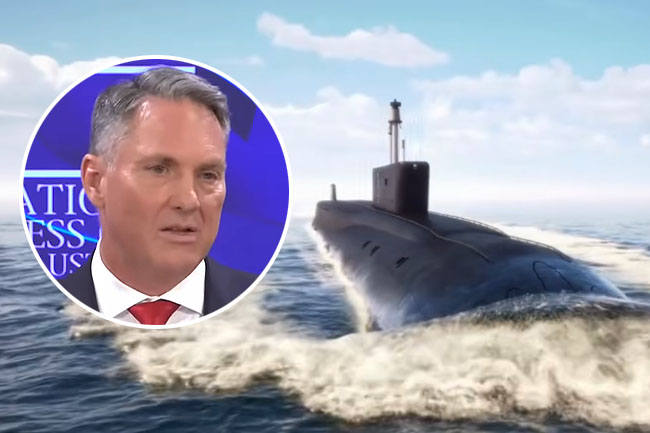
In May, Defence Minister Richard Marles identified Australia’s exposure and argued that economic interdependence does not remove the need for greater defence spending. On 9 November, the U.S. Embassy cited the cable vulnerability as a reason to deepen AUKUS cooperation. Marles also called for regional cooperation and dialogue, but the emphasis on military capability is striking.
Some protective spending may be justified. We also need a serious strategy to reduce the aggression and escalation that could break those connections in the first place. Otherwise, we are preparing for the consequences while neglecting one of the causes.
Systems can fail because of accidents, poor configuration, natural disasters or criminal activity. Diplomacy will not prevent all of them. That is why prevention and resilience must work together.
The connections we cannot take for granted
Australia is not an isolated fortress. Our economy depends on shipping routes, overseas suppliers, software, data and communications. We export minerals, food and energy, and depend on other countries for products and services we cannot readily replace.
In September, a break in the Australia-Singapore submarine cable forced traffic onto alternative routes. That is an example of resilience — it also shows that connections have to exist somewhere for traffic to be rerouted.
Large cloud operators spread some services and backups across different locations. This can help a business recover when one location fails. But it is not automatic: recovery arrangements must be designed and tested, and different services can share the same dependencies.

Now imagine a more serious scenario in which several international connections are disrupted for an extended period. Australian data centres would not simply vanish and some locally operated services could continue. But systems that rely on overseas authentication, remote backups, software updates or AI services could become difficult or impossible to use. An overseas backup is of limited help if you cannot reach it.
The Microsoft outage was not caused by severed cables. The point is not that these are the same event. It is that each exposes a different dependency in the same connected world.
Trade travels through the same world
The lesson extends beyond data. Australia’s Parliamentary Library found that 79 per cent of the refined petroleum products consumed here in 2023-24 were imported. Even fuel bought from a nearby trading partner can depend on oil and shipping routes much further away.
This year’s disruption to the Strait of Hormuz made that connection visible. The International Energy Agency reported that oil flows through the strait fell dramatically after conflict began. Alternative suppliers, routes and emergency stocks helped cushion the shock. That was valuable cooperation, not evidence that we had escaped the consequences.
A regional war would put far more than fuel and software at risk. It would kill and displace people in the places where it was fought. It could also disrupt shipping, medicines, communications and livelihoods far beyond the battlefield. For Australia, the result would depend on the conflict and our preparations. We should not assume either a complete shutdown or a painless separation from the world.
Prevention is defence
None of this means aggression is imaginary or that Australia should abandon its ability to defend itself. Conventional military capabilities can deter or respond to some threats. But a submarine cannot, by itself, restore an interrupted cloud service, repair a cable, guarantee a fuel shipment or rebuild the trust lost when countries move towards war.
The idea that we can make ourselves safe simply by acquiring more conventional weapons, while the connections that sustain our society are at risk, is not hard-headed defence. It is a dangerous illusion.
Nor does interdependence make war impossible. History and current conflicts tell us otherwise. It makes the consequences harder to contain, including for people who had no part in the decisions to fight.
A serious security strategy would therefore invest in diverse communications routes, tested backups, local capacity, emergency fuel supplies and ways for essential services to operate when connections fail. It would also invest in regional relationships, diplomatic channels and practical conflict prevention, including with countries with which Australia disagrees.
The Make Peace a Priority campaign has proposed giving peacebuilding an explicit ministerial responsibility, coordinating peace-related work within government and increasing resources for conflict prevention. These are not substitutes for cyber protection or national defence. They are ways to address the political conditions that make a much wider catastrophe possible.
Australia should ask of every major security commitment: does it make a crisis less likely, protect the systems people rely on and leave us more able to act independently? If it does not, what are we buying?
The Microsoft outage is a glimpse of how closely our lives are connected. A war would be something vastly worse. We are not separate from the world and the people on the other side of a border are not separate from humanity. It is time our security policy grew up and recognised that the first task of defence is to prevent the war that could damage us all.
David Higginbottom is a member of the coordinating committee of the Independent and Peaceful Australia Network (IPAN) and coordinator of the Make Peace A Priority campaign (mpap.au).
 This work is licensed under a Creative Commons Attribution-NonCommercial-NoDerivs 3.0 Australia License
Support independent journalism Subscribe to IA.