The Government has taken an important first step by developing an AI regulatory framework; the next step should be an AI infrastructure strategy, writes Paul Budde.
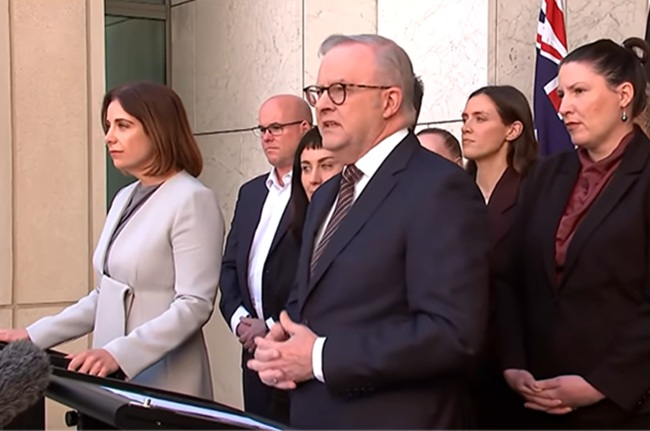
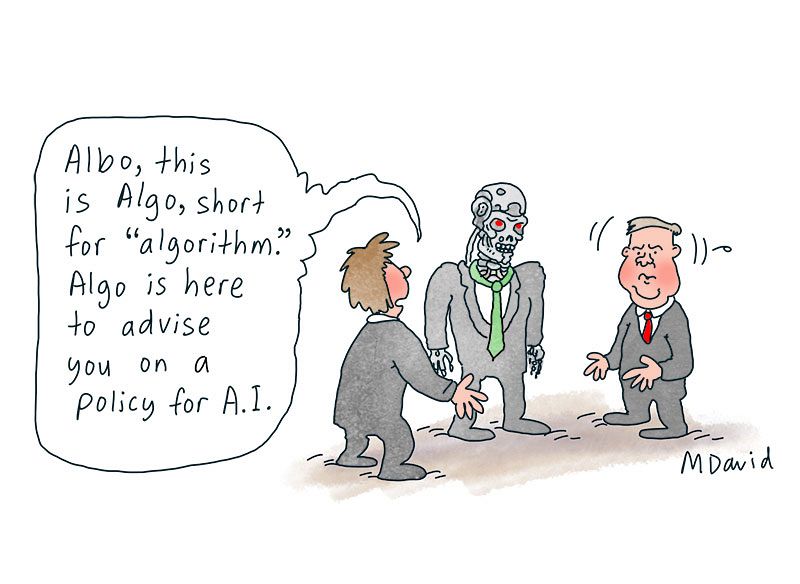
THE FEDERAL GOVERNMENT DESERVES CREDIT for recognising that artificial intelligence has become an issue of national importance. Its new AI strategy addresses governance, energy and water consumption, and the protection of Australian copyright.
These are sensible initiatives.
But they are not the issues that will determine Australia's future in the AI economy.
The strategy largely treats AI as another technology requiring regulation. Yet AI is rapidly becoming something much bigger. Like telecommunications, cloud computing and digital identity, it is evolving into critical national infrastructure. As AI becomes embedded in healthcare, finance, education, emergency management and government services, the policy questions change fundamentally.
The real questions are no longer simply how AI should be regulated:
- Who will own the infrastructure?
- Who will control access to it?
- How resilient will it be?
- And how much of the value created by AI will remain in Australia?
These are the strategic questions largely missing from the Government's announcement.
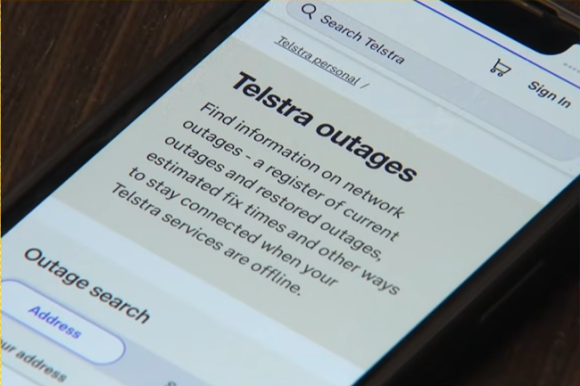
The recent Telstra outage provides a useful comparison. The immediate focus was on what caused the failure and how quickly services could be restored. Those were important operational issues. But they largely overlooked the broader strategic question: how resilient is Australia's communications infrastructure when failures inevitably occur?
The same issue now arises with AI.
Modern economies will increasingly depend on AI to support critical services. If those systems fail, are compromised, or become unavailable for commercial or geopolitical reasons, the consequences could extend well beyond inconvenience. Resilience therefore becomes just as important as capability.
In my previous article, I talked about digital sovereignty and highlighted another emerging risk. Around the world, governments are becoming increasingly aware that critical digital infrastructure can be affected not only by technical failures but also by sanctions, export controls, national security directives and foreign legislation.
For years Australia argued that Chinese telecommunications suppliers represented a national security risk because they ultimately operated under Chinese law. The same principle now applies more broadly.
The issue is no longer whether technology comes from China or the United States.
It is about jurisdiction.

Every technology company ultimately operates under the laws of its home country.
Whether it involves Microsoft's obligations under the U.S. CLOUD Act, restrictions affecting AI services, or the geopolitical debate surrounding Starlink, the lesson is the same. Critical digital infrastructure should not become excessively dependent on any single foreign jurisdiction.
That is not an anti-American argument. American companies continue to lead the world in AI innovation. Australia should continue working closely with them.
But partnership should not become dependence.
The Government has also placed considerable emphasis on the environmental impact of AI data centres and the protection of Australian copyright.
Both deserve attention.
Data centre operators are already investing heavily in renewable energy, greater energy efficiency and recycled water because these measures increasingly make commercial as well as environmental sense. Regulation can strengthen those trends.
Similarly, Australia's creative industries deserve protection from unauthorised use of their intellectual property.
However, these are largely regulatory challenges.
The more strategic question is whether Australia will become a creator of AI capability or simply the place where foreign companies build their infrastructure.
Australia has renewable energy, political stability and attractive locations for hyperscale data centres. Those are important advantages. But if our role is limited to supplying land, electricity and water while overseas companies own the AI models, software, intellectual property and customer relationships, much of the long-term economic value will once again be created elsewhere.

Australia has experienced this before with many of its natural resources.
We should not repeat the pattern in the digital economy.
The Government has taken an important first step by developing an AI regulatory framework.
The next step should be an AI infrastructure strategy.
Such a strategy would ask different questions. How do we build sovereign capability where it matters? How do we ensure resilience when critical AI systems fail or become unavailable? How do we reduce dependence on any single supplier or jurisdiction?
And how do we maximise the value created by Australian research, innovation and enterprise?
Energy, water and copyright matter.
But they are not the issues that will determine Australia's place in the AI economy.
The defining issues are sovereignty, resilience and value creation.
Those are the foundations on which Australia's long-term AI strategy should be built.
Paul Budde is an IA columnist and managing director of independent telecommunications research and consultancy, Paul Budde Consulting. You can follow Paul on Twitter @PaulBudde.
 This work is licensed under a Creative Commons Attribution-NonCommercial-NoDerivs 3.0 Australia License
Support independent journalism Subscribe to IA.


Related Articles
- CARTOONS: AI will dance to Albo-rhythm under new rules
- How a healthy home starts with the air inside it
- Energy and sovereignty will decide Australia's AI future, not algorithms
- Frankenstein and AI: Innovation without accountability
- The 2025 word of the year is not a word — it is AI