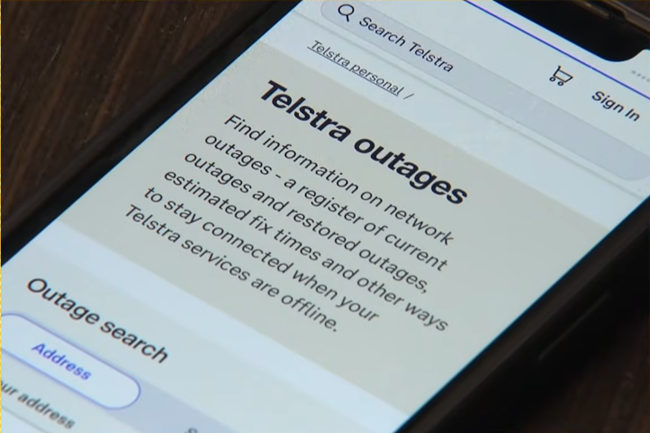
The Telstra outage exposed a bigger problem than a software fault: Australia's telecommunications laws are still built for the last century. Paul Budde reports.
BY NOW, the technical explanation for this week's Telstra outage is becoming clearer.
Investigations point to a software fault involving GPS timing systems that disrupted mobile services across the country. The consequences extended well beyond dropped phone calls. Rail services were interrupted, electronic payment systems failed, businesses lost connectivity and more than 300 attempted triple-zero calls required follow-up.
But the real story isn't Telstra.
It is that Australia continues to regulate telecommunications largely as though they were still telephone companies, when in reality they have become operators of the nation's most important digital infrastructure.
For more than two decades, I have argued that telecommunications are no longer simply a commercial utility. Broadband, mobile networks, cloud computing and data infrastructure have become a national asset. They underpin banking, healthcare, transport, energy, education, logistics, government services and emergency management. Without them, much of modern Australia simply stops functioning.
That is exactly what this week's outage demonstrated.
The failure itself is also telling. Increasingly, the greatest risks no longer come from broken cables or damaged exchanges. Today's networks are vast software-defined computer systems. As they become more virtualised, cloud-based and automated, failures increasingly arise from software defects, configuration errors, vendor updates and, inevitably, human error.
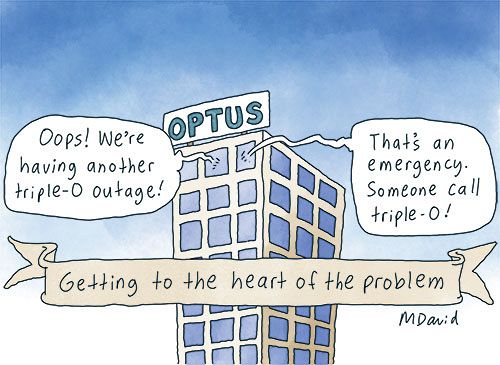
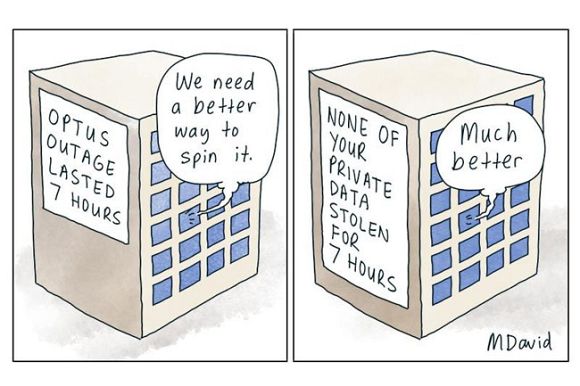
The CrowdStrike software update in 2024 crippled airlines, hospitals, banks and governments around the world. Australia's Optus outage in 2023 resulted from failures in its core software network. Now, Telstra appears to have experienced a software-related timing failure that rippled across multiple sectors of the economy.
This is not a coincidence. It is a pattern.
Yet Australia's policy response has changed very little. After every major outage, we see the same cycle: investigations, compliance reviews, additional reporting requirements and calls for larger penalties. Accountability is important, but it is only part of the answer. These responses belong to a regulatory framework that evolved around the monopoly telephone network of the last century.
Today's telecommunications networks are fundamentally different. They are distributed computer platforms operating at a national scale. They require a different policy philosophy.
Rather than asking how to punish operators after failures occur, Australia should be asking how to build resilience into the national digital infrastructure before failures occur.

Some countries have already made that shift.
Finland provides perhaps the clearest example. It treats telecommunications as an essential element of national security, economic resilience and the continuity of government.
Telecommunications operators, government agencies, emergency services, defence organisations, banks, energy providers and other critical infrastructure operators all participate in national resilience planning. Regular exercises test not only whether networks survive failures, but whether society itself can continue functioning when parts of those networks are disrupted.
The philosophy is fundamentally different.
Australia tends to ask: Did the carrier comply with the regulations?
Finland asks: How do we ensure society continues functioning if communications fail?
That difference changes everything.
Finland is not alone. Sweden has strengthened telecommunications resilience as part of its Total Defence strategy. Singapore imposes rigorous resilience standards because communications underpin its position as a global financial and digital hub. Japan has invested heavily in geographically diverse networks and rapid restoration following decades of experience with earthquakes and tsunamis.
These countries do not simply regard telecommunications resilience as a commercial responsibility for network operators. They increasingly treat it as a matter of national policy.
Australia should do the same.
This does not mean more regulation for its own sake. Nor does it mean governments should run telecommunications networks.
It means recognising that resilience, security and digital sovereignty have become matters of national interest.
Australia needs a National Telecommunications Resilience Strategy that brings together governments, carriers, cloud providers, emergency services, energy companies, banks, transport operators and defence agencies within a single policy framework. Such a strategy would focus on resilience by design rather than regulation after failure. It would promote diversity, redundancy, software assurance, coordinated planning and regular national resilience exercises.
Telecommunications have become as fundamental to Australia's wellbeing as electricity, water and transport. We have national strategies for those sectors because we recognise that their resilience cannot be left entirely to market forces. The same logic now applies to digital communications.
The lesson from the Telstra outage is therefore much broader than the failure of one company's software. It is a reminder that Australia's digital economy has outgrown the policy framework that governs it.
The next major outage should not simply trigger another inquiry or another round of penalties. It should finally convince policymakers that telecommunications are no longer merely a commercial service. They are a national asset and they deserve to be governed accordingly.
Paul Budde is an IA columnist and managing director of independent telecommunications research and consultancy, Paul Budde Consulting. You can follow Paul on Twitter @PaulBudde.
 This work is licensed under a Creative Commons Attribution-NonCommercial-NoDerivs 3.0 Australia License
Support independent journalism Subscribe to IA.