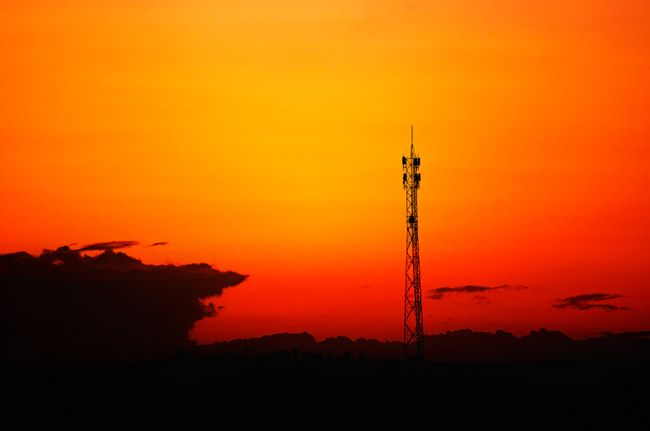
As a technologically advanced middle power occupying a strategically valuable part of the Indo-Pacific, Australia should aim to become a serious and influential participant in shaping the next phase of the space economy, writes Paul Budde.
THE GLOBAL SPACE ECONOMY is entering a fundamentally different phase. What was once mainly the domain of governments, defence and scientific exploration is becoming another layer of the world's critical infrastructure.
The Organisation for Economic Cooperation and Development (OECD)'s new Space Economy at a Glance 2026 makes this transition particularly clear.
Space-based systems already support more than half of the most critical infrastructures and services across OECD countries, including communications, transport, energy and food supply.
In some countries, satellite-enabled services support close to one-fifth of GDP.
I think this requires us to look at Australian space policy differently. The important question is no longer how many rockets or satellites we can build. It is whether Australia is positioning itself properly for an economy that will become increasingly dependent on space.

Government still has a critical role
Interestingly, the OECD finds that increasing private investment has not diminished the importance of government. Governments remain instrumental through R&D, procurement, regulation, finance and international cooperation.
Australia certainly isn't starting from scratch.
Its space sector generates around AUD$4.6 billion annually, employs approximately 17,000 people and includes some 620 businesses. We have expertise in satellite communications, Earth observation, space tracking and launch technologies.
But having innovative companies is not the same as having an integrated national strategy.
In my view, Australia needs to identify those parts of the emerging space infrastructure that are strategically important to us and decide where we need domestic capability and where international dependence is acceptable.

Australia has some cards to play
One advantage we should not underestimate is geography.
Our enormous landmass, low population density, Southern Hemisphere position and northern proximity to the equator provide opportunities for launch, spacecraft recovery, ground stations and satellite tracking.
At the same time, our geography makes Australia unusually dependent on space services. Remote communities, mines, farms and enormous coastlines make satellite communications, positioning and Earth observation particularly valuable. Bushfires, floods and cyclones reinforce that dependence.
We therefore have the unusual advantage of being both a potential supplier and an important test market for space technologies.
However, we cannot and should not try to do everything ourselves. Australia is a middle power, not a space superpower.
The more relevant question is: which space services could Australia not afford to lose?
Communications immediately come to mind.
I have written previously about how LEO satellite systems are reshaping Australia's telecommunications market. They provide enormous benefits to regional Australia, but they also increase our dependence on infrastructure controlled by overseas corporations.
That tension between innovation and dependency will become increasingly important.
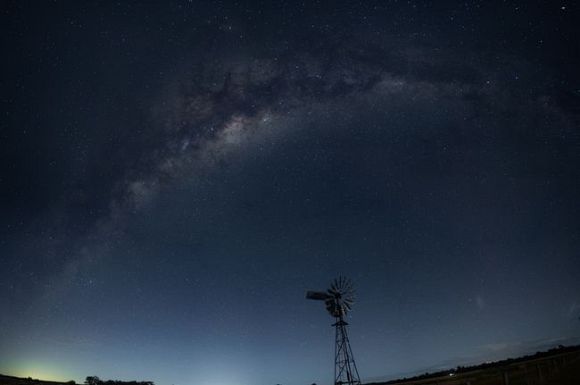
The congestion problem is catching up with us
There is another side to this extraordinary growth.
The OECD estimates that almost USD$200 billion of economic activity is exposed to space-debris risks.
I have previously raised concerns about orbital congestion and space debris. As thousands more low Earth orbit (LEO) satellites are deployed, debris, spectrum congestion, collision avoidance and space traffic management are moving from specialist technical issues into mainstream economic policy.
My more recent article on Artemis II and space governance raised the same broader problem: technological and commercial development is moving considerably faster than the international rules governing it.
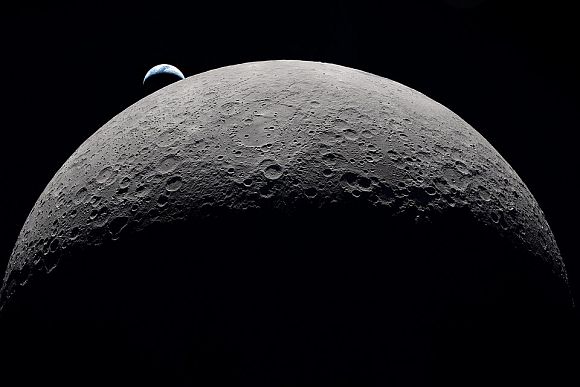
And this won't stop at Earth's orbit. I wrote several years ago about LunaNet and plans for communications infrastructure on the Moon. What then appeared futuristic is part of an emerging space economy extending beyond Earth.
Australia needs to think ahead
Australia appears reasonably well positioned. We have innovative companies, excellent research, strong international partnerships and geographic advantages many countries do not possess.
But being well positioned is not enough.
The OECD report reinforces my view that space should increasingly be treated as critical infrastructure. Australia needs to decide where we should build scale, where cooperation with trusted partners makes more sense and where dependence on foreign infrastructure could become an economic or strategic vulnerability.
We don't need to become a space superpower.
But as a technologically advanced middle power occupying a strategically valuable part of the Indo-Pacific, we should aim to become a serious and influential participant in shaping the next phase of the space economy.
The opportunity is there. The question is whether we are thinking far enough ahead to grasp it.
Paul Budde is an IA columnist and managing director of independent telecommunications research and consultancy, Paul Budde Consulting. You can follow Paul on Twitter @PaulBudde.
 This work is licensed under a Creative Commons Attribution-NonCommercial-NoDerivs 3.0 Australia License
Support independent journalism Subscribe to IA.