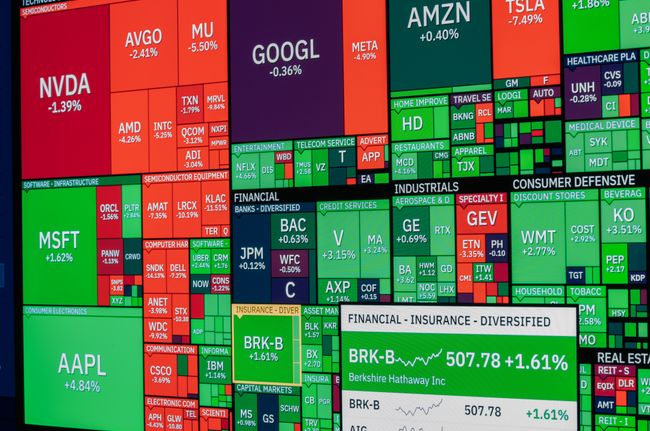
Foreign technology companies invest billions of dollars here; the question, writes Paul Budde, is how much of the value created by this next digital economy can Australia capture?
SINGTEL'S CONSIDERATION of bringing a minority Australian investor into Optus might look like another telecommunications ownership story. But viewed more broadly, it raises a much more interesting question: where is investment capital now flowing in the rapidly changing digital economy?
For decades, telecommunications networks attracted enormous investment as broadband and mobile drove digitalisation. Today, capital is increasingly moving towards data centres, cloud computing and artificial intelligence.
Singtel itself illustrates the transition.
It would be wrong to suggest that Singtel is considering selling part of Optus specifically to finance AI or data centres. But its broader strategy involves recycling capital from mature assets while expanding into digital infrastructure, data centres and AI-related services.
The underlying capital-allocation question is obvious: if capital can be released from mature telecommunications assets, where can it generate the strongest future return?
Increasingly, that may not be another telecommunications network.

Follow the money
Microsoft has announced AU$25 billion of investment in Australian cloud and AI infrastructure through 2029, while Amazon has announced AU$20 billion for Australian data-centre infrastructure.
Globally, major U.S. technology companies are committing hundreds of billions of dollars annually to AI infrastructure and computing capacity.
Economic power tends to follow investment.
Telstra illustrates what is happening. It remains financially strong, with a highly profitable mobile business and valuable infrastructure. But it operates largely within a mature Australian connectivity market where substantial new growth is difficult.
Having been involved in telecommunications for more than 40 years, I see this as one of the most fundamental changes in the industry's position.
Twenty years ago, telecommunications sat at the centre of digitalisation. Broadband, mobile, fibre and internet access were the essential growth infrastructure. Those networks remain indispensable, but increasingly they are becoming the transport layer underneath a much larger digital economy.
Networks connect data centres, which support cloud platforms and computing capacity that increasingly powers AI models and applications. Being essential, however, is not the same as capturing the greatest economic value.
Telstra, Optus, Vocus and TPG will carry ever-growing quantities of data, but Microsoft, Amazon, Google, Meta and Nvidia increasingly occupy the higher-value layers built upon that connectivity.
Australia's familiar problem
Australia has prospered enormously by supplying resources to the world while often capturing less value further along the processing, manufacturing and technology chains.
AI could reproduce this pattern in digital form. The resources are different: land, electricity, renewable-energy potential, fibre connectivity, political stability and capital.
Australia possesses these advantages and is attracting enormous investment in data centres and AI infrastructure.
State governments understandably compete to attract these investments. But attracting investment does not necessarily mean moving up the value chain. We should also be asking a more fundamental question: what does Australia and Australian society actually gain from it?
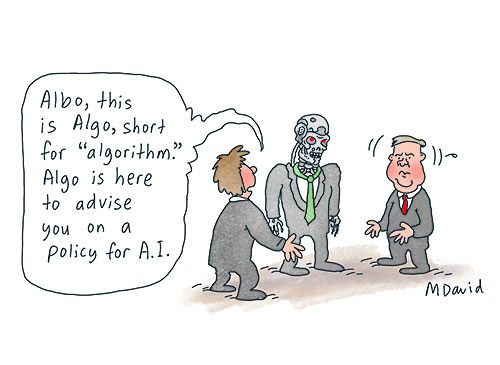
If Australia supplies the land, energy, buildings and connectivity while overseas companies control the advanced chips, cloud platforms, AI models, software and intellectual property, we risk remaining towards the resource end of this new industry.
Instead of exporting iron ore, we could effectively be exporting computing resources.
The investment is highly desirable. It expands Australia's digital capabilities and creates construction, engineering, energy and telecommunications activity. The challenge is capturing more of the value it generates.

A shift in economic power
There is also a geographical dimension.
Australia's traditional telecommunications industry has largely been shaped by Australian and Asian capital. The emerging cloud and AI environment, however, is dominated by giant U.S. corporations operating on a completely different scale.
This does not mean Australia should resist their investment. We need international technology and capital to participate seriously in the AI economy. But it changes where investment decisions are made and where technology and intellectual property are controlled.
Australia therefore faces an important choice.
We can remain extremely successful at supplying the physical resources required by the AI revolution, just as we have done in mining and agriculture. Or we can use this investment cycle to build Australian AI companies, technologies, intellectual property, skills and applications further up the value chain.
The Optus ownership discussions may ultimately prove a relatively minor development. But they provide a useful window into a much larger transformation.
Twenty years ago telecommunications companies stood near the centre of digitalisation. Today they remain essential, but increasingly provide the transport layer for a digital economy in which investment and economic power are moving towards data centres, cloud and AI.
For Australia, the real question is not simply how many billions of dollars foreign technology companies invest here. It is how much of the value created by this next digital economy Australia can capture.
Otherwise, the Lucky Country may once again provide the resources while others move further up the value chain.
Paul Budde is an IA columnist and managing director of independent telecommunications research and consultancy, Paul Budde Consulting. You can follow Paul on Twitter @PaulBudde.
 This work is licensed under a Creative Commons Attribution-NonCommercial-NoDerivs 3.0 Australia License
Support independent journalism Subscribe to IA.


Related Articles
- Australia needs AI skills — not just more data centres
- AI near misses: The space between potential and catastrophe
- Big Tech: When 1984 meets The Godfather
- EDITORIAL: Big Tech — When 1984 meets The Godfather
- AI job applicant screening — the law still applies