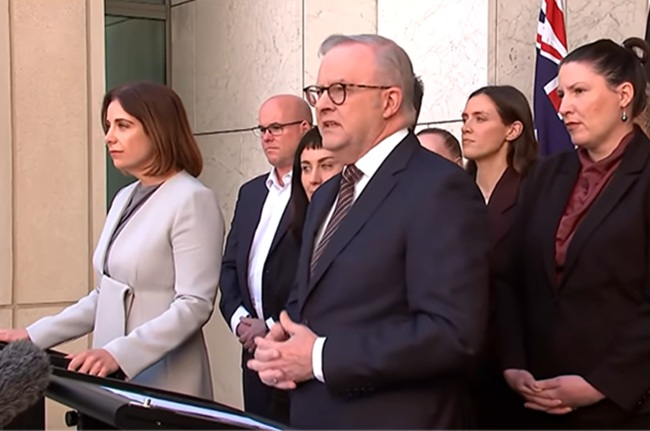
Emergency communications, cybersecurity, AI, consumer protection and national security are not separate issues – yet government continues to examine them through separate inquiries, regulators and legislation, writes Paul Budde.
THE SENATE INQUIRY into Australia’s Triple Zero service has delivered 11 recommendations following yet another series of serious telecommunications failures.
The most significant is that the Commonwealth consider establishing a statutory authority to take responsibility for the Emergency Call Person (ECP) function currently performed by Telstra.
I support the principle behind this recommendation. Triple Zero is an essential national-interest service and its central management warrants direct government responsibility. Emergency access should not depend entirely on the commercial priorities and operational performance of private telecommunications companies.
However, we need to be clear about what is being proposed. The Emergency Call Person answers the initial call and transfers it to the appropriate police, fire or ambulance service.
Transferring this function to a public authority does not place the underlying telecommunications networks under government control.
In previous articles for Independent Australia following the Optus and Telstra failures, I argued that repeated outages point to a much broader structural problem. Changing the organisation that answers a Triple Zero call will not prevent failures occurring before the call reaches it.
Triple Zero still depends upon the Telstra, Optus and TPG networks, together with their equipment, software, transmission links, power supplies and operational procedures.

The recent outages have exposed failures involving equipment, software updates, documentation, maintenance and network management.
Telstra’s July outage, for example, followed incorrect date information spreading through parts of its mobile network after maintenance on a timing system. Its subsequent investigation found that this critical function had not received adequate end-to-end oversight.
These were not simply unfortunate technical accidents. They revealed weaknesses in investment, management and accountability.
As I have previously argued, the telecommunications industry is under growing financial pressure. Traditional revenues have declined while companies continue to face demands for network expansion and modernisation. Profitability increasingly depends on cost reductions, but cutting costs in maintenance, technical expertise and infrastructure inevitably increases operational risks.
Placing the Emergency Call Person function under government control may clarify responsibility, but it cannot compensate for outdated, inadequately maintained or poorly monitored carrier networks.
An independent technical audit may find that parts of the underlying infrastructure need to be upgraded or replaced. That will take time and require substantial investment.
The committee has also recommended mandatory domestic roaming. In principle, this is a sensible way to create redundancy. If one network fails, customers could temporarily use another.
However, resilience and redundancy are not the same thing.
Emergency “camp-on” already allows a mobile phone to attempt an emergency call through another carrier when its normal network is unavailable. Establishing that connection can take up to a minute and, during Telstra’s July outage, customers were advised it could take as long as 90 seconds.
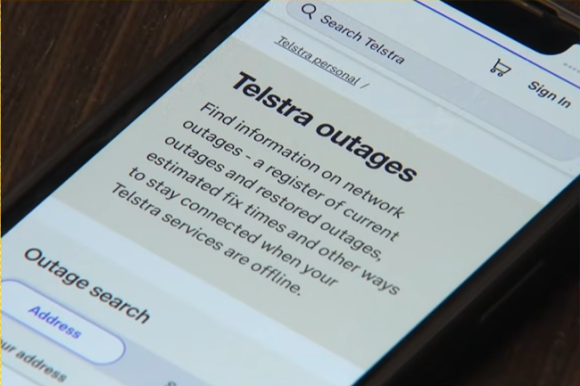
In a life-threatening emergency, that is an extraordinarily long time. Callers hearing an error message or experiencing silence may assume the call has failed and hang up before the transfer is completed.
Domestic roaming also creates a capacity problem. If a major network suddenly fails, surviving networks could be required to carry millions of additional customers. Networks are not currently designed with sufficient spare capacity to absorb all the traffic of a competitor.
Without investment in reserve capacity, roaming could simply transfer congestion from one network to another. The questions are therefore unavoidable: what additional infrastructure is required, how much will it cost and who will pay for it?
The other recommendations – including reliability standards, automatic compensation, stronger regulatory powers, text-based access to Triple Zero and a review of the Australian Communications and Media Authority – are also worthwhile.
My concern is that they risk becoming another collection of regulatory bandages.
Triple Zero is not being considered in isolation. Further investigations and legislative reforms are examining a digital duty of care, cybersecurity, online safety and the effects of artificial intelligence. Each will place new demands and responsibilities on the same telecommunications infrastructure.
AI will increase network traffic and society’s dependence on digital systems. It will also enable more sophisticated cyberattacks, scams and automated disruption. Stronger cybersecurity will require greater investment in monitoring, redundancy, skilled personnel and the replacement of vulnerable legacy systems.

A digital duty of care will require telcos and digital platforms to take greater responsibility for foreseeable harm. But such a duty is meaningless if the networks and operational systems needed to fulfil it are not reliable.
Emergency communications, cybersecurity, AI, consumer protection and national security are not separate issues. They converge on the same digital infrastructure. Yet government continues to examine them through separate inquiries, regulators and pieces of legislation.
We have already had the Bean review, the creation of a Triple Zero Custodian and numerous investigations into individual outages. Each new failure produces another review, another authority and another set of rules.
This fragmented approach must end.
Australia needs a holistic national review of telecommunications infrastructure, resilience, security, investment and governance. It should bring together Triple Zero, domestic roaming, cybersecurity, AI, duty-of-care obligations, disaster resilience and the financial pressures facing the industry.
Government control of the Emergency Call Person function would be a valuable reform, but it must not create the impression that Triple Zero has thereby been fixed.
The challenge is far greater. Australia must decide how it will fund, govern and maintain the secure and resilient telecommunications infrastructure on which an increasingly digital society now depends.
Paul Budde is an IA columnist and managing director of independent telecommunications research and consultancy, Paul Budde Consulting. You can follow Paul on Twitter @PaulBudde.
 This work is licensed under a Creative Commons Attribution-NonCommercial-NoDerivs 3.0 Australia License
Support independent journalism Subscribe to IA.