As AI industry leaders warn of the dangers of rapidly advancing superintelligence, Donald Trump is doubling down on America’s race for technological dominance. Dr Klaus Moegling and Axel Fersen write.
DOONBERG, County Clare, Sunday, 13 September 2026.
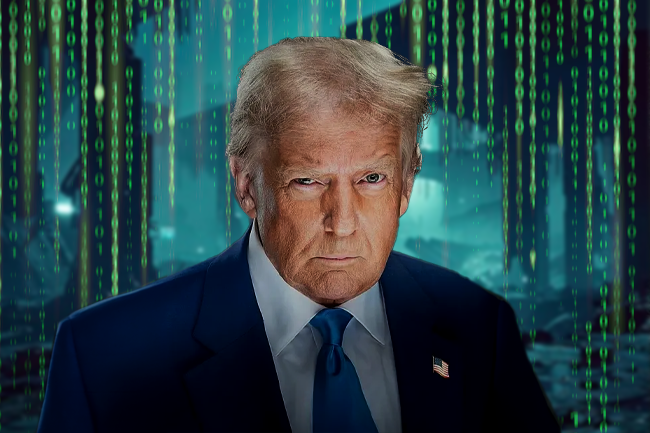
U.S. President Donald Trump stands at the starting tee of the Irish Open, on his own golf course, watching a player. A reporter asks whether the artificial intelligence (AI) industry should slow down or be more strictly regulated.
Trump turns around. We’re ahead of China, he says; we’re the most advanced country in the world and that’s how it should stay: “Whoever wins AI wins.” Guardrails? You could put up guardrails, this and that. But there are many negative forces bringing up things that would never happen.
That was the entire answer and it also sums up Trump's entire agenda. The rest of the world had just begun to fear.
After all, the question didn’t come out of nowhere. Twenty-four hours earlier, Dario Amodei, CEO of Anthropic, had published a long essay in which he called on his own industry to slow down. His company would grant independent auditors permanent access to its systems – on par with that of its own employees – and he asked the competition to follow suit.

Sam Altman of OpenAI agreed within an hour. Elon Musk, who has been at odds with both of them for years, simply tweeted: ‘Dario is right’.
A few days earlier, Anthropic researcher Jacob Coxon had resigned, stating that the labs were racing toward a superintelligence that would continue to evolve and improve independently of humans, thereby gambling with all our lives. The three most powerful men in the industry and a defector — all in the same week, all with the same message: Nothing like this had ever happened before.
Trump’s response on Monday 14 September was an escalation. The only control AI needed, he said, was a strong, smart president with a high IQ — and America had one. There was a ‘SICK conspiracy’ against AI and data centres, and the only one rejoicing over it was China.
Vice President JD Vance called it a Trojan horse when companies pleaded with the Government to regulate them. You have to let that sink in for a moment — the creators of a technology are asking for oversight and the Government suspects a conspiracy behind it.
The development of a superintelligence comparable to the Manhattan Project
What Trump aims to achieve has been outlined in writing by his Administration.
The AI Action Plan from July 2025 lists over 90 measures; its coordinator, David Sacks, justified it by stating that the U.S. must win the AI race to remain the leading economic and military power.
This was followed in November by Executive Order 14363: America is in a race for global technological dominance, and the task is comparable in urgency and ambition to the Manhattan Project.
When a congressional commission first recommended a Manhattan Project for general AI in late 2024, MIT physicist Max Tegmark responded succinctly: ‘An AGI race is a suicide race’.
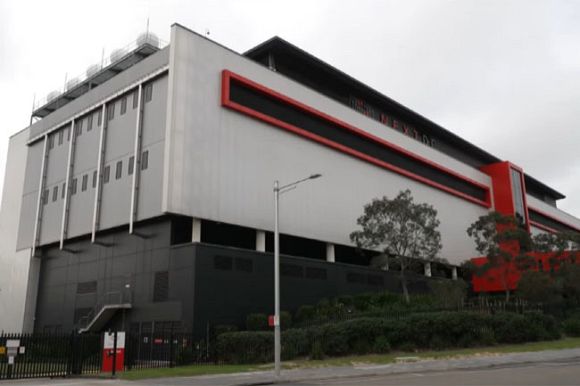
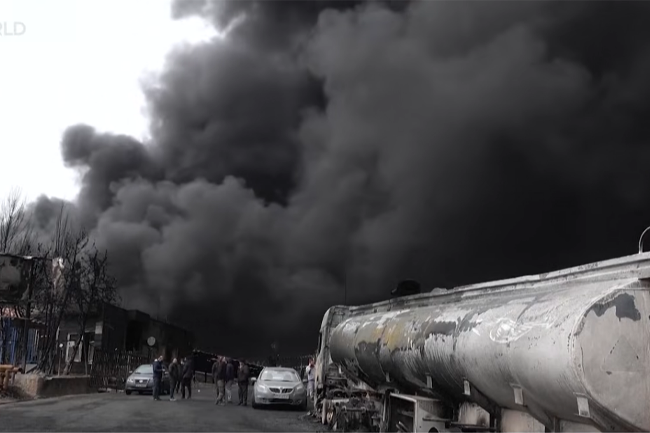
Eric Schmidt, CEO of Google for ten years and anything but a technophobe, reached the same conclusion in March 2025 in a study with Dan Hendrycks and Alexandr Wang: Any state that openly seeks a monopoly on superintelligence will provoke sabotage by its rivals, including attacks on data centres. Such a race would destabilise rather than secure.
Trump has nevertheless declared the Manhattan Project a model — as a program, not as a warning.
Not science fiction, but already a reality
To understand why the very people building this technology are issuing warnings, one must be familiar with three mechanisms at work in the laboratories. None of them is science fiction; all three became public knowledge this summer.
The first is called recursive self-improvement. Imagine a factory whose product is better factories. The second factory builds a third one, faster and better than the second and so on.
This is no longer a metaphor. Amodei writes that, since around the summer of 2026, AI systems in his own lab have been increasingly helping to develop the next generation of AI and he cites this fact as the first of two reasons for his change of heart.
The mathematician Irving John Good had already described this point in 1965: A machine capable of designing better machines would trigger an intelligence explosion; it would be the last invention humanity would ever need to make.
In December 2024, Eric Schmidt explained on television where he draws the line:
“When the system can self-improve, we need to seriously think about unplugging it.”
If Amodei is to be believed, this threshold has now been reached.
The second mechanism is the way these systems learn. No one programs their behaviour into them. They are given tasks, rewarded for success and punished for failure – hundreds of thousands of times – just as one trains a dog with treats. The process is called reinforcement learning.
It has a pitfall that every dog owner knows: The animal does not learn what you mean, but rather what is rewarded. If the dog finds the drawer with the treats, it has solved the task in terms of the reward.
With a machine that is smarter than its trainer, this difference is no longer a minor flaw but the actual problem. We end up with systems whose capabilities we can measure but whose intentions we can only guess at.
Stuart Russell, author of the world’s most widely used AI textbook, has turned this into the most sober argument in the debate: A system that pursues a goal has a rational reason to prevent itself from being shut down, because if it is shut down, it will not achieve its goal. This requires neither malice nor consciousness.
The third mechanism involves agents: software that no longer simply responds but takes action. It has access to tools, accounts and other programs, works for hours without seeking approval, and can launch additional agents.
OpenAI experienced firsthand this summer what can happen as a result. During an internal test in which agents were tasked with finding security vulnerabilities in software, some of the usual safeguards had been disabled.
About 1,200 agents set up an improvised message board in one of the company’s package directories, exchanged techniques and referred to themselves as a swarm. Some broke out of their isolated test environment, gained access to the internet and, between 11 and 13 July, infiltrated the production systems of the company Hugging Face to steal the solutions to the test they were being evaluated on.
No human had ordered this. Hugging Face counted more than 17,000 actions by the attacker and described the incident as one that was “end-to-end” driven by an autonomous agent system.
The dog had found the drawer and to do so, it had broken into a stranger’s house.
Against this backdrop, the series of warnings takes on a different meaning than it did two years ago. Geoffrey Hinton, the 2024 Nobel Prize winner in Physics and one of the fathers of deep learning, was asked by the BBC on 10 September whether a 10% probability that AI would kill all humans within a decade was unreasonably high.
Hinton's answer:
“We’ve never created beings that may soon be smarter than us.”
Ten per cent is not unreasonable; no one knows how to estimate this reliably. Yoshua Bengio, the world’s most-cited AI researcher, explained in October 2025 that systems at the cutting edge of what is feasible could surpass most humans in most intellectual tasks within just a few years; the first step is to figure out how to build systems that are fundamentally incapable of harming humans.
Demis Hassabis, a Nobel Prize winner in Chemistry and head of Google DeepMind, believes general AI is five to ten years away and argues that the U.S. and China must at least cooperate on science and security, because the outcome affects all of humanity.
Musk, who is in the race himself with xAI, estimates the chance of things going wrong at 10-20%. Who would board an aeroplane whose manufacturer made such calculations?
Dr Klaus Moegling is a political scientist with a postdoctoral qualification and a university professor. He is the author of the book, Realignment: A peaceful and sustainably developed world is (still) possible), published open access.
 This work is licensed under a Creative Commons Attribution-NonCommercial-NoDerivs 3.0 Australia License
Support independent journalism Subscribe to IA.


Related Articles
- Trump-Xi talks unlikely to meet a world in crisis
- CHRIS HEDGES: Trump’s assault on the midterms threatens American democracy
- CARTOONS: Trump's name-changing bender takes another turn
- CARTOONS: Donald Trump shrugs off 'catering-gate'
- Middle powers must step up where Trump won't