Domestic roaming is not a complete solution, but it is an essential part of a resilient communications framework, writes Paul Budde.
The ACCC HAS announced a 12-month inquiry into regional mobile coverage, including whether domestic mobile roaming and greater access to mobile network infrastructure should be regulated.
This is an important inquiry, but it should not be treated simply as another telecommunications competition review. Mobile communications have become critical national infrastructure. Coverage, reliability and the ability to maintain communications during disasters are now matters of public safety and national resilience.
Domestic roaming would allow customers to connect to another mobile network when their own provider has no coverage. This is particularly important in regional and remote Australia, where people can encounter large coverage gaps even when another operator has a functioning network nearby.
I have long argued that automatic roaming should be available during emergencies. Temporary Disaster Roaming is therefore a welcome development, but it should not be the end of the discussion.
People do not always lose connectivity within the boundaries of a formally declared disaster. A farmer involved in an accident, a traveller stranded on an isolated road or a community affected by a local network failure may face an emergency even though no disaster declaration has been made.
At a minimum, customers should be able to roam onto another available network for emergency calls, voice and basic messaging when their own provider is unavailable. More extensive data services could be provided where network capacity permits.

Investment and resilience
The mobile operators’ concerns cannot simply be dismissed. Telstra argues that unrestricted roaming could discourage competitors from investing in their own regional networks and could congest its infrastructure.
These are legitimate issues, but they are not arguments against roaming itself. They are questions about how roaming should be designed.
Access conditions could include capacity safeguards, regulated wholesale payments and investment obligations. Roaming should complement continued network expansion, not provide operators with an excuse to stop building their own infrastructure.
The ACCC is also considering radio access network sharing. In sparsely populated areas, duplicating every tower, radio system and backhaul connection may not be economically sensible. Shared infrastructure can extend coverage and reduce costs, provided responsibilities for investment, capacity, maintenance and disaster recovery remain clear.
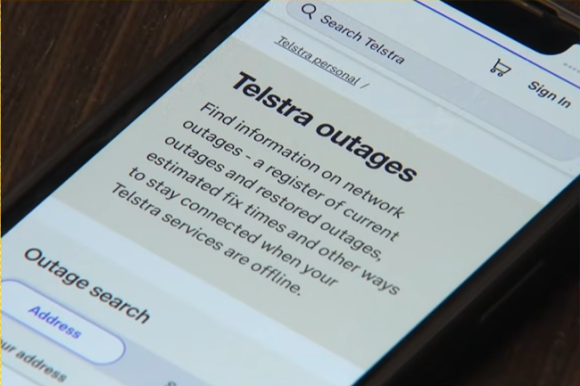
However, roaming and network sharing only improve resilience if the underlying networks are themselves resilient. We discussed this issue extensively during the recent Telstra outage.
Mobile towers require adequate backup power. Regional communities need diverse fibre, microwave or satellite backhaul so that one cable cut does not isolate an entire area. Networks should be designed to cope with prolonged power failures, equipment damage and sudden increases in emergency traffic.
Coverage statistics alone do not address these problems. Claims that a network reaches 99 per cent of Australians measure population coverage, not the enormous geographic areas where people travel, work, farm and face emergencies.
The changing role of Starlink
The inquiry will also consider direct-to-device satellite services. These can fill outdoor coverage gaps and provide alternative communications when terrestrial infrastructure fails.
As I discussed in my recent article, 'Sky infrastructure: Starlink, Australia and the dynamic global telecommunications order', Starlink is becoming an increasingly important part of Australia’s digital infrastructure.
Industry analyst Grahame Lynch (CommsDay 6/8/2026) has raised another issue: regulated access to terrestrial mobile networks could allow Starlink to develop a hybrid service that combines satellite coverage with roaming across Australian mobile networks.
That could improve competition, coverage and resilience. However, it could also make Starlink a far more dominant telecommunications player and increase Australia’s dependence on a powerful foreign-owned company. The ACCC should therefore consider the implications for national security, sovereign control and infrastructure resilience, without repeating the mistake of allowing any single provider to become indispensable.

Building a layered system
Australia should not be choosing between terrestrial mobile networks and satellite services. It needs a layered communications system in which different technologies and providers can support one another.
This should include stronger terrestrial mobile and fibre infrastructure, domestic roaming, sensible network sharing, diverse backhaul, longer-lasting backup power and access to multiple satellite systems wherever possible.
Domestic roaming is not a complete solution, but it is an essential part of a resilient communications framework. The guiding principle should be straightforward: when one network fails or is unavailable, Australians should have another way to connect.
Paul Budde is an IA columnist and managing director of independent telecommunications research and consultancy, Paul Budde Consulting. You can follow Paul on Twitter @PaulBudde.
 This work is licensed under a Creative Commons Attribution-NonCommercial-NoDerivs 3.0 Australia License
Support independent journalism Subscribe to IA.


Related Articles
- Telcos: Australia's greatest infrastructure success under attack
- Australia’s telecom expansion still paying for NBN policy mistakes
- Australia's telco industry an essential service on weakening foundations
- Lessons from Optus and the political risks of relying on LEO satellite technology
- Rethinking 5G: Why faster isn’t always better, especially in regional Australia