The RBA's relentless interest rate rises are squeezing struggling households while leaving wealthy consumers largely untouched, writes Dermot Daley.
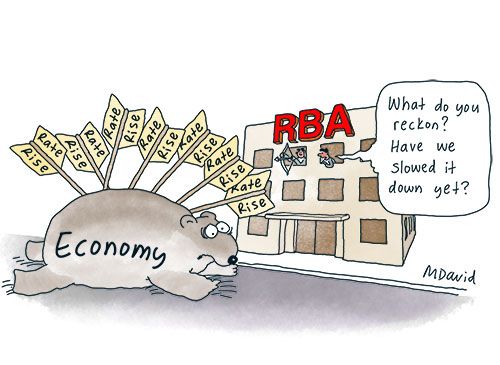
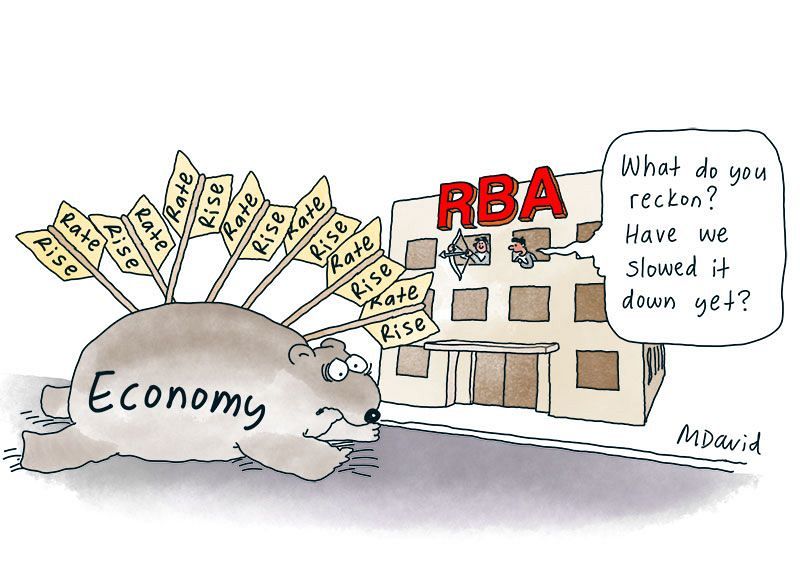
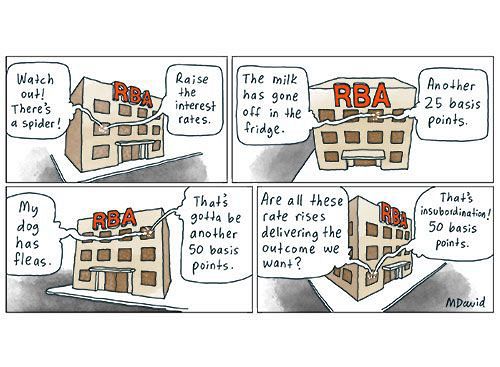
ON 3 NOVEMBER, the governor of the Reserve Bank of Australia (RBA) announced the fifth interest rate rise this year, advising us that it can take up to a year for the rise to take effect, and thereby inviting the question: if the first four increases in this cycle may not have had time to work, how do we know this one will?
It looks a bit like hitting your head against a wall to treat a headache and wondering why the headache persists.
The bogeyman scaring economists is inflation and they insist it's caused by excessive spending. But who is spending?
This rise in the interest rate will hurt the wrong people. It will hurt families and first-home buyers on modest incomes who are already struggling with the barrage of interest rate rises. These Australians have no room for discretionary spending, as many already struggle with wage stagnation, inflated fuel costs and spiralling food prices, and now their mortgage or rent will jump again.
If this fragile group defaults on their payments, they may have to sell the home they have fought long and hard to get. The home that they may be forced to sell could result in a monetary loss because house prices are lower due to the market adjustment from changes to the middle-class welfare of capital gains offset and negative gearing, both of which needed to be addressed two decades ago but were ignored by nervous PMs who sought popularity instead of fiscal competence.
Households affected by this interest rate dilemma will owe the mortgage on what they paid for their house, not what it is worth now. They will not have the luxury of selling freehold and then purchasing again in the same market.
If inflation is caused by spending and the ones most impacted by the latest interest rate rise are clearly not responsible for profligate spending, then who is? Many megaphone commentators say that the cause of inflation is government spending, but they fail to acknowledge that it is the role of the Government to spend money.
One might reasonably infer that they would prefer that the Government spent our money subsidising their own and their mates’ business speculations rather than providing support and services for the wider community.
But what about the actual beneficiaries of higher interest rates, the ones who gain from secure investments and who are not carrying the punitive debt of a large mortgage? There are many members of the community, “successful” through inheritance or luck, or randomness, who feel no pain from fluctuations in interest rates and go about their spending on cars and white goods and fashion and wining and dining and other trappings of our consumer society.
Of course, every business needs customers in order to survive, but the RBA seems somewhat disposed to providing immunity to the latter-day squattocracy when addressing inflation.
Surely there are practitioners of economic theory who can see that economics is not based on science, like medicine or engineering, but that it is more of an intuitive pastime like fishing or surfing. Adam Smith knew that sound economic practice was where the greatest number in society are best served.
Consider this empathetic approach compared with that of the current proliferation of billionaire oligarchs who hoard vast wealth without any thought of traditional philanthropy. Imagine the logical extension of what it will mean for these fabulously wealthy freaks if there is no one left to spend and to consume the goods that turn the wheels of the economy.
Which raises the question of why we pay inflationary salaries to the Board of the RBA when they are guessing outcomes of things of which they do not seem to have lived experience. Why has this curious profession of economist gained such unearned status?
Perhaps we need to review how we train economists rather than awarding diplomas at shopfront academies. Should they be subjected to a practical assessment of how well they can run a normal household?
We are witnessing the breadth of the U.S. midterm election results and it is clear that the House and the Senate have been flipped. We wonder if this will exacerbate the situation with Iran or if cool heads will prevail? Either way, the world has just breathed a huge sigh of relief and new horizons are available.
At the moment, we are still cringing from the “Tunnel of Trump”, and are yet to reacquaint ourselves with how we can resolve the impending twin existential crises of climate catastrophe and mass species extinction.
Do our omniscient economists have any planning or insight to offer in this critical environment? Because it sure as hell is not going to come cheap.
Dermot Daley is a fourth-generation Australian, living in Victoria, now retired from construction project management.
 This work is licensed under a Creative Commons Attribution-NonCommercial-NoDerivs 3.0 Australia License
Support independent journalism Subscribe to IA.


Related Articles
- RBA rate rise risks turning oil shock into recession
- CARTOONS: Interest rate rises are sinking spirits
- A tumultuous month ahead for the economy and policy makers
- The Reserve Bank's latest interest rate cut is too little, too late
- CARTOONS: The slings and arrows of outrageous rate rises