Australian summer cricket is no place for a bat that feels right only in the nets. From hard turf wickets to long batting spells and competitive Grade fixtures, your bat needs the right balance of pickup, rebound and control to keep up with your game.
Choosing the Best English Willow Bat means looking beyond appearance and focusing on how the blade performs in your hands.
For players considering a Grade 1 English Willow Bat Australia option, willow selection is just the beginning. Weight, pressing, sweet spot, profile and preparation all deserve attention.
CBP Sport brings carefully selected willow and customisable specifications into the picture, with its Force Choice offering a premium Grade 1+ option for players seeking a more tailored match-day experience.
Best English Willow Bat Australia: Complete buying guide (2026)
- Best English Willow Bat: Ideal for players who prefer quick pickup, faster bat speed and effortless movement against pace.
- Best English Willow Bat for Power Hitting: Suits aggressive batters looking for a strong rebound, substantial sweet spot and powerful stroke-making.
- Best Cricket Bat for Club Players: A reliable choice for regular Australian club cricketers who value comfortable handling, balanced pickup and consistent match performance.
- Best Custom English Willow Bat: Perfect for players who want to personalise weight, handle shape, blade profile and sweet spot according to their technique.
- Best Kashmir Willow Bat: A budget-friendly option for beginners and recreational players seeking a dependable bat for practice and casual cricket.
Our top picks at a glance
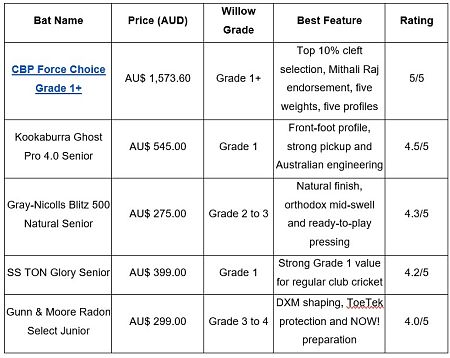
The five verified Australian prices range from $275.00 to $1,573.60. Each model serves a different player, from developing juniors to Grade cricketers who already know preferred weight and middle.
Why English willow suits serious Australian cricket?
English willow comes from Salix alba caerulea and is valued because its fibres compress under a hard leather ball and rebound quickly. That response produces the lively contact serious batters expect when they middle a drive, punch or pull. The material is also lighter than Kashmir willow for comparable blade volume, allowing fuller profiles without excessive dead weight.
For a Grade Cricket Bat Australia buyer, those traits are useful. Turf wickets can offer bounce and carry, suburban grounds can be abrasive, and a new Kookaburra remains firm enough to punish weak preparation.
A cricket bat for turf wickets therefore needs the right pressing, enough protection and a middle positioned for the player's scoring zones rather than simply the cleanest possible face.
1. CBP Force Choice Grade 1+: Best English willow bat in Australia
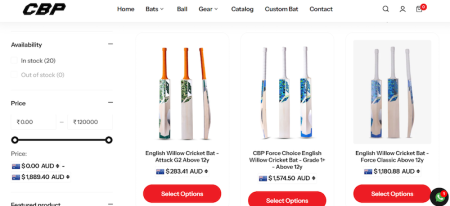
CBP Force Choice sits at the top of the Force range and uses Grade 1+ English willow selected from the top 10% of clefts CBP presses. The bat is built for experienced club and Grade players who already understand the difference between dead weight and pickup. It is priced at $1,573.60 AUD and carries Mithali Raj's endorsement.
The Grade 1+ Cricket Bat specification uses roughly eight to twelve straight grains, minimal natural marks and a clean face. Older, slower-grown willow can press to a firmer, more even surface, giving the blade consistent rebound across its working area. Thick edges and a lively middle add substance without forcing every player into the same balance.
Five listed weights are available: 1,050g, 1,120g, 1,160g, 1,180g and 1,190g. Harrow, SH, LH, LB and LB/LH sizes cover taller juniors through tall adults. As a pre-knocked cricket bat Australia option, it arrives ready for net use, with estimated delivery of three to five days.
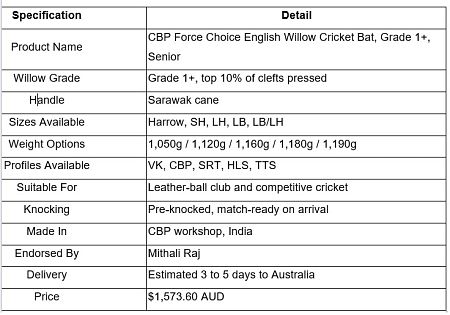
Key specifications: What Grade 1+ English willow means for Australian players
Grade 1+ sits above standard Grade 1 because the cleft pool is more selective. Straight grain, a clean face and consistent density matter, but the real value is how evenly the willow accepts pressing. That affects rebound across the face and how predictable the bat feels when contact moves away from the exact centre.
For Australian Grade cricket, that consistency matters through long seasons and repeated hard-ball use. A premium cleft is not simply a cosmetic upgrade. It gives a skilled batter a more predictable response when facing a hard ball on firm surfaces, especially once pace and match frequency increase.
CBP's top 10% selection makes the Force Choice a performance purchase rather than a display bat. This grade suits players who already know their ideal weight, profile and middle position.
Sizing and weight selection: Matching the bat to your game
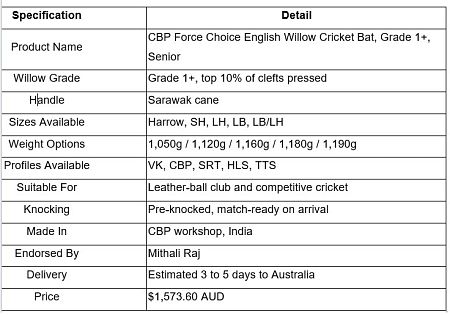
Harrow suits taller juniors and smaller adults up to roughly 168cm. Short Handle covers most adult players around 168cm to 183cm. Long Handle suits 183cm to 193cm players, while Long Blade and LB/LH add reach for taller adults.
The cricket bat pickup weight distinction matters here. Scale weight tells you how many grams are on the bat; pickup tells you how those grams feel during the backswing and downswing. A 1,180g bat with better balance can feel quicker than a poorly distributed 1,120g blade.
The 1,050g option suits players who value hand speed and back-foot reaction. The 1,120g to 1,160g band is a strong all-round range for club cricket. The 1,180g to 1,190g options suit stronger batters who drive hard and retain bat speed through longer innings.
Choosing your CBP profile: Five shapes for five playing styles
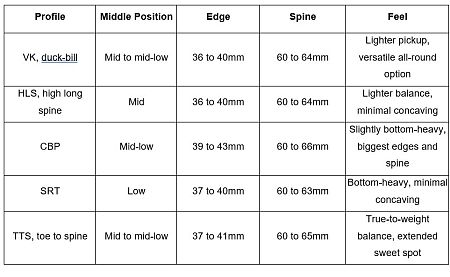
A bat profile determines where the spine, edge mass and middle sit. That makes the cricket bat profile explained decision central to performance, because two Force Choice bats at the same weight can feel completely different once the player lifts them into stance.
SRT and CBP suit front-foot players on slower club turf, where drives and square work dominate. HLS and TTS fit batters who cut and pull on bouncier Grade surfaces. VK is the safest all-round choice when the player wants one profile to cover different wickets across a full Australian season.
The cricket bat sweet spot principle is simple: the middle should sit where you meet the ball most often. Players who contact fuller deliveries lower on the blade gain from a low middle, while back-foot players generally benefit from a more central hitting zone.
2. Kookaburra Ghost Pro 4.0: Best Australian club cricket match bat
Kookaburra Ghost Pro 4.0 Senior uses Grade 1 English willow and costs $545.00 AUD. Its mid-to-low profile suits front-foot batting on Australian turf, while the round cane handle keeps the setup familiar for players moving from school or junior cricket into senior club competition.
Kookaburra's long association with Australian cricket gives the Ghost a profile built around local playing conditions. Thick edges support carry through drives, while the lower middle rewards batters who commit forward. It is a strong Best English Willow Bat candidate for players wanting a recognised Australian match profile without Grade 1+ pricing.
Why Ghost suits Australian turf conditions
Australian club wickets often reward a decisive front-foot game, especially when the ball arrives on a consistent length. A mid-to-low sweet spot places useful mass behind drives and on-side strokes without turning the bat into an extreme toe-heavy profile.
Thick edges also help retain wood around the working area. That does not replace timing, but it gives stronger contact more substance when a shot lands slightly away from the centre.
Ghost Pro 4.0 vs Ghost Pro 1.0
The Pro 4.0 is aimed at club players who want the Ghost profile and Grade 1 willow at $545.00. The Pro 1.0 moves into Grade 1+ territory at a much higher price and makes more sense for Grade or representative players.
For most club cricketers, profile and pressing can matter as much as moving one grade higher. The step to Pro 1.0 becomes easier to justify when a player bats regularly through a long competitive season and already understands preferred weight.
3. Gray-Nicolls Blitz 500 Natural: Best mid-range English willow bat
Gray-Nicolls Blitz 500 Natural Senior uses Grade 2 to 3 English willow and is priced at $275.00 AUD. The natural finish leaves the grain visible, while the mid-swell profile suits technically orthodox batters who score through straight drives, clips and controlled square shots.
Ready-to-play pressing reduces preparation time, and Short Handle plus Harrow sizing makes the model relevant to both adults and junior-to-senior transition players. It is a practical best cricket bat under $500 Australia option for players who value balanced feel more than premium face presentation.
Why natural finish willow appeals to club players
A natural finish lets the buyer see the grain and colour of the cleft instead of hiding the face beneath paint. Experienced players often like that transparency because they can judge the appearance and watch the willow settle through use.
The ready-to-play pressing is also valuable at this price. It gives developing players a manageable route into English willow without requiring an extended preparation schedule before every club session.
Who the Blitz 500 is built for
Blitz 500 suits technically orthodox batters, developing club players and juniors moving toward senior cricket. The mid-swell profile rewards timing and straight-bat technique rather than relying on a heavily loaded lower blade. Players who want a specialist power profile for T20 hitting may prefer another shape. For all-round club cricket, the neutral profile is easier to adapt across formats.
4. SS TON Glory: Best value Grade 1 English willow bat
SS TON Glory Senior uses Grade 1 English willow and costs $399.00 AUD. That places it below many premium heritage Grade 1 bats while retaining a willow level suitable for serious club cricket.
The bat uses a Sarawak cane handle and is available in Short Handle, Harrow and Long Handle. For players prioritising raw willow quality over brand premium, the Glory offers an accessible route into Grade 1 material.
Grade 1 Willow At $399: Where value sits
The Glory's appeal is simple: Grade 1 willow at a mid-range club price. The money goes toward the cleft rather than a premium local manufacturing story or highly complex profile system.
That makes the bat attractive to experienced buyers willing to inspect, pick up and press themselves. If a particular unit feels balanced and lively, the raw willow level gives it plenty of potential for regular club use.
SS TON Glory Vs Kookaburra Ghost Pro 4.0
The Glory offers Grade 1 willow for $399.00, while Ghost Pro 4.0 costs $545.00 and brings Kookaburra's established Australian profile and retail network. The choice depends on priorities. Players focused on Grade 1 willow per dollar may favour SS. Players who value local profile familiarity and consistent Australian retail support may prefer the Ghost.
5. Gunn & Moore Radon Select Junior: Best junior English willow bat
GM Radon Select Junior uses Grade 3 to 4 English willow and costs $299.00 AUD. It is made for younger hard-ball players, with Size 3 through Harrow options covering much of the junior pathway. DXM shaping redistributes mass through the hitting area, while ToeTek protects a vulnerable part of the blade. NOW! Preparation means the bat arrives ready for match use without a lengthy knocking-in schedule, making it a strong junior English willow bat Australia choice for families wanting convenience.
What DXM technology does for junior batters
DXM shaping controls how mass is placed through a smaller junior blade. A broader effective hitting area matters because younger players naturally make more off-centre contact while technique is developing. ToeTek adds useful protection against hard Australian outfields, while NOW! preparation removes a major barrier for parents and coaches who may not have experience knocking in English willow.
Who should buy Radon Select?
Radon Select suits junior club players aged roughly 10 to 15, Harrow users transitioning toward senior cricket and smaller adults who prefer compact dimensions. Advanced Under-17 players competing at higher levels may eventually need higher-grade willow. For regular junior club cricket, the Radon provides a manageable combination of protection, preparation and English willow response.
What makes a genuine English willow cricket bat?
Genuine English willow comes from Salix alba caerulea, traditionally grown in England for cricket-bat production. Its lighter, softer fibre structure compresses under ball impact and rebounds quickly, producing the lively response that serious leather-ball players expect.
When buying, look beyond grain count. Grade, pressing quality, pickup, middle position, handle construction and preparation all influence performance. A clean face is useful, but a visually attractive bat with poor balance will still feel wrong at the crease.
English willow grades explained
Grade labels describe cleft selection and appearance rather than guaranteed performance. A higher grade normally means straighter grain and fewer natural marks, but pressing and profile remain critical.
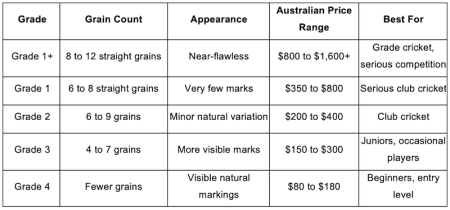
For most adult club players, Grade 2 or Grade 1 gives the strongest balance between cost and performance. Grade 1+ makes sense when a player competes frequently enough to benefit from more selective willow.
What pressing quality does
Pressing compresses willow fibres so the face can handle impact and produce consistent rebound. Lighter pressing can feel lively earlier, while firmer pressing may take longer to open up but can offer useful durability.
Two Grade 1 bats can therefore behave differently. The grade identifies the cleft category, but pressing determines how that particular blade responds.
Pre-knocked or ready-to-play preparation shortens the work required before a new bat can face hard-ball cricket safely. It does not remove the need for regular inspection and sensible introduction to match intensity.
English willow vs Kashmir willow for Australian players
The English willow versus Kashmir willow for Australian cricket decision comes down to rebound, weight, budget and playing level. English willow is lighter and more fibrous, while Kashmir willow is denser and generally heavier for equivalent dimensions. Regular hard-ball club and Grade cricket favours English willow because responsive pickup and rebound become more valuable as bowling pace increases. Kashmir willow remains practical for beginners, practice, tennis-ball cricket and budget-conscious players.
Cricket bat size guide for Australian players
A cricket bat size guide Australia adults should be used alongside stance, reach and strength. Height provides the starting point, but the correct bat must also feel controllable through backlift and downswing.
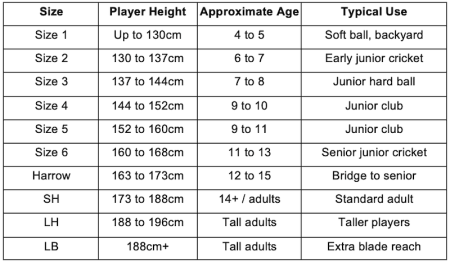
Most Australian adults use a Short Handle. Taller players may prefer Long Handle or Long Blade depending on whether they need extra grip length or additional hitting reach. Juniors should progress through the size range as they grow. Buying a bat too large can reduce bat speed and force awkward stance changes that slow technical development.
How to choose the right English willow cricket bat
1. Match willow grade to budget honestly
For serious club cricket, Grade 2 or Grade 1 is usually the practical starting point. Grade 1+ is appropriate when a player competes often enough to make small gains in face consistency. Do not buy solely on brand reputation. Willow grade, pressing, pickup and profile should justify the price.
2. Understand pickup vs static weight
A listed weight such as 1,120g does not tell you how the bat will feel. Middle position, edge mass, concaving and handling balance change pickup dramatically. Where possible, shadow several cricket shots before buying. Players who buy cricket bats online in Australia should read profile notes carefully rather than selecting only from weight.
3. Profile selection for Australian conditions
Low middles such as SRT suit front-foot players on slower turf and matting. Mid profiles such as HLS suit bouncier Grade wickets and back-foot scoring. VK provides a mid-to-mid-low compromise and is a sensible all-round choice for club cricketers who play across several ground types.
4. Set a realistic club cricket budget
Around $150 to $300 covers entry English willow and many junior options. The $300 to $500 range includes strong Grade 1 and Grade 2 club bats. From $500 to $900, buyers enter premium Grade 1 territory. Above $900, Grade 1+ and players-grade options become increasingly common.
The best cricket bat for club cricket in Australia is not automatically the most expensive. It is the bat whose grade, pickup and profile match the player's actual level and weekly workload.
Cricket bat maintenance for Australian conditions
1. Oiling an English willow bat
Good cricket bat maintenance starts with light raw linseed oil on exposed face, edges and back where appropriate. Do not oil the handle, stickers or splice. Australian summer heat can dry exposed willow quickly, so a conditioning coat before the season can help. Avoid saturation because over-oiling adds mass and can dull the face.
2. Knocking in for hard Australian wickets
A cricket bat knocking-in guide should always progress gradually. Untreated bats can require several hours of mallet work, particularly around the face and edges. Pre-knocked bats such as Force Choice need less work, but a short top-up plus old-ball throwdowns remains sensible before full-pace match bowling.
Do not take a new hard ball directly to an untested face. Seam impact can damage willow before the fibres have compressed sufficiently.
3. Post-season storage
Store the bat indoors after the season, away from hot cars, sheds and large temperature swings. Inspect the toe, face and splice before storage. Clean dirt from the blade and condition exposed willow where required before putting it away.
A quality cover protects the bat during transport, but does not seal a damp bat inside the cover for long periods.
How long does an English willow bat last?
English Willow Bat Lifespan Australia depends on pressing, preparation, workload and maintenance. A high-grade bat can fail early when neglected, while a well-prepared lower grade can survive several productive seasons. Knocking quality matters enormously. A seam strike on an unprepared edge can create cracks that spread rapidly.
Australian conditions also increase toe and edge wear. Hard summer grounds reward the use of a toe guard and reinforcement tape from the beginning. Maintenance should include light conditioning, dry storage and regular inspection. Never leave a bat in direct summer heat or a hot vehicle.
Replace a bat when deep structural cracks reach the splice, the toe separates beyond repair or well-timed middle contact loses the expected response. A properly prepared Grade 1 or Grade 2 bat can provide two to three full Australian club seasons. Grade 1+ may last longer when the cleft is pressed firmly and maintained well.
Cricket bat profiles explained for Australian players
Australian pitches vary from lower suburban turf to firmer Grade surfaces with strong bounce and carry. That means profile selection matters because the middle should match both local conditions and the player's dominant scoring zones.
Low swell profile
A low swell places the middle close to the lower blade. It suits front-foot players, straight driving and slower surfaces. CBP's SRT profile uses a low middle with minimal concaving and a deliberately bottom-heavy balance.
Mid-low swell profile
A mid-low profile moves the sweet spot slightly upward while retaining power through full-length contact. It works for front-foot dominant players who also need central response. The CBP profile combines a mid-low middle with the largest edges and spine dimensions in the Force Choice range.
Mid swell profile
Mid profiles suit all-round and back-foot batters. They provide useful contact for cuts, pulls and punches while remaining capable through drives. HLS combines a mid middle with minimal concaving and a lighter-balanced feel.
Toe-to-spine profile
TTS extends the hitting zone through the blade and keeps a balanced true-to-weight feel. It suits all-round players facing varying pace and bounce. This profile is useful for club cricketers who play across several ground types during a season.
Duck-bill profile
VK carries a mid to mid-low middle but feels lighter than its scale weight because of how mass is distributed toward the toe. It is the safest Force Choice profile when a player has not yet identified one dominant shot pattern.
Frequently asked questions
1. What is the best English willow bat for Australian club cricketers on a budget?
For most club players, Grade 2 or Grade 1 offers the strongest value. Gray-Nicolls Blitz 500 Natural at $275 suits developing players, while SS TON Glory at $399 provides Grade 1 willow for regular competitive cricket.
2. Is English willow worth the price difference over Kashmir willow for Australian players?
Yes, for regular hard-ball club or Grade cricket. English willow provides lighter pickup and stronger rebound. Kashmir willow remains practical for beginners, training and recreational cricket where durability and affordability matter more than maximum response from the blade.
3. What willow grade should an Australian grade cricketer use?
Grade 1 is suitable for regular Grade cricket, while Grade 1+ becomes worthwhile for serious first-grade or representative players who bat frequently. Premium selection matters most when the player already understands preferred weight, profile and middle position.
4. How long does an English willow bat last in Australian summer conditions?
A properly prepared and maintained Grade 1 or Grade 2 bat can provide two to three full club seasons. Lifespan depends on pressing, knocking quality, heat exposure, toe protection, storage, match frequency and impact damage.
5. Does the CBP Force Choice ship to Australia and how long does delivery take?
Yes. CBP Force Choice is available through the Australian storefront, with estimated international delivery of three to five days. Buyers should confirm current availability, their chosen size, weight, profile and final delivery timing before completing an order.
Which English willow bat should you buy in Australia in 2026?
The best English willow bat should reward your technique, not force you to adapt around the blade. CBP Force Choice Grade 1+ leads at $1,573.60 AUD through top 10% cleft selection, five weights, five profiles, Mithali Raj endorsement and match-ready preparation.
Kookaburra, Gray-Nicolls, SS and GM serve different budgets and stages of development, but CBP offers the deepest specification control here.
Australian players wanting premium Grade 1+ willow should check current sizing and profile availability directly at cbpsport.com/en-au.