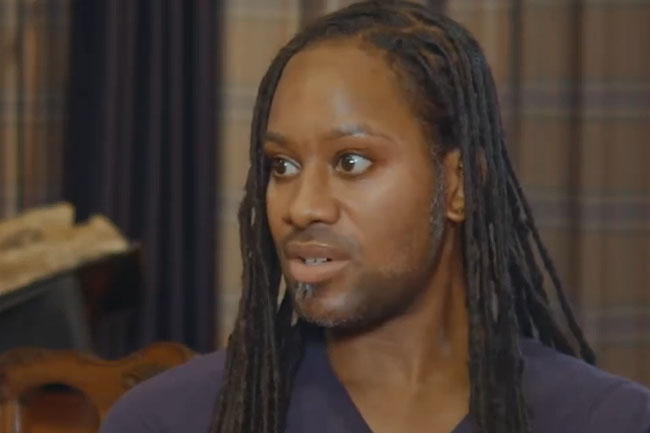
Sometimes disengagement may be a perfectly sensible response to the terms on which communities are asked to engage, writes Carl Gopalkrishnan.
THERE IS A LOT OF ANXIETY at the moment about plagiarism, artificial intelligence and the theft of intellectual property. Artists, writers and academics are rightly asking what happens when somebody takes your work, your ideas or your words and turns them into something from which they benefit.
Before AI started swallowing our words and images, multicultural communities were already handing over the intellectual property of our lives for free. Our memories, our families, our trauma, our hopes, our anger — all gathered into somebody else’s research project, publication or grant.
And what do we get for it? If we’re lucky, a $50 Coles voucher.
That isn’t to dismiss the serious issue of plagiarism. Given the extraordinary attention to plagiarism in the Jason Arday case, perhaps this is also a good time to ask what universities have been getting from those of us they call “vulnerable communities” for decades — and who, exactly, has benefited?
For those of us who have spent years working in multiculturalism and social cohesion, “engagement” has been almost an article of faith.
We built bridges between communities and government, institutions and law enforcement. We accepted that getting people into the room, keeping them talking and creating pathways into institutions was part of the answer.
I certainly did. After decades of doing that work, I’m no longer convinced engagement is always preferable to disengagement. Sometimes disengagement may be a perfectly sensible response to the terms on which communities are asked to engage.
When people are frightened, exhausted, angry or feel they are being attacked, disengagement can be better than confrontation. Better than another fight or entering an argument where somebody else has already written the questions, chosen the terms and decided what kind of answer they expect.
After 9/11, disengagement was often treated as a warning sign of alienation, extremism or radicalisation. I myself worked in that world. But if the choice is between anger escalating into confrontation and somebody calmly deciding, “No thank you, I don’t want to participate”, I pick disengagement any time.
For many multicultural communities, engagement has also become a burden: we are expected to keep turning up, participating and proving our willingness to belong, partly so our withdrawal cannot be read as alienation or extremism. That assumption sits deep inside social cohesion and deradicalisation thinking, and I now think it is flawed.
There is substantial research behind it, but we also need to ask who built that evidence base. Research, government advice and career law enforcement have grown together into a system whose institutions benefit from communities remaining available for engagement, consultation and study.
In 2017, while working with Muslim communities during the growth of countering violent extremism, I confronted this problem directly. I use the word “industry” intentionally. CVEs, counter-terrorism, radicalisation and social cohesion generated grants, projects, and researchers dependent on Muslim communities remaining available to be studied.
Again and again, Muslims became the cohort, the subject and — the problem.

Back then there was enough stress around the relationship between Muslim communities and university research to try to put some guardrails around it.
Drawing upon work from Yale University in the U.S. and leading Australian researchers, I drafted research partnership guidelines for a Muslim community organisation asking some fairly basic questions. Who benefits? How will information be used? What happens to data and intellectual property? Who makes the decisions? What actually comes back to the communities supplying the knowledge?
As a policy adviser, I learned some unexpected lessons about saying no. It is completely appropriate to disengage when research and media questions are built to harm you.
We were already seeing over-consultation and young multicultural and multifaith people withdrawing from research. At the time, I thought the answer was better engagement. Nearly ten years later, I wonder whether those young people understood something I didn’t.
The CVE/social cohesion machinery continues to extend well beyond Muslim research. Communities have become “vulnerable populations” and that attracts research.
Research attracts funding, publications and professional authority. Sometimes that research does enormous good. But racism in academia doesn’t always arrive shouting racist abuse.
Sometimes it arrives with ethics approval, and ethics will form part of the continuing examination of Jason Arday’s death in the UK, because ethics cannot be separated from duty of care.
The tragedy of Arday has made these questions harder to avoid. His death has become entangled in an extraordinarily ugly global culture war around race, universities, plagiarism and DEI. Without turning Arday into another research subject, those events should cause some reflection among those of us who have spent years encouraging multicultural participation.
Perhaps the advice today needs to be clearer: you don’t have to participate anymore.
A research invitation is an invitation, not a civic obligation. No, thank you. Your lived story belongs to you. That doesn’t protect us from failures in media ethics, but when governments are paying for advice built partly from intellectual property communities have supplied for free, that is one place any family can make its “No” heard loud and clear.
There is another promise worth reconsidering. Governments, multicultural organisations and well-meaning institutions have invested heavily in leadership programs, mentoring, fellowships and “emerging leaders”. Many of us supported them. Good people, including good white people, recognised prejudice and tried to open doors. The principle was sound: just give people a fair go.
But when social cohesion becomes an industrial-scale economy, individual humanity can get lost.
Our sector offered young multicultural people programs, mentors, networks and pathways into institutions while being far less successful at changing what waited for them once they got inside. Those of us who helped open those doors have to own that failure.
Sometimes young multicultural and multifaith people need permission to say no. Those of us who played a part in getting them into this mess have a responsibility to help them walk away from that industrial-scale objectification when we can no longer protect them from it.
Disengaging from an institution does not mean disengaging from each other. It doesn’t make you less Australian and it certainly doesn’t make you a terrorist. Sometimes it means letting a few battles go. Retreating. Resting. Protecting yourself and your family so you have something left for whatever comes next.
Because it is beginning to look as though this will be a much longer and more dangerous culture war than any of us ever wanted for them. Sometimes the action is no action.
Sometimes the answer is simply no.
Carl Gopalkrishnan is an Australian artist and policy practitioner with long-standing experience in multicultural policy, social cohesion and community engagement.
 This work is licensed under a Creative Commons Attribution-NonCommercial-NoDerivs 3.0 Australia License
Support independent journalism Subscribe to IA.


Related Articles
- Why multiculturalism needs recovering, not reinventing
- Newsflash: The mythical 'monoculture' has never existed
- PHON versus Pini: IA editor pulls pin on Pelican Pauline
- EDITORIAL: PHON versus Pini: IA editor pulls pin on Pelican Pauline
- Beyond monoculture: What really holds a diverse nation together