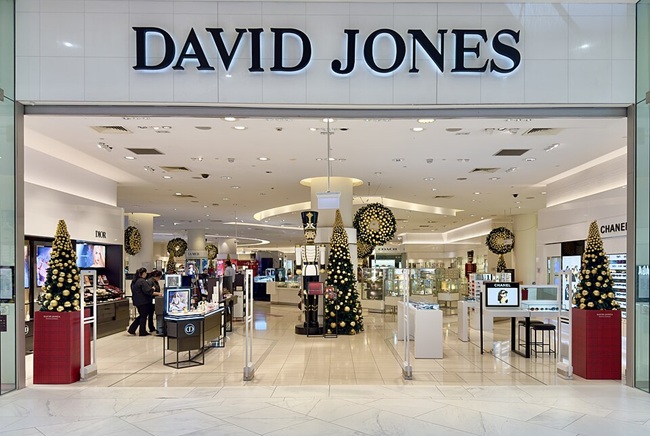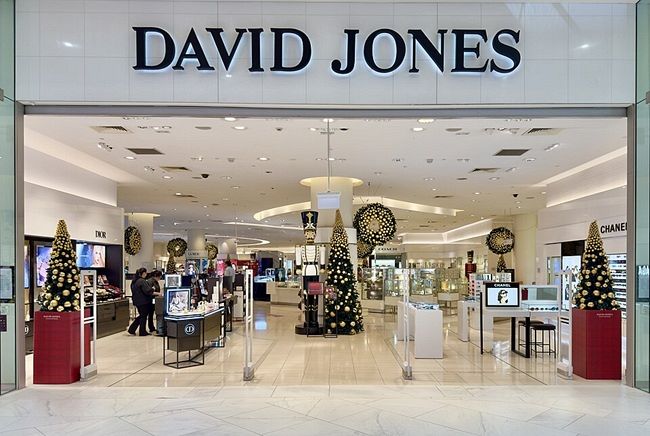
Department stores are in structural trouble — a collapse like Australian icon David Jones rarely has one cause. But "market conditions" is an explanation that conveniently leaves no fingerprints, writes Wayne Hawkins.
DAVID JONES LASTED 188 years. This week it went into voluntary administration and receivership, with more than 6,000 jobs now uncertain across 38 stores, weeks out from Christmas.
The explanations came quickly. The receiver cited the retail trading environment, rising costs, an outdated footprint and supply chain challenges. The owner, Anchorage Capital Partners, had earlier pointed to a 'prolonged period of weak consumer confidence' and structural change in department stores.
Those things may all be true. But I've run a bakery and café in Claremont, Tasmania, for more than 15 years, and I know how failure is described at my end of the street. When a small shop closes, people say the owner got it wrong. When an icon falls, it's the economy.
So I paid ASIC for the paperwork, expecting to find the familiar story: owners stripping out dividends while everyone below paid the bill.
I was wrong about the dividends. What I found instead is more revealing.
A $92.5 million icon, a thin layer of capital
The financial reports for the group's holding company, ACP Riley Street Group, show no dividends to the owner from the 2023 purchase period through to June 2025. That needs saying plainly, and Anchorage deserves that much.
They also show how little capital stood behind the business. Anchorage bought David Jones for $92.5 million, paid as $75 million and then $17.5 million. At the start, shares and an Anchorage loan came to $55.5 million. Later, share capital of $1.5 million took the total to about $57 million.
That is about $57 million under a retailer with more than $2.1 billion in future lease commitments.
Money did flow back. Anchorage entities received about $14.5 million across those periods, including roughly $2.9 million in interest on a loan charged at about 15%. That loan became interest-free on 28 June 2024.
The largest single item was $10.57 million in "expenses" paid to Anchorage Capital Partners IV in the period around the purchase.
The accounts don't say what it covered. It may be reimbursed deal costs, but it was equal to more than 11% of the purchase price, and the public is entitled to know.
Then there is the profit. The group recorded a $289 million profit in its first period, which sounds like a triumph.
Of that, $283.5 million was a "gain on bargain purchase": an accounting entry for buying the business below the value of its assets. No customer spent that money. The losses that followed were real: $74.4 million in FY24 and $62.3 million in FY25.
Anchorage looks set to lose on this deal. Inside Retail reports that its investment will most likely be wiped out. But a limited loss is still a limited loss, and it isn't the same as the loss facing people further down.
Who was carrying it
By June 2025, the risk had already moved downstream.
Trade payables rose 42% to $206.2 million in a year when sales fell 9%. Total payables rose by a smaller $17 million, so some of that shift may be reclassification.
Even so, Inside Retail reports long-running disputes with suppliers over late payments, and earlier reports described some being offered 20-week repayment schedules.
The company's headline cash balance rose by $54.7 million in FY25. That rise relied on $59.9 million in released restricted cash and $33.8 million in extra borrowing. Without them, cash would have fallen by about $39 million.
The business reported EBITDA of $176.5 million. It then paid $174.4 million on its leases. That left about $2.1 million before interest on its loans, new investment and tax.
Customers were exposed as well. In June 2025, unused gift cards totalled $45.9 million. Gift card holders can be left ranking as unsecured creditors, and a new owner needn't honour them.
The lender stands in a different place. Hilco appointed receivers to protect its loans, and they now have "ultimate control and responsibility" for the group's trading and property. Staff are being paid normally for now, but the receivers are still reviewing unpaid entitlements, and store closures are likely.
The people with the least say over the rent, the debt or the strategy are the ones waiting to find out what they've lost.
Insured against failure
This isn't only about billionaires. Most David Jones executives probably aren't the mega-rich. They belong to a layer below, and failure treats that layer differently too.
The company paid $850,000 a year in FY24 and FY25 to insure its directors and officers. It also indemnified them for liabilities arising from their roles, for seven years after leaving. Key management shared $13 million across the three reporting periods. The reports don't say how many people that covers, or what each received, so I won't pretend to know.
Directors can still be pursued for insolvent trading, and nobody enjoys a collapse on their CV. But the casual on the shop floor has no policy covering her. Neither does the small supplier owed for last season's stock. If entitlements go unpaid, the last resort is the taxpayer-funded Fair Entitlements Guarantee.
The contrast with small business is sharper still. We can form companies too, but limited liability only goes so far when landlords and banks commonly want personal guarantees. A small business failure can follow its owner home. My partner Laura and I employ about 18 people in Claremont, and we work because we have to.
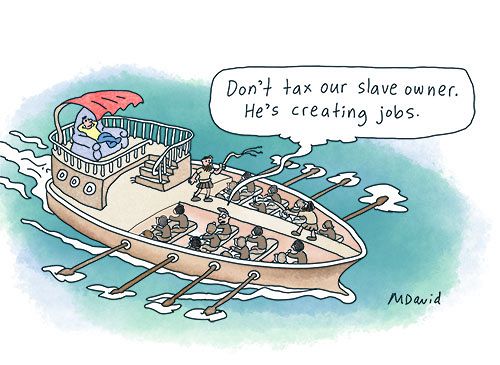
The same event gets two different descriptions. The small owner fails personally. The big company fails structurally.
The questions that remain
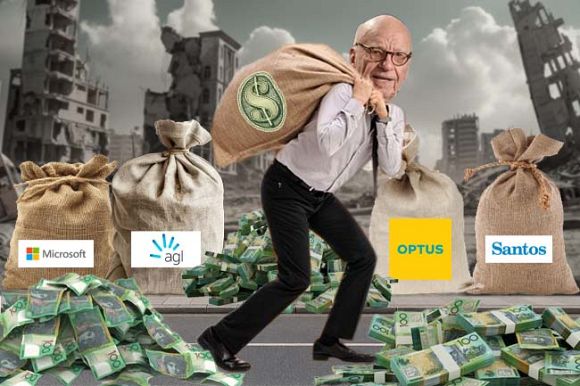
Retail expert Barry Urquhart told the ABC that undercapitalisation, not retailing, was the core problem. The accounts give that view some weight, and they leave questions the administrators should answer in public:
- What was the $10.57 million paid to Anchorage Capital Partners IV for?
- What was paid to Anchorage and senior executives in FY26, the year with no accounts lodged?
- Why were the FY24 and FY25 reports lodged only in April 2026?
- What exit, retention or bonus payments went to executives before the collapse?
- What is owed to suppliers, staff and gift card holders today?
Department stores are in structural trouble, and I don't doubt that. A collapse like this rarely has one cause. But "market conditions" is an explanation with a convenient habit of having no fingerprints on it.
Big names get the benefit of the doubt. Everyone else gets the bill.
Wayne Hawkins is a product of public schools who dropped out before earning any significant degree. His real political education came later, from more than 25 years of running businesses locally and overseas, seeing inequality up close and turning to history to understand how it got that way.
 This work is licensed under a Creative Commons Attribution-NonCommercial-NoDerivs 3.0 Australia License
Support independent journalism Subscribe to IA.