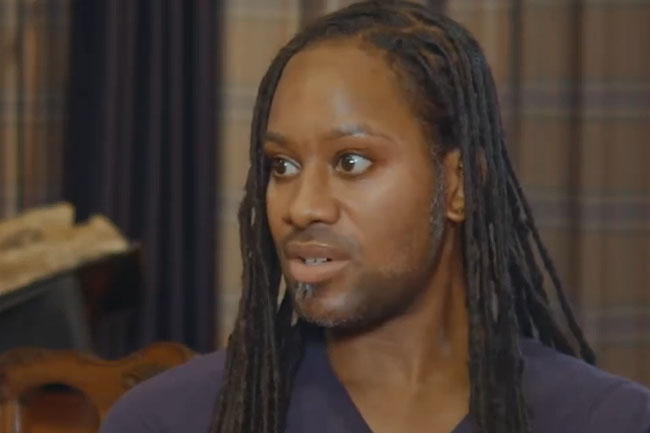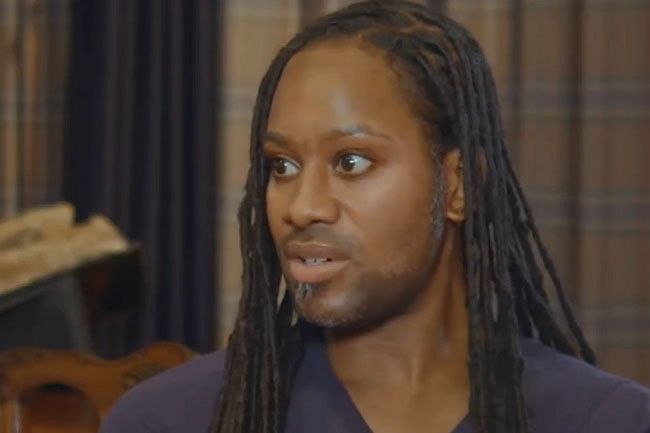
Jason Arday’s death is a stark warning of the human cost when multiculturalism and those who embody it become targets of political and media culture wars, writes Carl Gopalkrishnan.
IT IS A VERY THIN LINE to say that our conservative media actually wants us, as people of colour who support multiculturalism, dead. But don’t walk into any pub we’re drinking in and expect to be welcomed with that shallow distinction today. It just won’t cut it.
Jason Arday has been found dead. He was 41.
His death causes a grief that I don’t expect will be shared by our legacy media. But it also causes a justifiable rage that will resonate far beyond Britain, among people watching the rise of a “soft”, progressive-friendly extreme Right that increasingly treats multiculturalism, diversity and the people who embody them not as fellow participants in democracy, but as the problem democracy must solve, even while appearing to defend it.
That rage should not be confused with a claim about what caused Arday’s death. It is a response to the world in which his death occurred. But the line is wearing pretty thin and ready to tear at any moment.
Arday, a Black British academic, had been subjected to extraordinary public scrutiny over allegations concerning plagiarism and his academic and personal record. Universities have procedures for academic misconduct and journalists have every right to investigate powerful institutions. But somewhere along the way, a human being became material for a culture war about DEI, race, universities and who deserves to occupy them.
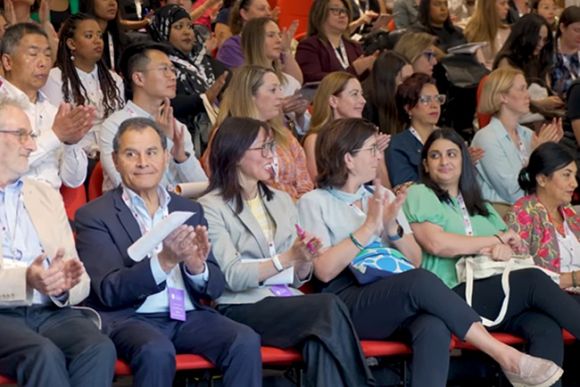
At my age, I’ve mentored a lot of young multicultural professionals and Arday is the face they need to see and remember.
Australia should not read this with the comfortable distance of something happening overseas. We watched Yassmin Abdel-Magied be subjected to an extraordinary media and political campaign before she left Australia for London. We watched Antoinette Lattouf become the subject of a campaign that ended with her removal from the ABC. We watched Randa Abdel-Fattah removed from Adelaide Writers’ Week before the festival spectacularly collapsed, after the Premier had lobbied for her removal. MP Ed Husic reached Cabinet and discovered how quickly a senior Muslim voice can be characterised as troublesome when it refuses to stay within prescribed political boundaries.
These cases are different and should not be collapsed into one another, but together they ask something uncomfortable about multicultural Australia that Arday’s death should, to any fair person, make a wake-up call: what happens when the people who embody multiculturalism become expendable? What happens when our fightback is framed as some form of extreme left politics instead of people wanting to go to work without fearing for their personal safety?
Vitriol does damage, but silence is not without accountability. The political framing of diversity in Australia does both and the evidence is growing.
When political figures frame multiculturalism itself as dangerous or extreme, they change the environment in which people of colour must live and speak. When sections of the media repeatedly transform us into evidence of everything supposedly wrong with diversity, the consequences don’t remain inside newspapers, television studios or Parliament. Institutions that proudly advertise their multicultural credentials can become remarkably quiet when those same people are under attack.
Australia is very good at celebrating multiculturalism as food, festivals, representation and demographic success. We are considerably less comfortable when multicultural Australians speak with authority, dissent, become angry or simply refuse to be grateful.

Jason Arday’s death should not be recruited to prove something we cannot know. But nor should demands for caution require people to suppress their grief or rage at the political culture surrounding his final days.
Behind DEI, multiculturalism, universities, journalism and all the other enormous words being thrown around is something much smaller and more important: a human life.
I hope Jason Arday’s family is now left in peace, surrounded by people who will support and protect them from the public appetite that has already consumed too much. The world has done enough damage.
There is a loud lesson here for Australian multiculturalism as we approach the Federation of Ethnic Communities' Councils of Australia (FECCA) national conference in October. Don’t suppress the fear, the anger or our right to inhabit our shared public space. Don’t apologise. Don’t be meek and fearful of funding cuts. Speak for every multicultural Australian who is fed up and wonders whether they might be the next Yassmin Abdel-Magied, Jason Arday, Antoinette Lattouf, Randa Abdel-Fattah or Ed Husic.
And don’t ever remain silent when MPs accuse us of extremism for fighting back against our own extinction, for fighting for the survival of multiculturalism, or for resisting those who turn our lives into opportunities for political advancement. You cannot make our cultures, our presence and the multicultural society we have built into political targets and then call us extremists when we fight to keep them alive.
Jason Arday is now far away from the brutality of our media landscape.
But we are still here.
What are we going to do about it?
Carl Gopalkrishnan is an Australian artist and policy practitioner with long-standing experience in multicultural policy, social cohesion and community engagement.
 This work is licensed under a Creative Commons Attribution-NonCommercial-NoDerivs 3.0 Australia License
Support independent journalism Subscribe to IA.