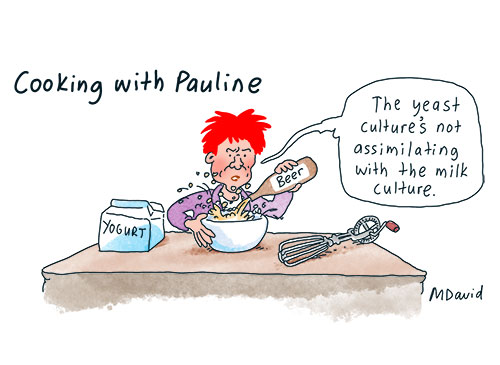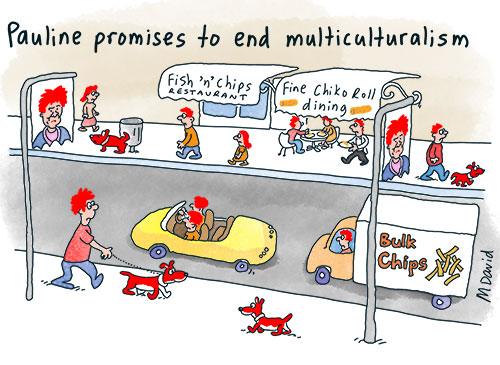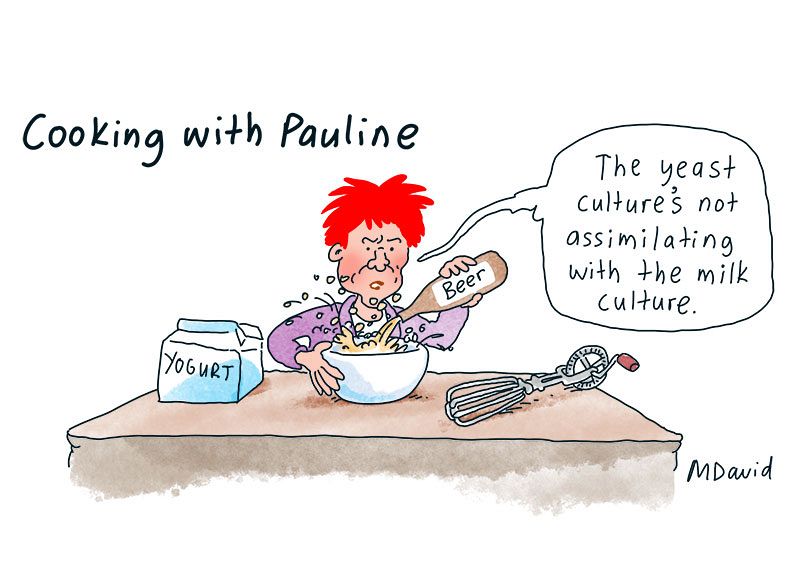
Poster person for prejudice, Pauline Hanson’s "monoculture" comments have inspired Greek-Australian managing editor Michelle Pini to recall a time when Australia was still grappling with rapid multicultural change.
WHILE she hasn't elaborated on her meaning, recent claims by Pauline Hanson that we should maintain Australia’s so-called "monoculture" presumably hark back to a time when multiculturalism was still evolving.
When my family arrived here from Greece in the 1960s, though it was obviously a nation made up of immigrants, they were mainly of Anglo stock.
Although he was fluent in English, my father’s flair for languages (he spoke several) was apparently not genetic and for the rest of us (especially my mother), the language barrier was one of the biggest hurdles.
There were many others. It was a different country, but it might well have been another world entirely, so foreign were our ways: our food, the way we dressed and the way we viewed the world. We had no extended family or friends in Melbourne and my father, a big believer in assimilation, chose a (largely) non-migrant suburb in which to settle.
We were, of course, foreign to our Aussie neighbours and when we met them, we were also viewed as “foreign” to most migrants at that time, since my Dad, a white-collar worker, was not a typical immigrant.
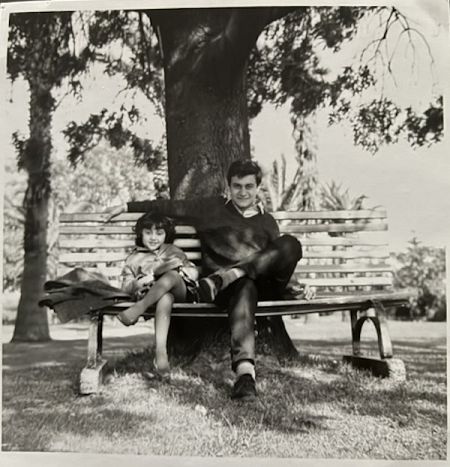
Though it was hard for my sister and I, my brother was 18, and his journey was perhaps the most challenging. Despite having matriculated with excellent results from his Athens grammar school, he could only find work as a storeman while he studied engineering.
On the day he was finally promoted from forklift duties to an office position at Kodak (then one of the biggest employers in the country with about 2,000 staff), his new boss called him into the office for an introductory meeting.
Surveying my brother’s secondary school achievements and engineering studies at RMIT, he sneered:
“None of this means anything here. I don’t like you. And just so you know, this is as far as you’ll go in this company.”
There were many migrant employees at Kodak in those days, but it turned out only the “true blue” Aussies were promoted in that particular racist bully’s department.
Racism was not new in Melbourne in the '60s. Nor is it new in Australia today. But I believe the majority of Australians, then and now, are welcoming, caring people. This is hardly surprising, given that Australia's overseas-born population stands at 8.8 million, or 32 per cent of the population.
There are still racists in Melbourne today. But the suburb of Elwood in which we lived is unrecognisable, as is the suburb of Coburg, where my brother worked. Melbourne is unrecognisable. It is truly a multicultural city and the breadth of its flavours, in food, fashion, style and culture, is unparalleled — a beautiful melting pot of many New Australian influences.
My siblings and I are proud Greek-Australians. Though not a prerequisite, the majority of our partners or their ancestors, and those of our children and now their children, were born here, but hail from many nations.
My father’s reasons for moving to Australia, with which he convinced my mother to make the move, primarily concerned the educational and vocational opportunities he believed it offered our family, but they were also largely political.
A staunch advocate of democracy and a pacifist, he was concerned with events unfolding in Athens at that time and which, not long after we left, led to the country being held against its will by a tyrannical military organisation known as the “Junta” or the “Regime of the Colonels”. This Far-Right dictatorship, characterised by censorship, repression and abuse of civil liberties, is largely believed to have been installed by the American CIA. (AUKUS, anyone?)
Letters we received from friends and family living in Greece during that period had all been crudely censored. Family friends and even some relatives disappeared — a common occurrence for political dissidents of this violent, fascist dictatorship.
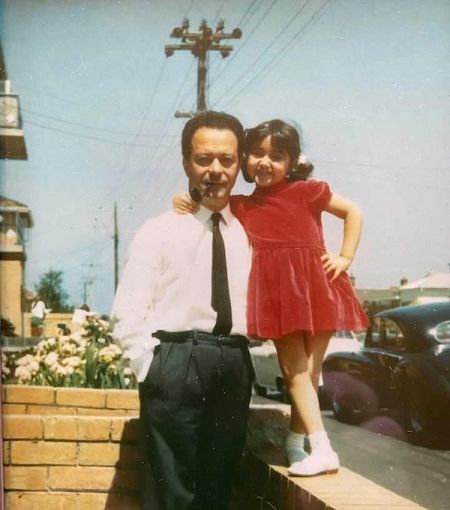
Though my father died when I was just 11 years old, his progressive way of viewing the world, imparted frequently over the dinner table and at his knee, stayed with me. He believed in equality, in freedom of speech and information, and in education as the answer to most problems. He was passionate about democracy and immensely proud that it began in Greece. And, though Greek culture was important to him, he was also honoured when we became Australian citizens.
I know he would be proud that I am now editor of this independent journal for democracy.
New Australians have made massive contributions in almost every field, including medicine, science and the arts. They are ardent ambassadors for our country around the world, excelling in almost every endeavour from sport, music, film and literature to invention and technology.
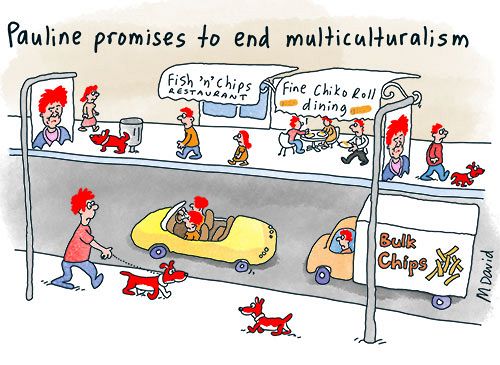
After the recent success of the Socceroos (a third of whom were born overseas), Pauline Hanson was forced to walk back her earlier comments advocating for “monoculture” — a word (along with many others) she has trouble pronouncing, let alone explaining. Nonetheless, as she ranted about immigrants having to speak English (while her use of the English language could best be described as embarrassing), her meaning was clear. There are few among us who don’t know racism when we see it.
Pauline wants to return to the days in which racist bullies like my brother’s boss held all the power and were commonplace.
Most Australians are not racist and younger generations thankfully only know about “White Australia” from the history books, but we cannot underestimate the politics of fear. We only need to look to America to see the destruction it causes.
It’s ironic that, having come so far, the xenophobia of old is back in the national conversation, thanks to this one poster person for prejudice.
My Dad would be turning in his grave.
Follow managing editor Michelle Pini on Twitter @vmp9 and Bluesky @michellepini.bsky.social, and Independent Australia on Twitter at @independentaus, Facebook HERE and Instagram HERE.
 This work is licensed under a Creative Commons Attribution-NonCommercial-NoDerivs 3.0 Australia License
Support independent journalism Subscribe to IA.