Australia's strength lies not in monoculture, but in shared values, trust and a genuine sense of belonging, writes Mainul Haque.
AS A YOUNG village boy growing up in northern Bangladesh, I could never have imagined that one day I would stand at Government House in Canberra to receive the Medal of the Order of Australia.
The journey between those two moments took me across four countries and three continents. Along the way, it taught me a question that feels especially relevant today: what really holds a diverse nation together?
It is a question worth asking at a time when some argue that Australia’s future lies in becoming more monocultural.
I understand why that idea appeals to some people. Rapid demographic change, global conflicts, economic uncertainty and growing social polarisation have left many Australians wondering whether we are losing the shared values that have long held us together. These concerns deserve to be heard. A strong society cannot take social cohesion for granted.
But my own journey, shaped not by theory but by lived experience, has led me to a different conclusion.
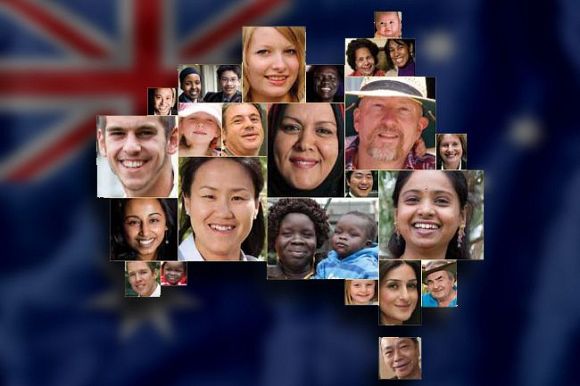
The strength of a nation is not determined by how similar its people are. It is determined by whether people from different backgrounds trust one another, share common civic values and feel they belong.
My understanding of diversity did not begin in Australia. It began long before I arrived here.
I was born and raised in a small rural village in northern Bangladesh, where almost everyone spoke the same language, shared similar traditions and lived much the same way. It was a close-knit community and I remain deeply grateful for the values it instilled in me. That sense of familiarity shaped my early years, but it also meant I had yet to encounter a world beyond it.
Everything changed when I received a Malaysian Government scholarship to study economics at the International Islamic University Malaysia. I was part of the university’s pioneer intake. For the first time in my life, I found myself living and studying alongside Malays, Chinese, Indians, Africans, Arabs, Europeans and students from many other countries.
The classroom became much more than a place to study economics. It became a place where I learned about people. We came from different cultures, spoke different languages and practised different traditions. Yet we shared lecture theatres, worked on assignments together, played sport, shared meals in the cafeteria and formed lifelong friendships. Those experiences challenged many of my assumptions and broadened my understanding of the world.
Later, I moved to Canada to pursue postgraduate studies in economics. Once again, I found myself surrounded by people whose backgrounds were very different from my own. Diversity was no longer occasional. It had become part of everyday life.
My travels across the United States further broadened that perspective. From major cities to smaller communities, I saw a nation shaped by successive waves of migration. I also saw that diversity alone does not guarantee harmony. Every diverse society faces the same fundamental question: how do people from different backgrounds develop trust, build a shared identity and create a sense of common purpose?
Each of these experiences deepened my understanding of both the promise and the complexity of diversity. By the time I migrated to Australia in 1992, I had already experienced multicultural societies in different forms across the world.
Australia gave me the opportunity to experience something else. It gave me the opportunity to belong.
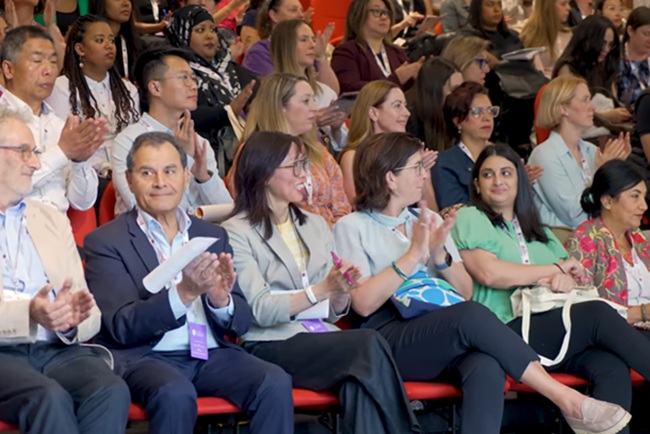
For nearly three decades, I worked in the Australian Public Service. That experience showed me how diversity functions in practice within a shared national purpose. Around the meeting table sat Australians whose families had come from every continent. We brought different perspectives and life experiences to our work, but our purpose was the same: to serve the Australian people with integrity and professionalism.
I also found that same principle reflected in community life.
As President of the Canberra Muslim Community, I had the privilege of leading the development of the Gungahlin Mosque. From the beginning, we wanted it to be more than a place of worship. We wanted it to be part of the wider Canberra community.
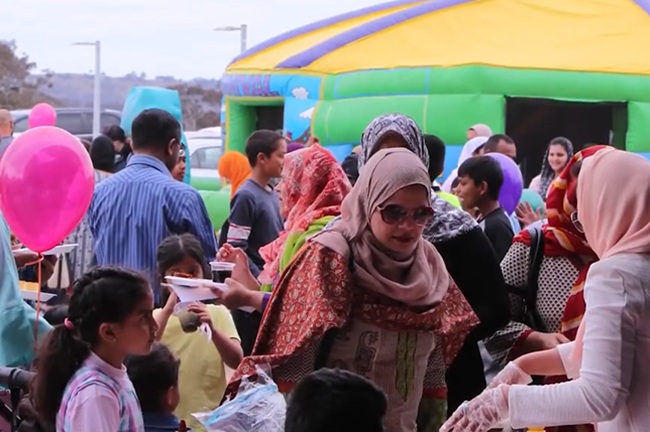
When the mosque opened its doors, we welcomed neighbours, church leaders, politicians, journalists and people of every faith. During Ramadan, we hosted community iftars where Muslims and non-Muslims sat together, shared a meal and built relationships. We were not simply building a mosque. We were building trust.
Over the years, I have also had the privilege of serving through Rotary and the Red Cross, as an Official Visitor to correctional centres, and on a range of government and not-for-profit boards. In all of these roles, I have seen the same simple truth. Whatever our background, people want much the same things. They want dignity, fairness, opportunity and hope. They want to be treated with respect. Above all, they want to feel that they belong.
Looking back, I realise that belonging has been the common thread throughout my own journey.
Australia never asked me to choose between where I came from and where I belong. It allowed me to honour both.
That, to me, is one of this country’s greatest achievements.

Some critics argue that multiculturalism has encouraged communities to live separate lives. There are examples where we can do better and we should not shy away from that conversation. Strong social cohesion requires more than celebrating diversity. It requires learning English, participating in civic life, respecting Australia’s democratic institutions, embracing equality before the law and building relationships across communities.
These responsibilities do not belong to migrants alone. They belong to all Australians.
Likewise, those born here also have a responsibility to welcome newcomers who are willing to contribute, to judge people by their character rather than their surname or religion and to ensure that everyone has the opportunity to participate fully in Australian society.
That is how trust is built.
That is how belonging grows.
History shows that societies can be deeply divided even when people share the same culture, language and ancestry. They can still fracture along lines of class, politics, religion or power. Sameness has never guaranteed harmony. By contrast, diverse societies can thrive when they are built on shared civic values, strong institutions and mutual respect.
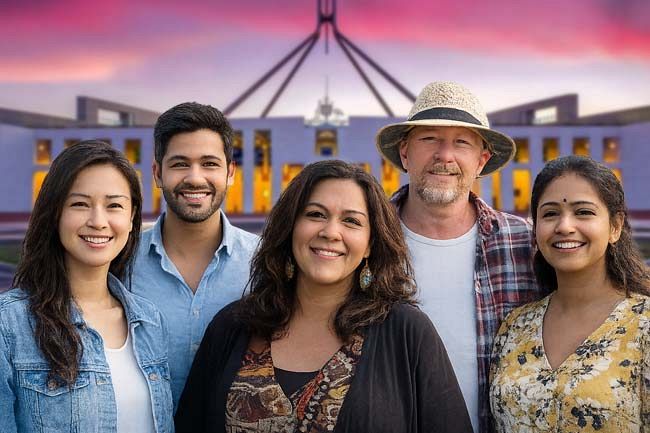
Australia’s success has never depended on everyone looking the same, praying the same or sharing the same ancestry.
It has depended on something much stronger.
A shared commitment to democracy, freedom, equality, the rule of law and giving everyone a fair go. These are the principles that shape how societies hold together in practice.
Those principles became more than ideas for me. They became visible in the life I was able to build in Australia.
As a young village boy growing up in Bangladesh, I could never have imagined that my life’s journey would take me across Asia and North America before bringing me to Australia. Nor could I have imagined that one day I would stand at Government House to receive the Medal of the Order of Australia.

For me, that moment was about much more than a medal.
It reflected the generosity of a nation that judged me not by where I was born, but by how I had tried to contribute.
It reminded me that Australia is at its best when it values contribution over ancestry and character over background.
Looking back, Bangladesh taught me the value of community. Malaysia taught me the richness of diversity. Canada showed me how diversity can become part of a national identity. My travels across the United States revealed both the opportunities and the challenges that come with diversity.
Australia brought those lessons together.
It taught me that what holds a nation together is not monoculture.
Nor is it diversity alone.
It is the willingness of people from different backgrounds to build a common future together.
That is the Australia I know.
It is the Australia I am proud to call home.
And it is the Australia I hope we continue to build for generations to come.
Mainul Haque OAM is a retired Australian public servant with nearly three decades of experience in government, academia, and community leadership.
 This work is licensed under a Creative Commons Attribution-NonCommercial-NoDerivs 3.0 Australia License
Support independent journalism Subscribe to IA.


Related Articles
- Australia is the proof multiculturalism works
- 'Out-One-Nationing One Nation’, with Angus Taylor and the Mad Monk
- The blind spot in Australia’s multicultural laws
- Why multiculturalism is saving, not sinking, the West
- Amid the world's upheaval, Australia is still the lucky country