The U.S. wants allies to carry more of the burden in the Indo-Pacific, making our partnership riskier and more costly, writes Imran Khalid.
HISTORY OFTEN MOVES in cycles of expansion and contraction. For the better part of eight decades, the United States has operated as the guarantor of a global commons, maintaining a presence that was as much about reassurance as it was about deterrence. But the release of the 2026 National Defence Strategy (NDS) signals that this era of the "global policeman" has been officially retired.
In its place is a more focused, more demanding, and decidedly more transactional vision of American power. The document, which centres on the concept of Peace through Strength, confirms a decisive shift toward what scholars call deterrence by denial.
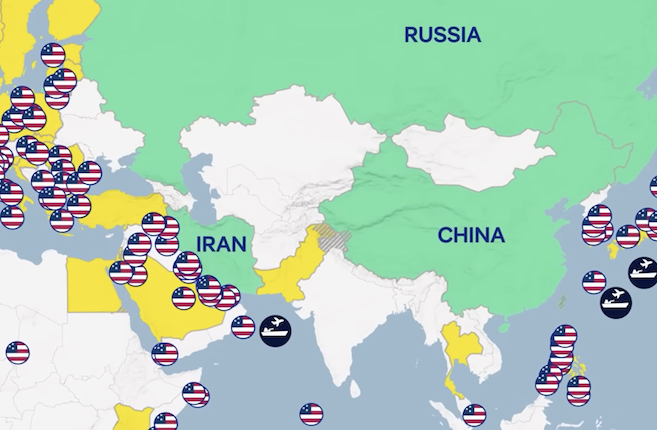
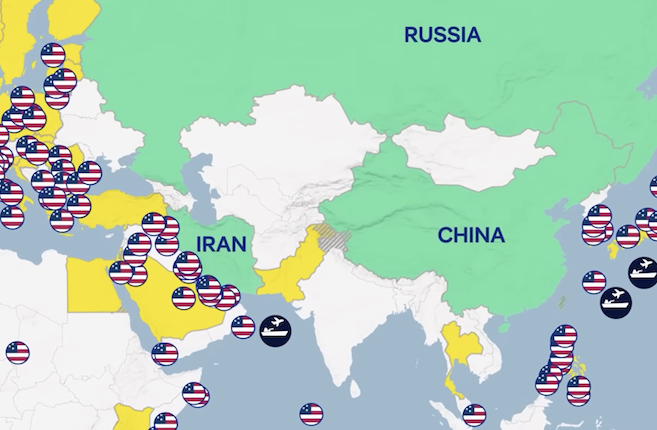
The objective is no longer to dominate every corner of the globe or to transform distant societies. Instead, the Pentagon has narrowed its aperture to a singular, overriding priority: making the cost of Chinese revisionism in the Indo-Pacific prohibitively high.

This is not a retreat into isolationism, as some critics fear. Rather, it is a cold-blooded calculation of national interest. By fortifying the First Island Chain – the maritime corridor stretching from Japan through Taiwan to the Philippines – Washington intends to create a geographic bastion that denies Beijing the ability to project power into the broader Pacific.
For Australia, this shift is profound. For decades, the alliance with the United States was viewed in Canberra as a form of ultimate insurance. The 2026 NDS changes the terms of the policy. Reassurance is now conditional. The strategy introduces the concept of the model ally, a designation reserved for nations that assume primary responsibility for their own regional defence while receiving critical but limited American support.
The implications for Australian defence policy are immediate and expensive. To remain a partner of first resort, Australia is being asked to spend more, do more, and risk more.
The NDS explicitly advocates for allies to meet a new spending benchmark that mirrors the recent pressure on NATO: a total defence expenditure approaching 5 per cent of GDP when security-related costs are factored in. This is a staggering figure for a middle power, yet it reflects the new reality of an offshore balancer America that expects its friends to provide the bulk of the conventional hardware.
The strategy contains a notable shift that warrants careful consideration by Australian planners. For the first time in recent memory, the National Defence Strategy does not explicitly mention Taiwan.
While the document discusses the First Island Chain and acknowledges the "pacing challenge" associated with China’s regional influence, the absence of a specific commitment to Taiwan suggests a move toward what some call a stabilisation strategy. This nuance implies a preference for managing competition through diplomatic deconfliction rather than explicit confrontation, signalling a Washington more interested in a predictable equilibrium than in fueling localised flashpoints.
Washington appears to be seeking a "decent peace" with Beijing - one based on deconfliction and strategic stability rather than ideological crusade. If the United States is moving toward a version of peaceful coexistence with China to protect its own homeland and economic interests, it may find itself at odds with the security perceptions of its regional allies. The risk for Canberra is that it could find itself "all in" on a denial strategy just as Washington decides to turn down the heat.
This brings us to the broader geopolitical tension at the heart of the new strategy. The Trump Administration is attempting to reconcile "America First" economics with "Peace through Strength" security.
While the Pentagon seeks deeper military integration with Australia, the White House continues to use tariffs as a primary tool of statecraft. Recent Australian concerns over trade friction illustrate the difficulty of this balancing act. It is hard to build a seamless defence industrial base when the economic foundations of the relationship are being tested by protectionist impulses.
The structural logic of the Indo-Pacific, however, demands a multi-polar equilibrium rather than a binary conflict. The recent Milan 2026 naval exercises off the coast of India, where Australian and American ships operated alongside a dozen regional navies, demonstrate that the demand for a stable maritime order is a shared regional interest.
Australia’s recent deployment of P-8A Poseidon aircraft to the Philippines underscores that Canberra is leaning into its role as a regional security contributor, even as it maintains its essential economic ties with Beijing.

The 2026 NDS is a clear-eyed recognition that American resources are finite. It is a strategy for a world where the United States remains a primary power but must increasingly rely on stable regional partnerships. For Australia, the era of the "steady-as-she-goes" approach is over. The price of the alliance has gone up and the safety it provides is now tied directly to Australia’s own capacity to act as a balanced, regional anchor.
The challenge for Canberra is to ensure that in becoming a "model ally," it does not lose its own strategic autonomy. As the United States pivots to a posture of denial, Australia must ensure it is not just a platform for American power but a partner in a regional order that promotes stability and serves its own sovereign interests.
The map of the Indo-Pacific is being redrawn and for the first time in a generation, Australia is expected to hold the pen.
Imran Khalid is a geostrategic analyst and columnist on international affairs. His work has been widely published by prestigious international news organisations.
 This work is licensed under a Creative Commons Attribution-NonCommercial-NoDerivs 3.0 Australia License
Support independent journalism Subscribe to IA.