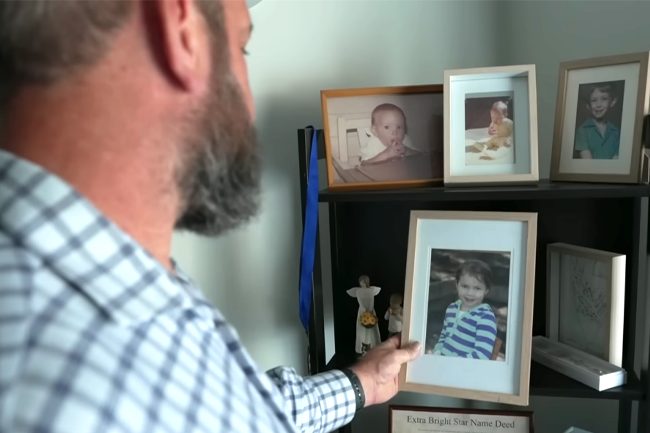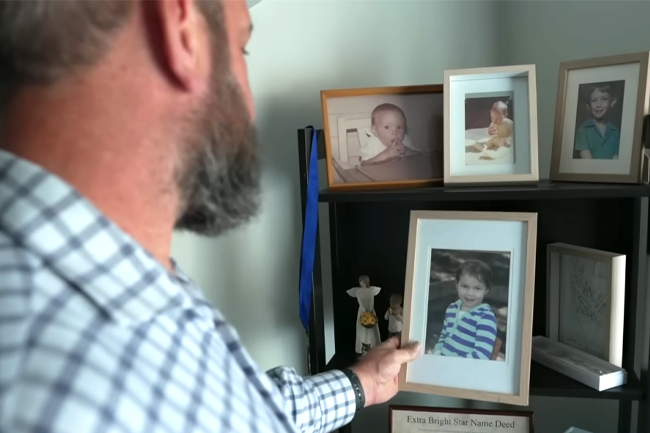
A submission by the family of Bridgette “Biddy” Porter highlights how repeated forensic tribunal processes can compound the trauma of victims' families. The submission is published here in full.
Content warning: This article discusses violent crime that may distress some readers
To: The NSW Parliament Committee on Law and Safety
Re: Inquiry into the forensic division of the NSW Mental Health Review Tribunal and related victim support processes.
Acknowledgement of victims of crime
We acknowledge the victims of crime, both those who have lost their lives and those living with the lasting effects of violence.
We honour their families and loved ones, whose pain and strength remind us of the impact of these acts.
We remember them and commit to ensuring their experiences are never forgotten.
Introduction
We make this submission as the family of Bridgette “Biddy” Porter.
Biddy was our daughter, sister, granddaughter, step-sibling, niece, cousin, friend and a deeply loved member of our wider family and community.
She was murdered as a child.
That fact sits behind every interaction we have had with the criminal justice system, the Mental Health Review Tribunal, Victims Services and the Specialist Victims Support Service.
Biddy is not just a name in a file.
She is not just a case number.
She is not only the subject of reports, hearings, assessments, findings, risk reviews or procedural notifications.
She was a little girl.
She was our family.
She had a future.
She had dreams.
She had people who loved her and still love her.
We make this submission because the systems that follow a homicide matter deeply. They shape how victims’ families are treated, how much information they receive, whether they are respected, whether they are heard and whether they are forced to keep reliving trauma inside processes that were not designed with them in mind.
This submission is not made out of revenge.
It is made because the current system remains too offender-focused and too process-focused, while victims and their families are too often left trying to find their place in a system that directly affects them but does not truly centre them.
We understand that forensic patients have legal rights and treatment needs.
We are not asking for those rights to be ignored.
We are asking for victims’ families to also be recognised as people with rights, dignity, trauma, safety concerns and an ongoing stake in decisions made by the Tribunal.
Purpose of this submission
The purpose of this submission is to provide the Committee with the lived experience of a victim’s family engaging with the forensic division of the Mental Health Review Tribunal and related victim support processes.
Our experience has shown us that:
- the process is highly complex;
- victims’ families are not always supported in a meaningful or practical way;
- communication can be confusing, inconsistent or inadequate;
- hearings can be distressing and difficult to participate in;
- the system often feels centred around the forensic patient, with victims’ families treated as secondary or peripheral;
- there is insufficient trauma-informed practice;
- victims’ families are required to repeatedly re-engage with traumatic material over many years;
- the system does not adequately recognise the cumulative harm caused by repeated hearings, notifications, statements and reviews;
- the Specialist Victims Support Service is important, but its role and powers appear limited; and
- there is not enough transparency or consistency around what victims’ families can expect.
We ask the Committee to consider not only whether the forensic division of the Tribunal is meeting legal requirements, but whether it is doing so in a way that properly balances patient treatment needs, victim support and community safety.
The impact of repeated forensic hearings on victims’ families
For victims’ families, the trauma does not end when the criminal proceedings end.
The Tribunal process continues.
Every six months, there may be another notification.
Another hearing.
Another report.
Another decision.
Another reminder.
Another need to prepare emotionally.
Another need to decide whether to attend.
Another need to consider whether to provide a Victim Impact Statement or further material.
Another return to the facts of the homicide.
Another forced engagement with the person responsible for the harm caused to our family.
This is not a one-off process.
It is ongoing.
It can continue for years.
It can continue across birthdays, anniversaries, holidays, significant family dates and already difficult periods of grief.
For our family, that includes the anniversary of Biddy’s murder.
The ongoing nature of the Tribunal process needs to be understood as a form of repeated exposure to trauma. It may be administratively routine to the system, but it is not routine to victims’ families.
Every notification has a human impact.
Every hearing has a human impact.
Every decision has a human impact.
The system must recognise this.
Offender-focused process and the position of victims
Our experience is that the forensic system is overwhelmingly focused on the forensic patient.
We understand why the Tribunal must consider treatment, risk, rehabilitation, leave, placement and potential progression.
However, victims’ families are also affected by those decisions.
The way those decisions are communicated, explained and managed can either reduce harm or increase it.
Victims’ families should not be made to feel as though they are an inconvenience in a process that only exists because of the harm done to their loved one.
There needs to be a stronger victim-centred approach within the forensic division.
This does not mean removing the rights of the forensic patient.
It means recognising that the system must properly balance treatment needs, victim support and community safety in a practical and trauma-informed way.
Notification and communication
Notification is one of the most important parts of the process for victims’ families.
It is often the first point at which a family becomes aware that another hearing or decision is approaching.
In our experience, notification processes can be confusing, technical and difficult to understand, especially for people who are distressed, traumatised, unfamiliar with legal processes, or not confident navigating complex written material.
Notification letters should be written in plain English.
They should clearly explain:
- what the hearing is about;
- what decisions may be considered;
- what rights the victim’s family has;
- whether they can attend;
- how they can attend;
- whether they may provide a statement;
- who they can speak to for support;
- what the possible outcomes may be; and
- what happens after the hearing.
Notifications should not simply meet an administrative requirement.
They should actively assist victims’ families to understand and participate in the process.
The current approach can still leave families trying to interpret complex information during periods of significant emotional distress.
Hearing access and audio-visual participation
Victims’ families who attend hearings by video or audio link must be able to properly hear and follow the hearing.
This is not a minor issue.
If a victim’s family cannot hear all participants clearly, they cannot meaningfully follow the process.
In our experience, the ability to hear all aspects of the hearing has at times been appalling.
Even where there have been improvements, as soon as multiple people join, the ability to hear everyone clearly can be reduced significantly. This can result in victims’ families missing sections of the hearing.
Each person speaking should be required to sit directly in front of a microphone or use equipment that allows them to be clearly heard.
The Tribunal and panel members should introduce themselves clearly at the start of each hearing.
Victims’ families should know who is present, what their role is and why they are there.
A hearing that cannot be properly heard is not trauma-informed.
It creates distress, confusion and further disempowerment.
Complexity of instructions
The instructions provided to victims’ families about how to attend hearings have improved over time, but they can still be complex.
People engaging with these processes are often traumatised, anxious, grieving, overwhelmed or unfamiliar with technology.
Instructions should not assume that victims’ families are calm, technically confident or able to process detailed information easily.
The Tribunal should consider using clearer formatting, diagrams, screenshots, step-by-step instructions and simple explanations.
Practical accessibility matters.
It is not enough to say victims’ families can attend if the process for attending is difficult to understand or stressful to navigate.
Victim Impact Statements and repeated statements
Victim Impact Statements are important, but they can also be incredibly painful to prepare and revisit.
Families should not be expected to repeatedly explain why the murder of their loved one still matters.
There should be greater recognition of the emotional burden placed on victims’ families each time they are invited, expected or required to provide further input.
The system should consider whether previous Victim Impact Statements can be carried forward, referred to and treated as ongoing, rather than families feeling pressured to produce new statements to prove that the harm remains continually.
The harm does remain.
The absence of a new statement should never be taken as an absence of ongoing impact.
The need for a standing victim position
Victims’ families need clearer standing within the Tribunal process.
At present, the process can feel as though victims’ families are allowed to observe or provide limited input, but are not truly recognised as participants whose rights and needs must be actively considered.
A victim’s family should not have to fight to be treated as relevant.
They are relevant because the Tribunal’s decisions can affect their safety, well-being, trauma, dignity and sense of justice.
The Tribunal should be required to consider the impact of its decisions on victims and their families as a distinct and meaningful factor, not merely as an afterthought.
Specialist Victims Support Service
The Specialist Victims Support Service plays an important role, but its role appears limited by the broader system it operates within.
Victims’ families need more than administrative contact.
They need clear guidance, advocacy, continuity, trauma-informed support and assistance in understanding what is happening and what options are available to them.
There should be stronger case management for victims’ families involved in forensic Tribunal matters.
Support should not depend on victims’ families already knowing what to ask for.
Many families do not know what they need until they are already overwhelmed.
The support service should be empowered and resourced to assist families before, during and after hearings actively.
Continuity of support
Victims’ families should not have to repeatedly tell their story to new people.
Every time a family has to re-explain the murder, the history, the trauma, the family impact and the previous Tribunal issues, further harm is caused.
Continuity matters.
Where possible, families should have access to consistent support workers or case managers who understand the history of the matter.
There should be a clear record of the family’s needs, concerns and preferences so they do not have to keep starting again.
Trauma-informed practice
The forensic Tribunal process must be trauma-informed in practice, not just in language.
Trauma-informed practice means recognising that victims’ families are not simply members of the public attending a hearing.
They are people living with the consequences of homicide.
They may have PTSD, complex grief, anxiety, depression, sleep disturbance, physical stress symptoms and profound distress around anniversaries, hearings and notifications.
Trauma-informed practice should include:
- clear communication;
- predictable processes;
- respectful language;
- reduced repetition of traumatic details where possible;
- support before and after hearings;
- careful management of hearing conduct;
- sensitivity around dates and anniversaries;
- acknowledgement of the ongoing nature of homicide trauma; and
- practical steps to reduce further harm.
A process that retraumatises victims’ families cannot be considered balanced.
Language used in hearings and reports
The language used in forensic processes matters.
Victims’ families can be deeply affected by language that appears to soften, minimise or clinically reframe the harm done to their loved one.
We understand that clinical language is part of forensic mental health.
However, the system must be careful not to erase the victim or reduce the homicide to a treatment issue.
Biddy was murdered.
Our family lives with that every day.
Reports and hearings should use language that is clinically appropriate but also respectful of victims and families.
There should be guidance around language that avoids unnecessary harm to victims’ families.
Balancing patient treatment needs, victim support and community safety
The terms of reference refer to whether the Tribunal’s approach effectively balances patient treatment needs, victim support and community safety.
In our experience, that balance does not feel equal.
The treatment and progression of the forensic patient can feel central.
Community safety is discussed through risk.
Victim support can feel limited, secondary and procedural.
A genuine balance would require victim support to be built into the process from the beginning, not added around the edges.
Victim support should be part of case management.
Victim safety should be part of case management.
Victim trauma should be part of case management.
Victim communication should be part of case management.
Victim participation should be treated as meaningful, not symbolic.
Community safety
Community safety must remain a central consideration in forensic matters.
Families of victims often carry serious concerns about risk, progression, leave, conditional release and the possibility of future harm.
These concerns should not be dismissed as emotional or punitive.
They come from the lived experience of catastrophic harm.
The Tribunal should clearly explain how community safety has been assessed, what risk factors have been considered, what protective factors exist and what conditions or safeguards are in place.
Victims’ families should not be left guessing.
Release, leave and progression
Decisions about leave, progression, transfer or release can be deeply distressing for victims’ families.
Families need clear, timely and meaningful information about what is being considered and what has been decided.
Where restrictions, conditions or safeguards are imposed, they should be explained in plain language.
Victims’ families should be told what the decision means in practical terms.
They should also be told who to contact if they have concerns.
The system should recognise that these decisions are not abstract to victims’ families.
They can affect where families feel safe, how they move through the community and whether they feel protected by the system.
Respect for the victim’s family
Respect for victims’ families should not depend on the goodwill of individual people within the system.
It should be built into the process.
Victims’ families should be treated as people who have suffered profound harm and who continue to live with the consequences of the crime.
They should not have to fight for basic information.
They should not have to chase explanations.
They should not be made to feel intrusive.
They should not be expected to absorb disrespectful behaviour in silence.
They should not be required to repeatedly prove that the harm still matters.
The emotional and physical toll
The ongoing Tribunal process has an emotional and physical toll.
For victims’ families, the lead-up to hearings, anniversaries and major dates can affect sleep, mental health, concentration, stress levels and physical well-being.
Trauma is not only emotional.
The body carries it.
Families may appear to be functioning publicly while internally dealing with nightmares, flashbacks, anxiety, grief, exhaustion and distress.
The system must stop treating participation as though it is a simple administrative choice.
For many victims’ families, participation means re-entering the trauma again and again.
Need for independent advocacy
Victims’ families should have access to independent advocacy when engaging with the forensic Tribunal process.
This should include assistance in understanding reports, preparing statements, attending hearings, asking questions and understanding outcomes.
Families should not be expected to navigate complex forensic, legal and mental health systems alone.
Independent advocacy would help ensure victims’ families are not lost inside a process that is already difficult to understand and emotionally overwhelming.
Recommendations
We respectfully ask the Committee to consider the following recommendations.
19.1 Plain English notifications
All Tribunal notifications to victims and victims’ families should be written in clear, plain English and should explain the purpose of the hearing, possible outcomes, participation options, support contacts and next steps.
19.2 Improved hearing instructions
The Tribunal should provide simple step-by-step instructions for victims’ families attending by video or audio link, including screenshots or visual guides where appropriate.
19.3 Clear introductions at hearings
At the start of each hearing, all Tribunal members, clinicians, legal representatives and other participants should clearly introduce themselves and explain their role.
19.4 Improved audio standards
The Tribunal should ensure all people speaking at hearings can be clearly heard by victims’ families attending remotely. Participants should be required to use adequate microphones and speak from appropriate positions.
19.5 Trauma-informed hearing management
Tribunal hearings involving victims’ families should be managed in a trauma-informed manner, recognising the distress caused by repeated exposure to the forensic process.
19.6 Recognition of cumulative harm
The Tribunal should recognise the cumulative harm caused to victims’ families by repeated hearings, notifications, statements and reviews over many years.
19.7 Standing recognition of victim impact
Previous Victim Impact Statements should be treated as continuing evidence of harm unless a family wishes to update or replace them. Families should not have to repeatedly prove that the harm continues.
19.8 Stronger role for victim support
The Specialist Victims Support Service should be strengthened and properly resourced to provide practical, trauma-informed and continuous support to families involved in forensic Tribunal matters.
19.9 Continuity of support workers
Where possible, victims’ families should have continuity of support workers or case managers so they are not required to repeatedly explain their trauma and history to new people.
19.10 Clear explanation of decisions
Tribunal decisions should be explained to victims’ families in plain language, including what was decided, what it means practically, what conditions apply and what further steps may occur.
19.11 Clear explanation of risk and safeguards
Where leave, transfer, progression or release is considered, victims’ families should receive clear information about risk assessment, safeguards, conditions and community safety measures.
19.12 Independent victim advocacy
Victims’ families should have access to independent advocacy to assist them in understanding and participating in the forensic Tribunal process.
19.13 Sensitivity around anniversaries and significant dates
Where possible, the Tribunal and support services should take into account anniversaries, birthdays and other significant dates that may heighten trauma for victims’ families.
19.14 Respectful and careful language
The Tribunal should adopt guidance around language used in hearings and reports to ensure clinical language does not unnecessarily minimise the harm done to victims or erase the victim from the process.
19.15 Victim-centred case management
Victim support should be included as a meaningful part of forensic case management, rather than treated as a separate or secondary issue.
19.16 Post-hearing support
Victims’ families should be offered support after hearings, not only before them, recognising that the emotional impact may continue or worsen after the hearing has ended.
19.17 Better explanation of rights
Victims’ families should receive a clear explanation of their rights within the forensic Tribunal process, including what they can attend, what they can say, what information they can receive and who can assist them.
19.18 Respectful conduct during forensic hearings
The Tribunal should adopt, clearly communicate, and consistently enforce standards of respectful conduct for all people attending forensic hearings, including family members, support persons and observers.
Victims’ families should not have to participate in an already traumatic and offender-focused process while being exposed to mocking, intimidating, dismissive, disruptive or otherwise inappropriate behaviour.
The Tribunal must ensure hearings are conducted in a trauma-informed manner that minimises the risk of further psychological harm to victims and their families.
If any person attending, in person or by video link, engages in conduct that causes distress, undermines the dignity or integrity of the hearing or detracts from a safe and respectful environment, the presiding member should intervene promptly.
This may include issuing a warning, muting the person, removing them from view or excluding them from the hearing if necessary.
This recommendation is not about punishing family members or the support people of the forensic patient. It is about ensuring the Tribunal process is managed in a respectful, trauma-informed and safe way for victims and their families, so participation does not cause further harm.
Conclusion
Biddy was murdered when she was a child.
Our family lives with that every day.
The forensic Tribunal process is not separate from that trauma. It is part of what follows.
For families like ours, the system does not end when the criminal matter ends. It continues through hearings, notifications, reports, statements, risk reviews and decisions that can affect our safety, grief, trauma and sense of dignity.
We ask the Committee to recognise that victims’ families are not peripheral to the forensic process.
They are directly affected by it.
A system that properly balances patient treatment needs, victim support and community safety must give real weight to the experience of victims and their families.
It must be clearer.
It must be more respectful.
It must be more trauma-informed.
It must reduce unnecessary harm.
It must stop treating victims’ families as an afterthought.
We make this submission for Biddy.
We make it for our family.
We make it for other victims’ families who are trying to survive inside systems they never asked to be part of.
Kind regards,
Dominic Porter
Biddy’s Father
On behalf of the family of Bridgette “Biddy” Porter
If you would like to speak to someone about violent crime, please call Lifeline on 13 11 14.
 This work is licensed under a Creative Commons Attribution-NonCommercial-NoDerivs 3.0 Australia License
Support independent journalism Subscribe to IA.