As Washington demands unprecedented military spending from its allies, Australia faces a stark choice between strategic loyalty and the preservation of its social and economic foundations, writes Imran Khalid.
IN THE SWEEPING architecture of the 2026 National Defence Strategy, Washington has issued a decree that is as fiscally daunting as it is strategically blunt.
For decades, the United States has acted as the venture capitalist of global security, providing the lion's share of the “seed funding” for regional stability, while its allies have contributed niche capabilities. But under the new doctrine of ‘Restoring Peace Through Strength’, the terms of the lease have changed. Nowhere is the “sticker shock” more profound than in Canberra.
The 2026 NDS introduces a new gold standard for what it calls ‘model allies’: a requirement to spend 3.5% of GDP on core military capabilities and an additional 1.5% on security-related expenses. For Australia, currently hovering at roughly 2.1% of GDP, this is not a mere budgetary adjustment; it is a fundamental reordering of the Australian social contract.
To understand the magnitude of this shift, one must look at the numbers. Reaching a total of 5% of GDP would require Australia to nearly double its defence outlays – an additional $40 billion annually – at a time when the domestic economy is grappling with the familiar headwinds of the 21st Century: an ageing population, a strained healthcare system and the expensive transition to a green economy.

If Canberra were to meet this American benchmark, the defence budget would begin to rival the entire federal spend on education or health. It raises a haunting question: Can a nation be truly secure if its strategic weight comes at the expense of its internal resilience?
The tragedy of the current moment is that Australia has already been doing the heavy lifting. Through the AUKUS agreement, Canberra has committed to a multi-decade path to acquiring nuclear-powered submarines — the most ambitious industrial undertaking in the nation's history. Yet, in the eyes of the current Pentagon leadership, AUKUS is no longer a special exemption; it is simply the baseline.
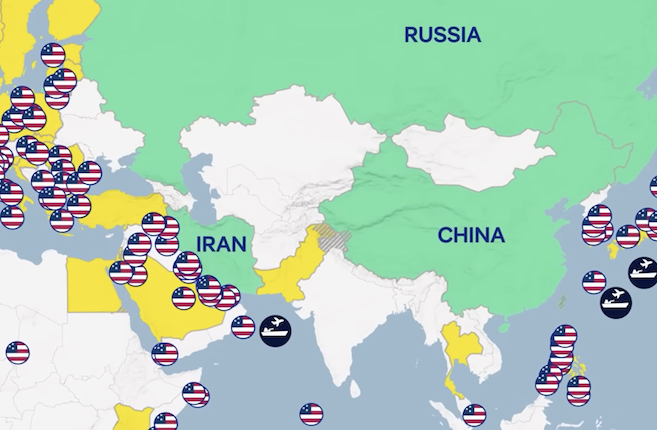
The Biden-era concept of “integrated deterrence” has been replaced by a more transactional “offshore balancing”. Washington is effectively saying that while it will provide the “Golden Dome” of missile defence and the high-end nuclear umbrella, the “boots on the ground” in the First Island Chain must increasingly bear a local flag.
This “America First” realism was personified by the 3 January capture of Venezuelan President Nicolás Maduro during Operation Absolute Resolve. By acting unilaterally to secure the Western Hemisphere, Washington has signalled that its focus has shifted toward homefront stability and direct resource control.
For Australia, this provides a chilling preview: the U.S. is increasingly unwilling to subsidise the security of distant “secondary” theatres unless those allies are fully “staked” into the new Board of Peace financial architecture.
For Australian policymakers, the challenge is twofold. First, there is the “guns vs butter” dilemma. In a vibrant democracy, it is difficult to justify spending 5% of national wealth on long-range missiles when voters are feeling the pinch of housing and energy prices. Second, there is the risk of “strategic over-extension”. By tailoring its entire force structure to meet American requirements for a “denial defence” against China, Australia risks losing the flexibility to manage its own “near abroad” in the South Pacific — where threats are often about climate change and state fragility rather than kinetic conflict.

Furthermore, this pivot ignores the reality that a fragile domestic economy is itself a national security vulnerability. If the Australian Government cannibalises its Social Services and Medicare funding to purchase Tomahawk missiles, it risks radicalising a disillusioned youth and fracturing the social cohesion that underpins national mobilisation. The 2026 NDS treats allies like satellite offices in a corporate restructuring, but a nation is not a subsidiary.
When the “cost of doing business” with Washington becomes synonymous with the erosion of the Australian way of life, the alliance ceases to be a shield and begins to feel like a yoke.
The irony is that this pressure may inadvertently push Australia toward a more independent “armed neutrality” style of thinking. We are seeing the early signs of this in the Albanese Government’s attempt to “re-label” spending on cyber resilience and critical minerals as “security-related” to bridge the gap toward that 5% target. It is a clever bit of accounting, but it does not solve the underlying tension.
The United States must be careful. By treating its most loyal allies as franchises that must pay a high royalty fee, it risks hollowing out the very goodwill that makes the alliance system a unique American advantage.
For Australia, the path forward requires a delicate balance. True strength does not come from a spreadsheet alone. If the 2026 NDS forces Australia into a choice between its alliance and its domestic prosperity, the result may be a fortress that is impressively armed, but socially and economically brittle. In the long run, that is a recipe for a weaker Indo-Pacific, not a stronger one.
Imran Khalid is a geostrategic analyst and columnist on international affairs. His work has been widely published by prestigious international news organisations.
 This work is licensed under a Creative Commons Attribution-NonCommercial-NoDerivs 3.0 Australia License
Support independent journalism Subscribe to IA.


Related Articles
- Invisible no more: How drone warfare exposes AUKUS’ strategic blind spot
- We should never have agreed to AUKUS
- Australia’s top-secret AUKUS cloud may hand our data over to the U.S.
- Chinese investor buys land near AUKUS ports, sparking security fears
- Canberra’s $1.6B AUKUS gamble risks destabilising the Indo-Pacific