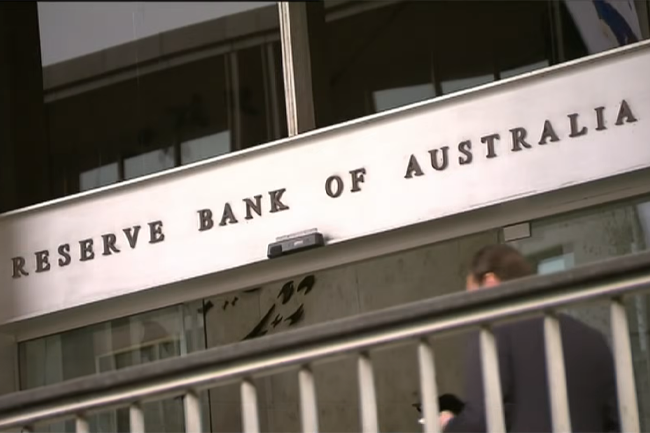
Australia’s generosity to the world’s poor is no longer a newsworthy topic, as Alan Austin reports.
WHEN THE Abbott Government slashed almost a billion dollars from projected overseas aid allocations in 2014, The Sydney Morning Herald greeted this appalling decision with ‘Foreign aid budget plunges to lowest level in Australian history’.
A companion piece was titled, ‘Australia's foreign aid cuts: A long-term disaster’.
ABC News reported the decision thus:
‘Budget 2014: Aid groups vent anger over cuts to foreign aid spending.’
SBS announced:
‘Charity groups “gutted” by foreign aid cuts.’

This year, however, when aid was reduced even further relative to national income, there was barely a murmur.
Little by little, public interest in aid has declined. There are at least three reasons for this.
Demise of Australia’s aid agencies
Through the 1970s, '80s and '90s, overseas aid agencies featured prominently in Australia’s cultural life and mainstream news and other media.
The 1976 evacuation of pro-American citizens from Saigon led to flotillas of vessels, large and small, sailing from Vietnam to Australia, assisted eagerly by the aid agencies in collaboration with the Fraser Government.
Thirty years ago, World Vision’s annual 40 Hour Famine was the nation’s largest community event, with millions of sponsors giving donations to hundreds of thousands of mostly young people who went without solid food for a weekend. This was covered throughout the 40 hours on virtually every radio and television news network and on many variety programs.
This fundraiser generated $7.4 million 1991, when that was a lot of money. This had declined to $2.2 million in 2016 and is now no longer itemised in annual reports.
Through the Howard years, from 1996 to 2007, most aid agencies shifted their focus from raising funds from the public to seeking government grants. The trade-off in exchange for free public money was that advocacy in the form of castigating governments for aid cuts had to cease. So it did.
World Vision’s Tim Costello acknowledged this in 2012:
“Charities are receiving up to 90% of their budget from government. At some point, they crossed the line from being clear about their purpose, independent, focused and fearless, to being completely co-opted and captured.”
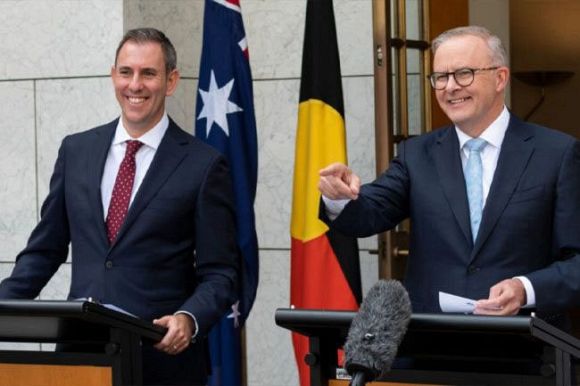
Hence, these days, the aid agencies have a much lower profile. Their pleas on behalf of the world’s poor in occasional media releases rarely command attention.
Fundraising revenue confirms this. World Vision’s appeals generated $126.7 million in 2024, nearly $6 million below the revenue in 2023. That’s down from $242.4 million in 2013.
This is the first reason aid cuts are now uncontroversial, which is a great pity, as the agencies actually achieve extraordinarily good results.
Aid works. Who woodathort?
As recently as 2012, Australia allocated $32.7 million to development programs in China, $3.5 million to Malaysia, $1.76 million to Peru and $1.5 million to Costa Rica. All four of those countries are now in the UN’s top 80 nations by economic advancement and are now net aid donors.
Thanks to bilateral and multilateral aid programs over the decades, fewer nations now experience dire poverty. Hence, urgent life-saving appeals such as for Ethiopia in 1983, North Korea in the mid-1990s, South Sudan in 1998 and Somalia in 2011 are more infrequent and less gut-wrenching.
This is the second reason cuts to development aid are less newsworthy.
Australia’s creeping parsimony
The May Budget allocated $5,097 million to aid for 2025-26, an increase of $135.8 million over last year. This is only a smidgeon above the $5,052 allocated in Julia Gillard’s last budget in 2012-13. As a percentage of gross national income (GNI) – which is how generosity is compared historically and internationally – this is 0.18%, the lowest since records have been kept. See chart below.

Callous Coalition commitment to cut
The third factor fostering frugality is the absence of any Opposition pushback. Before the May Election, the Coalition signalled aid cuts of a further $813 million over four years, while quarantining immediate neighbours from reductions.
It would be great if this were one reason the Coalition lost so resoundingly, but we will never know.
Shifting focus of Australia’s assistance
To their credit, both sides of Australian politics are committed to maintaining support for development in the Asia-Pacific region.
Of Australia’s top 20 current aid recipient nations, 11 are close Pacific neighbours. Four are in South East Asia and three in Central Asia. Only Gaza and Afghanistan are further away. See chart below.

This is a shift from 20, or even ten years earlier. A decade ago, the top 20 aid recipients included Pakistan, Syria, Nepal, Kenya and Zimbabwe. Two decades earlier, they included Iraq, China, Thailand, India and South Africa.
Targets consistently missed
Australia’s proudest period of good global citizenship was during the Whitlam years when 0.6% of GNI was allocated to overseas development. With the UN’s global target then at 0.7%, this placed Australia among world leaders.
It has been downhill from there, with the Fraser Government reducing the percentage to 0.45% over its term. This was raised through the Hawke/Keating Labor years, but never returned to Whitlam’s largesse. This pattern has repeated since. Howard reduced aid again, then Rudd and Gillard restored it partially. Abbott, Turnbull and Morrison slashed it further, then Albanese reinstated some of that.
The peak aid body, the Australian Council for International Development, has now shifted the target from a percentage of GNI to a proportion of the total federal budget. They are asking for 1%. The current level is 0.65%.
Unless there is a miraculous reinvigoration of the aid sector, they will never get it.
Alan Austin is an Independent Australia columnist and freelance journalist. You can follow him on X/Twitter @alanaustin001. He worked in the media team of World Vision Australia from 1996 to 2003.
 This work is licensed under a Creative Commons Attribution-NonCommercial-NoDerivs 3.0 Australia License
Support independent journalism Subscribe to IA.