Encouraging information on jobs and wealth has been greeted with a range of interpretations, as Alan Austin reports.
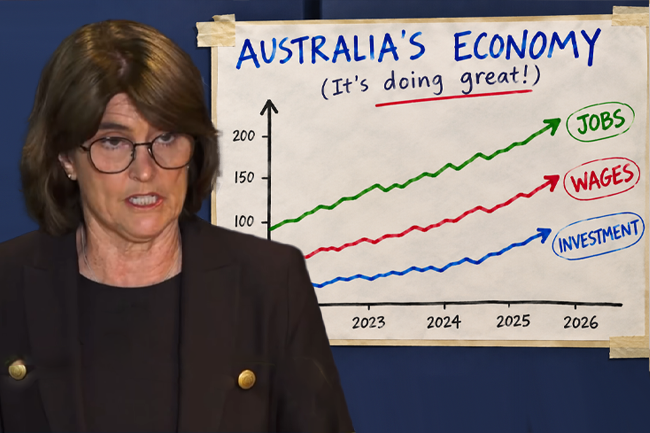
MORE THAN 76,000 Australian families are now feeling greatly relieved and much more optimistic about their future. That’s how many workers found jobs in June, according to last week’s Bureau of Statistics report.
Those numbers bolster the claim that Australia’s economy is the strongest since records began, with employment to population now above 63.5% for a record 51 months. The jobless rate at 4.43% has now been below 4.5% for an impressive 55 months. Job participation at 67.01% is a fraction below the January record, while underemployment at 6.51% extends the historic streak below 7% also to 55 months.
This brings total jobs the Albanese Government has added to 1.33 million and continues Treasurer Jim Chalmers’ duel with Paul Keating to decide Australia’s best job creator.
Most jobs generated by PMs
To the end of June, Albanese’s team had created 326,800 jobs every year, on average, by far the highest since records began in 1978. Next comes the Turnbull period, which generated 272,500 jobs annually. Then followed Morrison, Howard, Rudd, Keating, Gillard, Hawke, Abbott and Fraser.
Obviously, we cannot validly compare raw numbers over time as today’s workforce is one-and-a-half times John Howard’s labour pool and double Bob Hawke’s.
Adjusting for workforce size, we find the Hawke Government with Paul Keating as Treasurer expanded jobs by 2.49% each year on average. Next came Albanese with 2.42%, then Howard 2.33%, Turnbull 2.31%, Keating 2.13%, Morrison 1.92%, Rudd 1.58%, Gillard 1.45%, Abbott 1.35% and Fraser 0.85%.
Global comparisons
We are yet to see June figures for all 38 developed OECD economies, but Australia is clearly back in the top ten. That’s up from ranking outside the top 20 for most of the dismal Morrison years.
Among OECD members which have reported, Canada, Germany, Luxembourg, Austria and Lithuania are all above 6%. Sweden is 9.9% and Finland 10%. The Finns can be happy, of course, that this is down from 12.7% in May.
Equality increasing along with wealth
This month’s Global Wealth Report from Swiss bank UBS reveals the wealth of average Aussie adults has soared to US$616,306 (AU$882,500), ranking fifth in the world behind Switzerland, the USA, Luxembourg and Hong Kong.
The number of millionaires – with net worth above US$1 million (AU$1.43 million) – jumped by 25,100 to 1,634,000. Australia is now seventh globally by millionaires.
Broad wealth, which indicates asset distribution across the population, is lifting, with 70% of adults holding more than US$100,000 (AU$143,266). This is second only to Luxembourg.

Australia’s Gini coefficient is 0.53, ranking 29th on the UBS list of 32 rich countries. This measures equality on a scale from zero to one, with zero being perfect equality and one being perfect inequality. So the lower the better — for egalitarians, anyway.
The only nations with scores lower than Australia were Qatar, Belgium and Slovakia.
As Australia’s score in last year’s UBS report was 0.55, which ranked 27th out of 32, equality is advancing. Australia has now snuck ahead of Luxembourg and Japan.
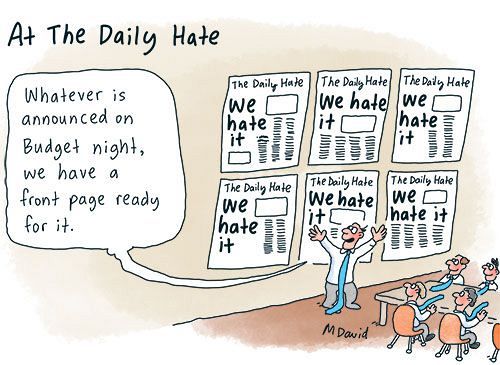
Newsroom responses negative as always
Sadly, most newsrooms continue to spin excellent data on wealth and jobs into gloom, doom and despair, with headlines like:
- ‘Rate hike fear grows as nation adds 76,000 jobs in June’ (Sydney Morning Herald, 23 July);
- ‘More jobs, higher rates: Australians warned the worst may be ahead’ (Sky News, 23 July);
- ‘Unemployment drops but labour market cracks emerge’ (The Australian, 23 July);
- ‘Victoria’s jobless rate hits highest level since COVID-19 lockdowns’ (Financial Review, 23 July); and
- ‘Economists issue rate hike warning as unemployment rate holds steady’ (Nine News, 23 July).
To be fair, some newsrooms did play the jobs numbers with a straight bat, including the Herald Sun, ABC News, News.com.au and FX Street, which is a refreshing change.
Newsroom recantations
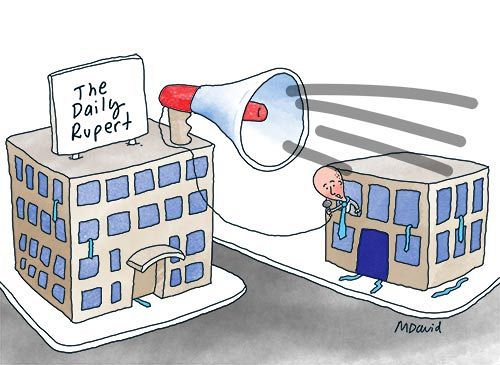
This column was somewhat chuffed two weeks ago to see the ABC’s business reporter Alan Kohler abandon his long-held pessimism and announce that Australia is not heading for a recession after all. The economy is so robust, he said, that it needs dampening.
He was the first mainstream journalist to confirm IA’s reporting over the last two years. Our chuffedness quotient was boosted further last Thursday when analysis by economist Adam Triggs ran in the Canberra Times and affiliated journals. Triggs asserted that despite constant crisis narratives, Australia’s economy is not “busted” but among the world’s most resilient. Correct.
The article reported that multiple recent real‑world stress tests show the economy has absorbed severe shocks with little damage.
Corporate affirmations
While newsrooms may take months or even years to catch up, the business investment community is certainly alert.
Morningstar DBRS confirmed Australia's long-term and short-term foreign and local currency-issuer ratings at AAA last week. Its report praised ‘the country's considerable fundamental strengths, including its diversified and highly productive economy, sound macroeconomic policy frameworks, and highly effective governing institutions’.
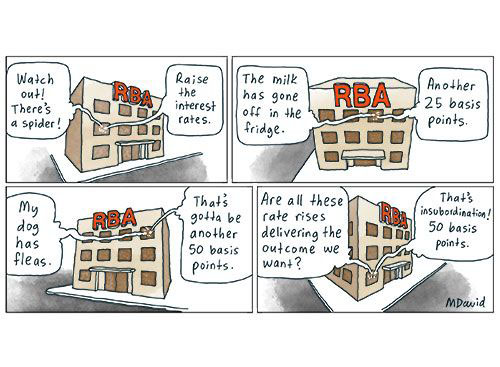
Market analyst with IG International Tony Sycamore affirmed that the June jobs data ‘aligns with the RBA’s view that labour market conditions remain resilient.’ He described the jobs surge as ‘a sign of broader economic resilience’.
In its monthly report for July, London-based global asset management firm Janus Henderson Investors said that AI-driven investment will ‘propel domestic demand and maintain an overall positive growth momentum’.
A Commonwealth Bank report described Australia’s economy as ‘in a solid position with its fiscal position triple-A-rated, well-positioned to draw global capital’.
The May budget, it said, ‘adds mild stimulus, keeping demand firm and retaining upside risks for RBA rate increases... unemployment is low and the budget charts a credible path back to surplus’.
What Australia needs urgently, however, is a credible path back to newsrooms that report on the economy without a surplus of pessimism, distortion and falsification.
Alan Austin is an Independent Australia columnist and freelance journalist. You can follow him on Twitter @alanaustin001 and Bluesky @alanaustin.bsky.social.
 This work is licensed under a Creative Commons Attribution-NonCommercial-NoDerivs 3.0 Australia License
Support independent journalism Subscribe to IA.


Related Articles
- Australia's export slump quietly dragging down the economy
- Economists and newsrooms collaborate to lie about Australia’s economy
- Australia’s newsrooms continue to suppress vital information
- Flailing newsrooms flog fears of a fictional recession
- Lucky for some: Australia’s per capita recession