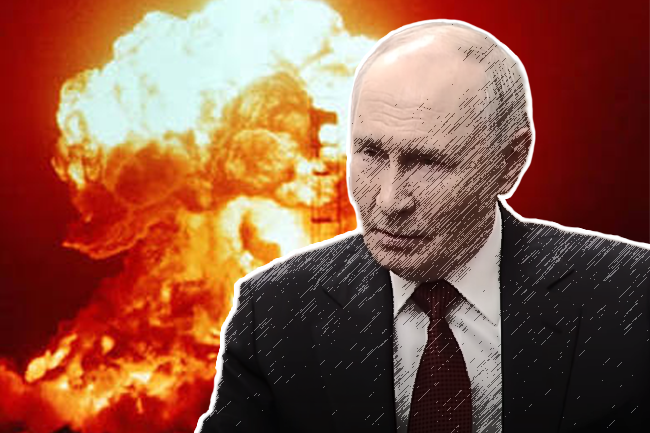
Russia’s nuclear threats over Kaliningrad have heightened fears that escalating tensions with NATO could trigger a catastrophic wider conflict, writes Dr William Briggs.
THE THREAT of nuclear war has just become significantly more real. The Bulletin of Atomic Scientists set the doomsday clock at 85 seconds to midnight in January, but recent events have made those calculations seem almost optimistic, if not irrelevant.
What is unfolding is chilling. The recklessness that accompanies the expansion of the war is taking the world to the brink. The Ukraine war, possibly more accurately described as the U.S.-NATO war against Russia, has been dramatically escalating in recent days.
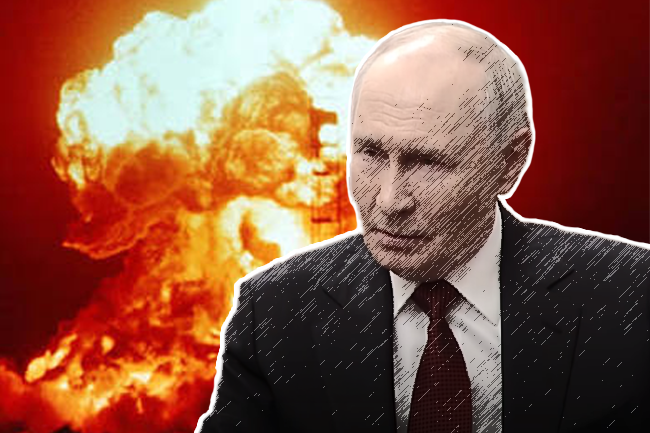
The nuclear-armed powers are now but a breath away from open and potentially apocalyptic conflict. Russia has declared that it is prepared to use nuclear weapons if NATO moves to blockade Kaliningrad, the Russian territory on the Baltic, sandwiched between Poland and Lithuania.
The warning was officially issued through Russian embassies in Belgium, Britain and Ireland on 28 and 29 September, and in a diplomatic note to NATO.
The statement made one thing clear:
‘There should be no mistake — Russia would be ready to use all its arsenal, including nuclear weapons, to defend its territory if NATO countries try to isolate the Kaliningrad region from the rest of the country.’
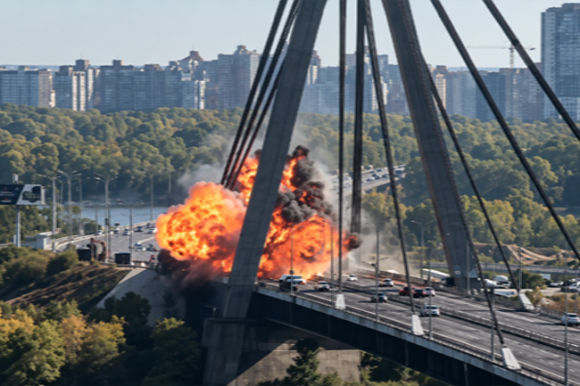
NATO spokespeople have denied that such a threat exists, but events of the most recent past need to be considered. In considering these actions, the fears expressed by Russia assume a very real air. Kaliningrad is vital to the Russian military. It is central to its air defence and pivotal for its naval capacity. The region is also surrounded by two NATO states and therefore extremely vulnerable.
Kaliningrad has very much been in the NATO spotlight since Russia invaded Ukraine in 2022. The addition of Sweden and Finland to the NATO bloc has made encirclement complete.
Lithuania’s Foreign Minister, Kęstutis Budrys, stoked tensions in May, when he said that NATO had to show Moscow it was capable of ‘penetrating the small fortress they've built in Kaliningrad’ and ‘razing Russian air defences and missile bases there’.
In mid-August, an operation was launched by NATO members in the airspace around Kaliningrad to “demonstrate” their capacity to cut off the exclave’s radio, radar and air defences.
While NATO continues to promote the charade that it is purely a defensive organisation, Moscow clearly believes that the bloc is already “waging war” against it.
The stakes are high. The potential for war is real. The provocations by NATO are real and astonishingly dangerous.
Polish Foreign Minister Radosław Sikorski, on 11 September, pushed things even further, proposing that NATO “exercise so aggressively on our side as to make [Putin] uncertain of what we will do”. He added, “We should not be thinking about our confrontation with Russia only as being confined to Ukraine”.
Such are the voices of the “purely” defensive NATO alliance. Allison Hart, NATO spokesperson, did her best to maintain the lie, saying that ‘no NATO exercises or actions pose a threat to any part of Russia’. She went so far as to denounce “the threat of force, including any irresponsible nuclear rhetoric”.
The fact is that NATO is arming and guiding Ukrainian strikes deep inside Russia. NBC News reported, as early as October 2025, that the Trump Administration was to provide Kyiv with intelligence to help it ‘strike at oil and gas facilities inside Russia’. So much for a “purely” defensive policy.
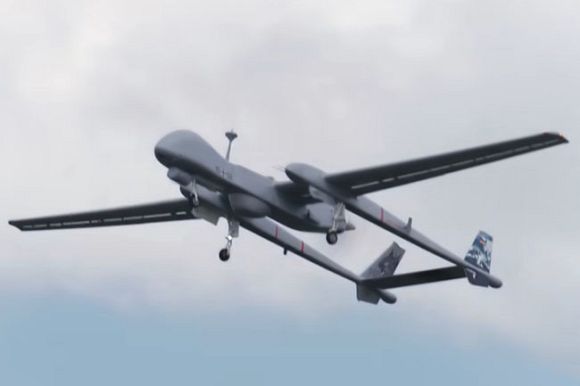
Kaliningrad is of strategic importance but has assumed a special significance in recent months. The war is not proceeding according to plan. Russia’s decision to invade Ukraine was a reactionary one and cannot be easily accepted. But the driving force behind the war was – and remains – the dismemberment of Russia.
This “Balkanisation” of Russia was a long time in the planning. The war was to be one of conquest, with the aim of gaining access to resources, markets and territory. In this respect, it was a war like all wars. It was to be a war for profit and that motivation remains.
The war, however, is going badly. Europe has developed an entire set of policies on victory.
Just last week, European Union Defence Minister Andrius Kubilius stated that “Putin needs to feel that war is coming to Russia itself”. The stridency of that statement flows from the setbacks that Ukraine continues to suffer. Its capacity to defend itself is progressively weakening. With each setback has come further escalation. Massive drone attacks on Moscow and increasingly erratic missile and drone attacks are a case in point.
The talk of potential action against Kaliningrad indicates a serious escalation. The reality is that Russia has every reason to fear the blockade. Such an action, against the headquarters of its Baltic Fleet, would make the situation intolerable and so, the potential for a nuclear conflagration becomes more acute.
Russia’s nuclear capabilities are no secret. Its nuclear doctrine allows for their use should “aggression” become a “critical threat” to its territorial integrity. This is where the danger lies.
A former Russian diplomat and now nuclear analyst, Nikolai Sokov, now based in Vienna, commented in an interview that the Russians ‘expect more action, including a blockade of the Baltic Sea — just below the level of war in European calculation, but for them this will be open war. I see a risk of mutual miscalculation’.
This description of being ‘just below the level of war’ is of immense importance. According to international law, a blockade becomes an actual act of war. The definition of “aggression” in this context, according to the United Nations, includes ‘the blockade of the ports or coasts of a State by the armed forces of another State’.
The risks are real and yet there have been no calls for anything like meaningful negotiations, beyond the fatuous games that have been played out over the past years. There is, rather, a feeling that escalation is the answer.
On one side there is NATO and the U.S., pressing on with a war with little apparent regard for the possible outcome. On the other side is the Russian regime, equally incapable of resolving the conflict and prepared to risk all with nuclear threats.
The war in Ukraine was decades in the making. NATO expansion and threats to Russian sovereignty are inevitably linked to the need to pursue markets, resources and potential profits. Some might see this as international politics or international economics; international relations, if you like.
Yes, it is, but it is a dangerous, reckless struggle, not limited to Ukraine but global in reach. A reckless and dangerous set of manoeuvres that threaten the lives of us all.
Dr William Briggs is a political economist. His special areas of interest lie in political theory and international political economy. He has been, variously, a teacher, journalist and political activist.
 This work is licensed under a Creative Commons Attribution-NonCommercial-NoDerivs 3.0 Australia License
Support independent journalism Subscribe to IA.